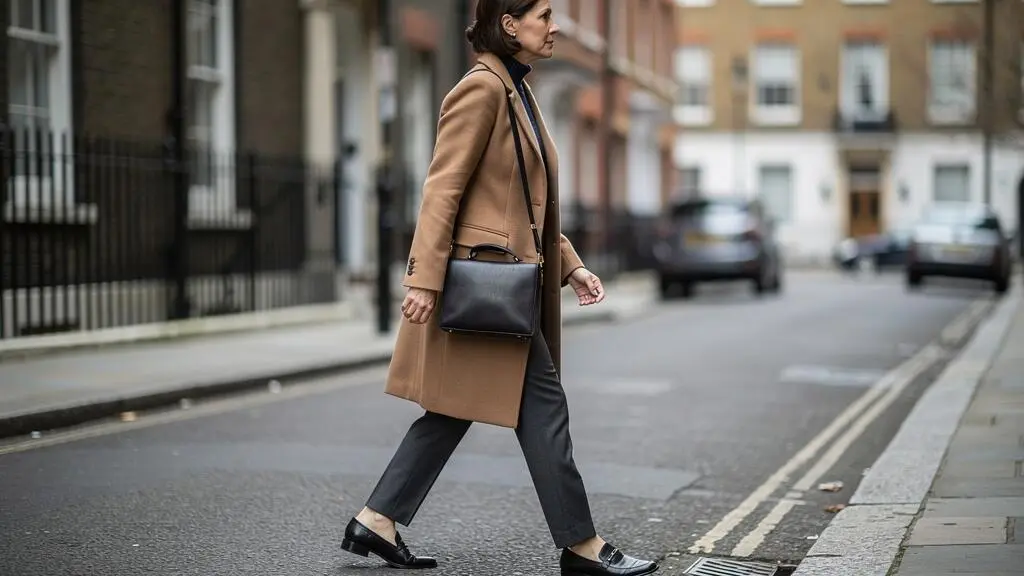
Some people can walk into a London office wearing a plain jumper, tailored trousers and loafers and look impeccably dressed. Others assemble an expensive blazer, designer accessories and carefully coordinated colours, yet the result feels strangely overworked.
The difference is rarely the price tag. Contemporary elegance is the balance between proportion, restraint, fabric quality and physical ease. Clothes should look appropriate to the person, the occasion and the way they actually move through the day.
In the UK, that increasingly means navigating the space between traditional formalwear and relaxed smart casual. A polished outfit needs to work in an office, survive a damp commute and still feel credible at dinner. Looking elegant does not require looking formally dressed.
The practical challenge is knowing what to adjust, what to remove and when to stop. Once those decisions become instinctive, elegance stops looking like an elaborate styling exercise.
Contemporary elegance: the essentials
- Fit before price: balanced shoulders, hems and trouser lengths make clothing look more considered than expensive labels.
- One focal point: let a single distinctive element lead while everything else supports it.
- Comfort creates confidence: clothing that moves naturally helps you look relaxed rather than excessively styled.
- Why Can a £200 Outfit Look Cheap When the Proportions Are Wrong?
- How to Build a Contemporary Elegant Outfit in 10 Minutes Without Overthinking?
- Tailored Blazer or Elevated Knitwear: Which Works Better for Smart-Casual Offices?
- The Styling Mistake That Makes You Look Overdone in Under 30 Seconds
- A 3-Piece Outfit Formula That Keeps You Looking Polished Through 4 Seasons
- Why Do Some Fabrics Look Stunning in Low Light but Awful in Flash Photos?
- Quiet Luxury or Logos: Which Signals Better Taste in the UK Workplace?
- Why Does Luxury Casualwear Feel Better Even When It Looks Simple?
Why Can a £200 Outfit Look Cheap When the Proportions Are Wrong?
A £200 outfit can look inexpensive when its proportions fight the wearer’s natural shape. Drooping shoulders, awkward jacket lengths and trousers pooling around the shoes create visual disorder, regardless of fabric or brand. Conversely, an affordable outfit can appear more refined when the shoulder line, waist and hems relate convincingly to one another.
Start with the shoulder-to-hem balance test. Stand naturally in front of a full-length mirror, arms relaxed. Check where the shoulder seams sit, where the upper garment ends and how that length divides your silhouette above the trousers. The aim is not a mathematically perfect ratio. It is a coherent visual relationship.
A jacket with shoulders extending beyond the intended silhouette may overwhelm a narrower frame. A cropped top combined with low-rise trousers may create an awkward break at the waist. Wide-leg trousers can look sophisticated, but excessive fabric collecting around the shoes often appears accidental rather than deliberate.
This attention to body shape has a research basis, although styling judgements remain subjective. University of Manchester research on body shape and garment fit examined how 30 UK women aged 18–34 evaluated garments during physical try-on sessions. The researchers found body shape mattered to fit appraisal. The small study does not establish universal fashion rules or prove that tailoring makes clothing appear more expensive.
30 participants
UK women aged 18–34 took part in garment try-on research examining the relationship between body shape and fit evaluation. The findings cannot be generalised to all UK consumers.
Chrimes, Boardman, McCormick and Vignali, Journal of Fashion Marketing and Management, 2023.
Before buying anything, inspect three details: the trouser rise should sit comfortably without pulling, sleeves should finish at an intentional point around the wrist, and fabric should fall cleanly around the waist without unwanted tension.
British high-street clothing is generally designed around standardised size ranges rather than individual proportions. A garment can fit at the chest but feel too long in the sleeve, or fit at the hip while being too loose at the waist. Size labels are therefore a starting point, not a guarantee.
A local tailor can sometimes correct these problems without requiring a replacement wardrobe. As a hypothetical example, a £40 trouser alteration may be worthwhile if it turns an otherwise unworn pair into something reliably wearable. Actual charges depend on the garment, alteration and tailor.
However, better fit does not mean tighter fit. An aggressively nipped waist, rigid shoulders and narrow trousers can recreate the overly fitted silhouettes associated with earlier officewear trends. Contemporary tailoring often benefits from room through the body, relaxed sleeves and an easy trouser line.
Once the silhouette works, choosing an outfit becomes considerably faster. Good proportions remove many of the styling decisions that otherwise consume the morning.
How to Build a Contemporary Elegant Outfit in 10 Minutes Without Overthinking?
Build a contemporary elegant outfit by choosing one structured piece, one piece that adds texture and one quiet focal point. Keep the colours compatible, avoid competing details and finish with shoes that match the overall level of formality. This creates a repeatable decision process rather than an endless search for the perfect combination.
Start with the part of your day that requires the most appropriate appearance. A client presentation, informal team meeting or evening reservation may each require a different level of polish.
Then follow a simple sequence:
- Choose structure: tailored trousers, a softly constructed blazer or a clean-lined coat establishes the silhouette.
- Add texture: fine merino, brushed cotton, crisp shirting or a substantial jersey introduces depth without adding visual noise.
- Select one quiet hero: distinctive loafers, an elegant bag, a beautifully cut jacket or a subtle piece of jewellery provides personality.
These roles can overlap within one garment. The point is to create visual balance, not to force every outfit into exactly three separate purchases.
Apply the one-third rule as a practical styling heuristic: only one of the three main outfit roles should demand significant visual attention. If you can immediately name three competing focal points, edit the outfit rather than adding another accessory.
For a typical UK office day, an uncomplicated combination might be charcoal trousers, a cream fine-gauge jumper and dark leather loafers, finished with a weather-appropriate coat. The coat provides structure outdoors; the knitwear maintains polish indoors.
British weather also makes layering a functional requirement. An outfit that only works without a coat, or becomes bulky under a waterproof layer, has not been properly resolved. Test the complete silhouette with the outerwear you actually intend to wear.
Your five-step pre-departure outfit check
- Confirm the silhouette: stand naturally in front of a mirror and identify one clean shoulder-to-hem line.
- Check the waist and trouser break: adjust the tuck or hem until there is no accidental bunching; leave with a clearly defined waist transition.
- Identify the hero piece: name the single strongest detail and remove any accessory that competes with it.
- Test the commute layer: put on your coat and carry your usual bag; confirm that nothing pulls, bulges or restricts movement.
- Complete the 20-second scan: inspect collar alignment, hem position and shoe weight; leave with all three visually consistent.
The final check should be quick. A collar lying flat, a controlled hem and footwear that does not overpower the trousers usually tell you more than another round of accessorising.
The next decision is often whether the structured element should be a blazer at all. In many contemporary offices, refined knitwear can do the job more naturally.
Tailored Blazer or Elevated Knitwear: Which Works Better for Smart-Casual Offices?
Elevated knitwear often works better in relaxed smart-casual offices, while a tailored blazer is more useful when meetings, clients or organisational expectations call for greater formality. Neither is inherently more elegant. The better choice depends on workplace culture, the day’s agenda and whether the garment’s proportions complement the rest of the outfit.
The modern British workplace offers no universal dress formula. In a YouGov survey published in November 2023, 34% of UK workers described their usual workplace clothing as smart casual, compared with 7% who reported business attire. These figures describe reported habits at that time, not a rule about what workplaces expect today.
For the original breakdown, see the YouGov survey on business attire and smart-casual clothing in the UK.
For practical styling, compare the two options against your actual working day rather than their traditional associations.
| Decision factor | Tailored blazer | Elevated knitwear |
|---|---|---|
| Workplace formality | Useful when a visibly structured appearance is expected | Suited to offices where polished casual clothing is accepted |
| Meeting calendar | Helpful for formal presentations and certain client meetings | Practical for internal meetings and flexible working days |
| Proportions | Defines the shoulder line and introduces shape | Follows the body more softly and allows a relaxed silhouette |
| Comfort and layering | Requires attention to shoulder ease and sleeve fit | Can accommodate movement comfortably when correctly sized |
| Common mistake | Excessively stiff construction or an awkward hem | Thin, stretched or pilled fabric that appears tired |
A refined jumper succeeds when its fabric has substance without excessive bulk. Look for a neckline that holds its shape, sleeves that sit deliberately at the wrist and a hem that does not collapse around the waist. Fine-gauge merino or a well-made cotton knit can look more appropriate than a rigid blazer in a relaxed environment.
Body proportions matter here too. A cropped knit may work particularly well over higher-rise trousers, while a longer, softly draped jumper might need a more deliberate waist treatment. A blazer should frame the body rather than engulf it.
The hybrid option is knitwear beneath an unstructured blazer. It works when the knit is sufficiently fine, the jacket has room through the arms and the combined neckline remains clean. A heavy cable-knit jumper beneath a closely fitted blazer, by contrast, can create distracting bulk.
Keep the formality consistent. A relaxed jumper paired with extremely formal, sharply creased suit trousers can sometimes feel unresolved. Softer tailoring, balanced footwear and compatible textures usually create a more coherent result.
The correct garment establishes the level of polish. Restraint in the remaining styling determines whether that polish looks natural.
The Styling Mistake That Makes You Look Overdone in Under 30 Seconds
The quickest way to make an outfit look overdone is to stack too many signals of sophistication. Statement jewellery, dramatic silhouettes, conspicuous textures, bold colours and meticulously matched accessories can compete for attention. Contemporary elegance usually works better when one distinctive element leads and the remaining pieces create a calm, coherent background.
Consider a hypothetical outfit combining a sharply tailored suit, oversized gold jewellery, a patterned silk scarf, glossy statement shoes and a conspicuous designer bag. Every item may be attractive individually. Together, however, they offer too many competing reasons to look.
The issue is not boldness itself. A vibrant coat or sculptural earrings can be elegant when supported by simpler pieces. The problem appears when each additional detail demands its own moment.
Another source of visible effort is excessive coordination. Matching the bag, belt, shoes, jewellery and even nail colour too precisely can give an outfit a heavily planned appearance. Exact matching is not automatically wrong, but deliberate variation often feels more contemporary.
Try the one-hero audit. Identify the strongest visual element, whether that is shape, colour, texture or accessory. Then use the reversal test: remove one item and assess whether the overall impression improves.
If removing the scarf makes the jacket look stronger, leave the scarf behind. If switching statement shoes for quieter loafers improves the trouser line, the footwear was competing with the silhouette.
In many British professional contexts, understatement is a useful stylistic starting point, but it is not a universal cultural rule. Creative workplaces, fashion events and individual social circles may welcome considerably more expression than conservative corporate environments.
Acas published independent research on workplace dress codes and appearance in 2016, demonstrating why organisational expectations deserve attention. The research does not establish a universal British preference for understated clothing or constitute official legal guidance.
That distinction matters: looking appropriate is partly contextual, while looking effortless is also a matter of personal styling. The goal is not to suppress individuality but to ensure it reads clearly.
Once unnecessary details disappear, a small number of versatile garments can produce a surprisingly wide range of polished outfits.
A 3-Piece Outfit Formula That Keeps You Looking Polished Through 4 Seasons
A reliable three-piece outfit combines a base layer, a structure piece and a transition piece. Each serves a different purpose: comfort, silhouette and adaptability. This gives the outfit enough dimension to look intentional without requiring elaborate styling. The formula works across four seasons because fabrics and layers change while the underlying roles remain consistent.
The base layer is what sits closest to the body: a shirt, lightweight jumper, fitted top or refined T-shirt. It should work comfortably indoors and create a clean foundation for everything above it.
The structure piece defines the overall shape. Depending on the outfit, this could be tailored trousers, a blazer or another garment with deliberate construction.
The transition piece adjusts the outfit for changing conditions or occasions. A coat, cardigan, lightweight overshirt or additional layer may provide warmth, coverage or a more finished appearance.
Three pieces are not a scientific optimum. They are a useful wardrobe-planning framework, particularly for people who tend to accumulate layers without considering what each contributes.
The same framework can be adapted throughout a typical UK year:
| Season | Base layer | Structure piece | Transition piece |
|---|---|---|---|
| Spring | Cotton shirt | Tailored trousers | Lightweight trench coat |
| Summer | Breathable cotton top | Relaxed linen-blend blazer | Lightweight overshirt for cooler conditions |
| Autumn | Fine merino jumper | Straight wool trousers | Unstructured coat |
| Winter | Thermal-friendly fine knit | Wool tailoring | Insulating overcoat |
These are suggested combinations, not universal outfits for every temperature. In warmer weather the transition piece may be carried rather than worn, while winter conditions may require additional functional layers.
A stable neutral palette makes seasonal changes easier. Charcoal, navy, cream, olive, camel and brown can be combined without requiring every garment to match exactly. Rather than introducing an entirely new colour scheme each season, change the fabric textures and weights.
A brushed wool coat brings depth in winter. A crisp cotton shirt provides lightness in spring. Linen and breathable cotton introduce texture in summer without demanding stronger colours.
The formula fails when garments duplicate one another’s function. Two bulky outer layers may obscure the silhouette; a long shirt beneath a long cardigan can create unnecessary visual competition.
Ask whether each element provides a distinct contribution. If removing one improves the silhouette without sacrificing comfort, weather protection or the intended level of formality, it may not belong in the outfit.
This approach also makes wardrobe spending more rational. Rather than buying complete seasonal looks, prioritise garments that can occupy several roles across different combinations.
Fabric choice then becomes crucial. A garment’s appearance can change dramatically with lighting, which is particularly relevant when an outfit must work both in person and in photographs.
Why Do Some Fabrics Look Stunning in Low Light but Awful in Flash Photos?
Some fabrics look luxurious in subdued lighting but disappointing under direct flash because their fibres, weave and surface finish reflect light differently. Directional illumination can exaggerate shiny patches, flatten subtle texture or highlight wrinkles that were barely noticeable indoors. The result depends on the fabric, the light source and the camera rather than on garment quality alone.
The optical explanation is more complex than simply dividing fabrics into shiny and matte.
Woven textiles contain fibres and yarn structures that reflect and scatter light in different directions. As the angle of illumination changes, highlights and surface texture can become more or less visible. This relationship is examined in Cornell research on light reflection from woven fabrics, published in ACM Transactions on Graphics in 2012.
The research explains textile reflection, not whether a specific jacket photographs elegantly or whether one fabric is universally superior.
Under warm restaurant lighting, a satin blouse may produce soft, attractive highlights. In direct flash photography, those highlights can become much more prominent, particularly where the material folds. Dark fabrics may reveal surface lint or an uneven sheen that was less apparent in person.
Conversely, certain textured fabrics that look rich in daylight can lose some visible detail in poorly lit photographs. Camera exposure and image processing also influence the final result.
For someone attending a networking event, wedding or professional function, it is worth testing the outfit before leaving home. Examine the garment under ordinary room lighting, then take a photograph using direct phone flash and compare the results.
A phone torch provides a useful close-up view of surface texture, while an actual flash photograph gives a better indication of the camera result. Neither can reproduce every lighting condition at an event, but both can reveal distracting sheen, obvious creasing or unwanted reflections.
For a versatile wardrobe, matte mid-weight wool, brushed cotton and substantial jersey are sensible fabrics to consider. Their surfaces can provide visual depth without relying on pronounced shine. That is an editorial preference rather than a guarantee that they will always photograph better.
The reverse problem also matters. A high-sheen garment selected because it looks striking in photographs may feel conspicuously dressy under ordinary office lighting. Strong contrast can similarly produce an impressive image while feeling excessive in person.
Choose fabric for its real-world appearance first, then check how it photographs. Professional portraits and event pictures matter, but most clothing spends substantially more time being worn than photographed.
Once lighting, texture and fit are considered together, conspicuous branding becomes a less important measure of sophistication.
Quiet Luxury or Logos: Which Signals Better Taste in the UK Workplace?
Quiet luxury is often the more adaptable choice in a UK professional wardrobe because it emphasises fit, fabric and construction rather than recognisable branding. Logos offer immediate brand recognition but can make clothing feel more trend-dependent or conspicuous. Neither guarantees good taste: a poorly maintained minimalist outfit can look less polished than one featuring a discreet logo.
The distinction is fundamentally about what communicates quality.
A visible logo communicates brand identity. It can also signal personal taste, familiarity with a fashion label or affiliation with a particular aesthetic. The message is immediately recognisable to people who know the brand.
Quiet luxury relies instead on garment-level details: fabric texture, proportion, finish and how naturally the clothing moves. Those qualities may be apparent without the viewer being able to identify what the wearer paid.
In many conservative UK offices, subtle branding is a practical choice because it draws less attention away from the professional setting. However, that does not establish a universal hierarchy of taste. Creative agencies, design studios and some client-facing industries may interpret visible branding differently.
The more useful distinction is between quiet quality and quiet neglect.
A plain cashmere jumper with extensive pilling does not become elegant simply because it lacks a logo. A badly fitted expensive coat can look less convincing than a modestly priced alternative with better proportions.
Before paying a premium for understated clothing, examine three characteristics:
- Stitching: seams should appear secure and reasonably even, without obvious pulling or unfinished areas inconsistent with the design.
- Hand-feel: the fabric should feel appropriate for its intended use, without unexpected harshness, excessive limpness or obvious instability.
- Drape: the garment should fall naturally on your body without persistent twisting, dragging or unwanted tension.
These checks cannot prove fabric durability or reveal every construction defect. They can, however, help eliminate garments whose quality does not justify their price to you.
When working with a limited budget, prioritise the pieces people see repeatedly and at close range. Outerwear shapes the first impression; knitwear often sits near the face; shoes influence how finished the entire outfit appears.
That does not mean buying the most expensive coat or shoes available. It means directing money towards fit, material performance, maintenance and frequency of wear rather than paying extra solely for visible branding.
A small, recognisable logo can still work perfectly well when it fits the overall look. Branding becomes distracting mainly when it competes with the garment’s proportions or the context in which it is worn.
The final test of luxury is not purely visual. How a garment feels throughout an ordinary working day can change the way the entire outfit is carried.
What matters most before buying or styling
- Pay for wearable comfort and convincing construction, not merely for a recognisable brand or a premium price.
- Judge an outfit while moving, sitting and wearing outerwear, rather than relying on a static mirror image.
- Keep the garments that combine polish with ease; they are more useful than impressive pieces you constantly need to adjust.
Why Does Luxury Casualwear Feel Better Even When It Looks Simple?
Luxury casualwear can feel better because fabric weight, construction and cut influence how clothing sits, stretches and moves throughout the day. Well-designed garments may reduce pulling, bunching and repeated adjustments, making the wearer appear more relaxed. However, a high price does not guarantee superior comfort or quality; the physical performance of each item matters more than its label.
The connection between comfort and elegance is often overlooked. An outfit can look excellent when someone is standing still but feel restrictive after a train journey, several meetings or an evening spent sitting and walking.
Consider two hypothetical pairs of tailored trousers. Both appear similar on a hanger. One has enough ease through the hip and thigh to accommodate sitting comfortably; the other pulls across the lap whenever the wearer moves.
Even if both look polished in a photograph, the first may be easier to wear naturally. The wearer has less reason to adjust the waistband, tug at the fabric or change posture to accommodate the garment.
That is the practical value of ease built into the cut. Good casualwear allows movement without sacrificing an intentional silhouette.
Fabric weight also matters. A garment with sufficient substance may hang cleanly and feel reassuring, while an overly heavy alternative can become uncomfortable indoors. Lightweight fabric can be elegant too, provided it behaves appropriately for the design and occasion.
Finishing quality contributes to the experience. Rough interior seams, an unstable neckline or a waistband that twists during wear can create irritation despite an attractive exterior.
Before paying more for luxury casualwear, carry out three physical checks:
- Fabric recovery: gently stretch a suitable area of the fabric and release it. Check whether it returns towards its original shape. Avoid stretching materials not designed to give.
- Seam finishing: inspect the inside of the garment for secure stitching, rough edges and construction details that could affect comfort.
- Collar structure: examine whether the neckline sits consistently and retains its intended shape when the garment is put on and removed.
These are useful preliminary checks, not laboratory durability tests. Long-term performance still depends on fibre composition, construction, laundering and frequency of use.
There is also a behavioural dimension. When clothing feels comfortable, a person may stand more naturally, move without hesitation and pay less attention to adjusting an outfit. The relationship is plausible as a styling observation, but it should not be presented as a proven universal psychological effect.
Importantly, none of this requires luxury pricing. A well-cut high-street jumper can provide more comfort than a premium designer garment, particularly when the latter prioritises an unusual silhouette or branding over practicality.
The best wardrobe investment is often not the most striking item but the one that gets worn repeatedly because it reliably looks and feels right.
That brings contemporary elegance back to its central principle: the outfit should accommodate the person, rather than requiring the person to perform for the outfit.
Choose one outfit you already wear regularly. Check its proportions, remove a competing detail and spend a full day noticing whether any garment needs constant adjustment. Keep what works, identify the specific discomforts and make those your next wardrobe priorities. Effortless contemporary elegance is easier to build through small, repeatable improvements than through an expensive reinvention.
Can contemporary elegance work with trainers?
Yes. Clean, understated trainers can complement tailored trousers, structured outerwear and refined knitwear, particularly in relaxed workplaces. Choose a shape that balances the trouser width and avoid footwear that looks worn or excessively bulky unless its proportions are deliberately part of the outfit. Check your employer’s dress expectations before relying on trainers for formal meetings.
Which colours make a small wardrobe look more elegant?
Navy, charcoal, cream, camel, brown and olive are useful because they combine relatively easily. However, elegance does not require a beige or monochrome wardrobe. Rich burgundy, deep green or a carefully chosen bright colour can work equally well. Prioritise combinations that complement your complexion, remain coherent together and suit the occasions you dress for.
How can someone look elegant without wearing formal clothes?
Use relaxed garments with deliberate proportions and convincing fabric quality. Straight trousers, a substantial fine-knit jumper, simple leather footwear and a clean-lined coat can create a polished appearance without a formal suit. Maintain the garments, avoid unnecessary statement accessories and ensure that each piece moves comfortably during ordinary activities.
Is it better to buy fewer expensive clothes or more affordable pieces?
Neither approach is automatically better. A smaller collection of durable, versatile garments can reduce duplication, but affordability matters and expensive clothing is not guaranteed to last longer. Judge each purchase by fit, comfort, construction, maintenance requirements and how often you realistically expect to wear it. Alterations and proper garment care may be more useful than purchasing additional items.
How do you maintain an elegant appearance on a rainy UK commute?
Build weather protection into the outfit from the beginning. Choose outerwear with sufficient room over your indoor layers, practical footwear suited to the conditions and a bag that does not distort the silhouette. Keep delicate pieces protected when necessary and check whether the outfit still looks coherent after removing your coat. An elegant commute outfit should be functional, not merely photogenic.