Haute couture
Haute couture is often used loosely to describe anything luxurious, but the term has a precise meaning rooted in craft, law and tradition. Far from being just expensive clothing, it represents the highest level of garment making in the world: pieces designed and constructed by hand for a single client, using techniques that can take hundreds of hours to master and execute. Whether you are a curious beginner or a fashion enthusiast looking to deepen your knowledge, this page explains what haute couture truly is, how it works, and why it continues to influence the way we all dress.
What Exactly Is Haute Couture?
The expression comes from French and literally means “high sewing” or “high dressmaking.” In practice, it describes garments that are entirely made to measure for one specific client, from an initial sketch to the final hand-finished seam. Unlike ready-to-wear collections found in boutiques, a couture gown exists in a single size, shaped to one body.
What makes the term special is that it is a protected designation in France. Not every fashion house can call itself a couture house. The name is governed by strict criteria, defended by an official body in Paris, and awarded only to houses that meet demanding requirements.
The Rules Behind the Name
To earn the official haute couture label, a house must satisfy several conditions that have evolved over more than a century. These rules protect both the craft and the clients.
- Design made-to-order clothing for private clients, with one or more fittings.
- Maintain a workshop, known as an atelier, based in Paris.
- Employ full-time skilled artisans, including pattern makers and seamstresses specializing in handwork.
- Present a collection of original pieces to the public each season, with a minimum number of looks per show.
Houses that meet the criteria appear on an official list. Some are full members, while others are invited members or correspondents from abroad. The list changes over time as houses join, step away, or return, which is why you may see the same designer names associated with couture for decades while others appear more recently.
A Brief Look at the History
Haute couture as an organized system emerged in the nineteenth century, when an English-born designer working in Paris, Charles Frederick Worth, began signing his creations and dressing elite clients on commission. He essentially invented the model of the fashion house: a name, an atelier, a clientele and seasonal presentations.
His successors formalized the system, creating associations to regulate who could use the term. Over the twentieth century, legendary names such as Chanel, Dior, Balenciaga and Givenchy built their reputations on couture, each bringing a signature vision: the little black dress and tweed suits, the New Look silhouette, sculptural absract shapes, and so on. Today, couture remains a Parisian institution, with shows held twice a year and attended by editors, collectors and clients from around the world.
How a Couture Garment Is Made
Understanding the process helps explain both the price and the prestige. A couture piece is not drawn, cut and sewn in a linear factory workflow. It is closer to architecture for the body, built through repeated fittings and refinement.
- First consultation: the client meets the house, discusses the occasion, the desired silhouette, fabrics and color palette.
- Sketch and toile: the designer proposes drawings, then the atelier creates a toile, a prototype made in plain cotton, to test the shape on the client.
- Fittings and adjustments: several fittings take place; the toile is pinned, adjusted and sometimes rebuilt entirely before the real fabric is cut.
- Fabric and embellishment: silks, tweeds, feathers, embroidery and beads are ordered, often from specialized suppliers, some of whom work exclusively for the couture world.
- Hand finishing: final seams, linings, hems and embellishments are applied by hand, a phase that can alone represent dozens of hours.
- Final delivery: the garment is presented to the client, often with documentation, and may be kept, archived or worn for a lifetime.
To visualize the difference in effort, imagine comparing a printed poster with an original oil painting: both are images, but only one is unique, hand-executed and signed.
Why Couture Costs What It Costs
Prices frequently reach tens or hundreds of thousands of euros, and the reasoning is less about branding than about labor. A single embellished evening gown can require the work of several specialized artisans over many weeks or months.
- Exceptional materials: rare silks, custom-dyed fabrics, hand-made lace and precious embellishments sourced from heritage suppliers.
- Skilled labor: embroiderers, plumassiers (feather workers), pleaters and floralists represent crafts that exist almost nowhere else at this level.
- Exclusivity: the piece is unique, fitted to one client and never mass-produced.
- Time: hundreds of hours of handwork, multiple fittings and constant human judgment.
For the client, the value also lies in the experience: being measured, heard, and involved in the creation of something that fits perfectly and exists only once.
Couture vs. Ready-to-Wear vs. Made-to-Measure
These three terms are often confused, so a clear comparison is useful.
- Haute couture: fully custom, hand-made in Paris by an accredited house, unique per client, extremely high price point.
- Luxury ready-to-wear (prêt-à-porter): designed collections produced in standard sizes, sold in boutiques; high quality but not made for one body.
- Made-to-measure: existing patterns adapted to a client’s measurements, a middle ground offering personal fit without couture-level handwork.
A simple analogy: ready-to-wear is like a beautiful apartment in a new building, made-to-measure is that apartment renovated to your taste, and couture is a house designed from the ground up around the way you live.
Who Actually Buys Haute Couture?
The client base is small and international. It includes collectors, members of royal families and high-profile figures, but also less visible patrons: businesswomen, long-standing family clients and enthusiasts who commission a piece for a milestone such as a wedding or a gala. Red carpet appearances have also become an important showcase, with celebrities borrowing or commissioning couture for major events, which keeps the discipline visible to the general public.
Why Couture Still Matters if You Never Buy It
Even though only a tiny audience purchases couture, its influence reaches every wardrobe. Couture is where houses take creative risks: experimental shapes, new fabric treatments, extreme embroidery. Ideas tested on the runway filter down season after season into ready-to-wear, then into mainstream retail.
Couture also plays a crucial role in preserving craftsmanship. The ateliers train generations of artisans in techniques, such as hand pleating or thread embroidery, that would otherwise disappear. Luxury ready-to-wear and even high street collections depend on this pool of expertise. Finally, couture acts as a laboratory for sustainability thinking: garments made to last decades, designed for one person, repaired and archived rather than discarded, offer a model that contrasts sharply with fast fashion.
Common Questions About Haute Couture
Can any designer call their work haute couture?
No. Legally, in France, only houses on the official list may use the designation. Designers elsewhere may describe their work as couture-style, bespoke or made-to-measure, but the protected term applies to accredited houses.
How long does one garment take to make?
It varies widely: a simple suit might take around one hundred hours, while a heavily embroidered gown can require several hundred hours across multiple artisans and many fittings.
Is couture only for women?
Historically focused on womenswear, the field has broadened. Several houses now present menswear looks within their couture collections, and bespoke tailoring for men shares the same philosophy of full customization.
Can you visit a couture show?
Shows are invitation-only events for clients, press and industry figures. However, houses increasingly release films and behind-the-scenes content online, and museum exhibitions regularly display couture pieces to the public, making the discipline accessible without attending a show.
Key Takeaways
- Haute couture is a protected, regulated designation for custom-made, hand-crafted fashion produced in Paris.
- Each garment is unique, built through fittings and hundreds of hours of specialized artisan work.
- The field is distinct from ready-to-wear and made-to-measure, though it feeds creativity into both.
- Beyond its exclusive clientele, couture preserves rare crafts and influences what everyone wears.
Approached with curiosity rather than intimidation, haute couture reveals itself as what it truly is: a living craft, a cultural heritage, and the place where fashion dreams are drafted before reaching the wider world.
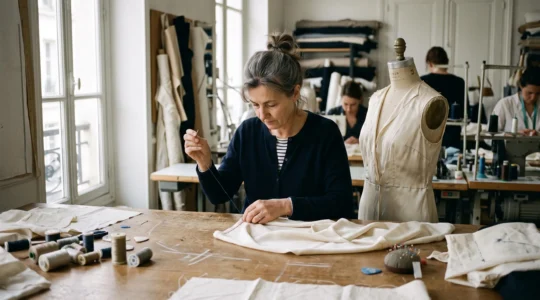
What Makes a Couture Garment Worth Hundreds of Hours Beyond the Label ?
A couture garment is worth its hours when the work produces something that cannot be judged by appearance alone: a more individual fit, carefully controlled structure, considered fabric behaviour and finishing suited to the design. The price reflects not simply…
Read more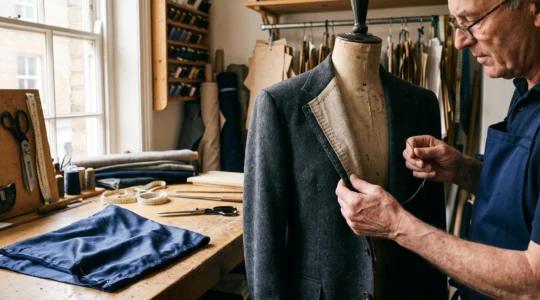
How Can You Tell When Artisanal Techniques Actually Improve a Garment’s Performance ?
Hand-finished buttonholes, carefully shaped lapels and hand-set sleeves can justify a higher clothing price, but the presence of visible hand stitching does not automatically mean a garment will last longer or feel better. The meaningful difference lies in what the…
Read more