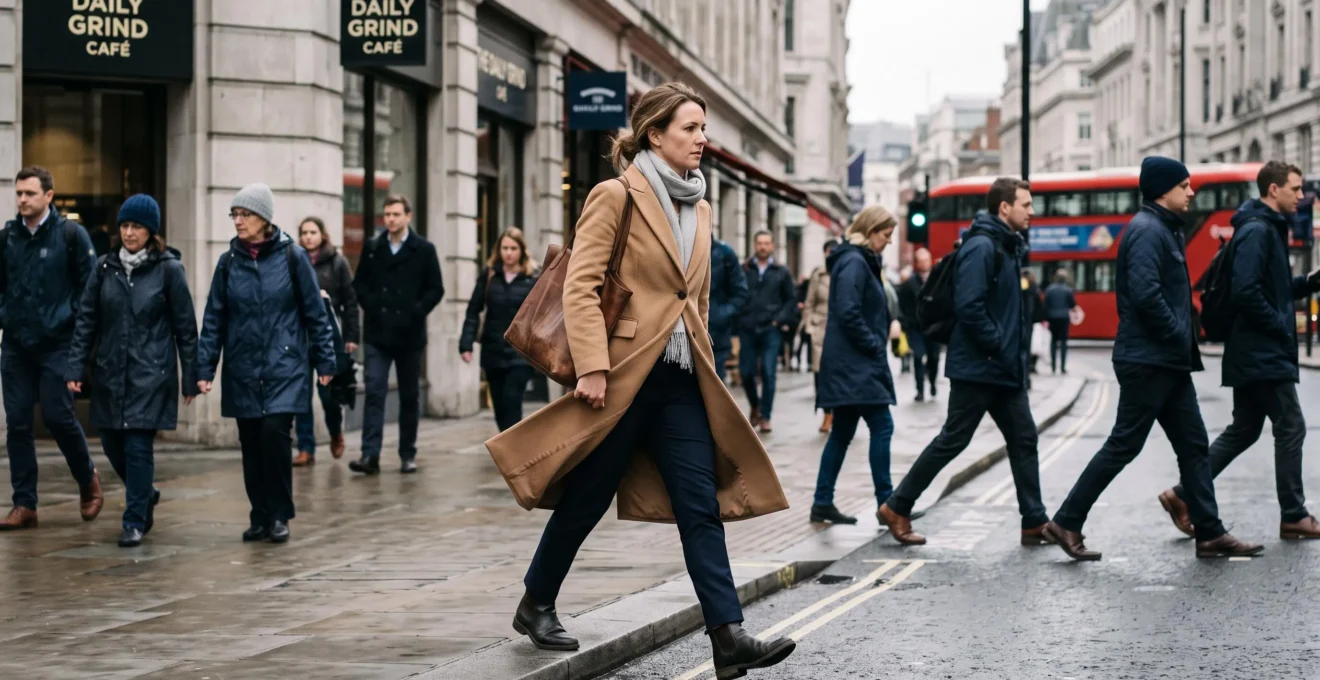
Beautiful clothes should still feel beautiful after a crowded train journey, an afternoon at your desk and a brisk walk through unexpected rain. Yet an outfit that looks effortless in the mirror can become a collection of small irritations once real life begins.
Functional beauty means choosing clothes that look good while allowing you to move comfortably, manage daily conditions and wear them repeatedly. It is not a rejection of tailoring, interesting proportions or personal style. It is a more demanding definition of good design: appearance and usability must succeed together.
For UK city dwellers, that means considering the full journey rather than the photograph. A coat needs to work over office layers, trousers must survive hours of sitting and walking, and shoes should remain comfortable beyond the first few minutes.
The practical approach is to test garments in motion, identify the construction details that cause friction and spend more only where better performance will improve your actual week.
Functional beauty: the essentials
- Test movement before appearance becomes a purchase decision. Sitting, reaching, bending and walking reveal problems that a mirror can conceal.
- Prioritise fit, construction and fabric behaviour together. An expensive material cannot rescue a garment that restricts everyday movement.
- Invest where discomfort occurs most frequently. Shoes, trousers and outerwear generally deserve attention before rarely worn statement pieces.
- Why Do Beautiful Clothes Become Annoying the Moment You Start Moving?
- How to Test Wearability in 6 Moves So You Don’t Buy “Pretty but Useless” Clothes?
- Better Fabric or Better Cut: Which Improves Daily Comfort More?
- The Detail That Forces You to Fidget All Day and Shortens Garment Life
- When Should You Invest in Function-First Pieces to Feel the Difference Immediately?
- Why Can a “Light” Handbag Still Hurt Your Shoulder After 20 Minutes?
- Coat, Shoes, or Trousers: Where Does Spending More Pay Off the Most?
- What Does a Well-Constructed Wardrobe Look Like When You Actually Wear It Weekly?
Why Do Beautiful Clothes Become Annoying the Moment You Start Moving?
Beautiful clothes become frustrating when their design works in a stationary position but fails to accommodate everyday movement. A garment may hang perfectly while standing yet pull, twist or shift when walking, sitting or reaching. The problem is often insufficient ease, unsuitable proportions or poorly positioned seams rather than the garment’s appearance or price.
Static beauty and dynamic beauty are different tests. Static beauty concerns silhouette, colour, proportion and drape when the body is still. Dynamic beauty concerns whether those qualities survive changes in posture without creating pressure or requiring repeated adjustment.
Retail photography and fitting-room mirrors primarily show stationary appearance. They rarely demonstrate how a waistband behaves on a bus seat or whether a coat allows you to reach an overhead rail. That makes movement testing an important part of judging clothing before purchase.
Four common warning signs deserve attention:
- A dropping or shifting rise: trousers slide down while walking or pull uncomfortably when seated.
- Restrictive sleeves: reaching forward lifts the entire jacket or creates tension across the upper arms.
- A rising hem: a dress or skirt moves significantly upwards when sitting and needs repeated correction.
- An unstable neckline: the opening shifts or gapes whenever your posture changes.
The distinction between poor sizing and poor design matters. A waistband that feels uniformly tight may need a different size. A waistband that fits while standing but digs into the abdomen whenever you sit may indicate an unsuitable rise, construction or pattern shape. Sizing up will not necessarily solve that problem.
26%
An estimated 26% of clothing items in wardrobes surveyed for WRAP’s UK research commissioned in 2021 had not been used during the previous year. The research did not establish whether discomfort caused that non-use.
An appealing purchase that repeatedly stays in the wardrobe is unlikely to deliver good value. Cost per wear depends on actual use, not the number of occasions imagined when buying it. For example, a hypothetical £120 garment worn 40 times costs £3 per wear, while one worn four times costs £30 per wear, before care and repair costs.
The practical question is whether the garment remains comfortable once your normal movements begin, rather than whether it looks impressive during a brief fitting.
That distinction becomes particularly useful in the fitting room, where a short sequence of realistic movements can expose problems before they become expensive wardrobe mistakes.
How to Test Wearability in 6 Moves So You Don’t Buy “Pretty but Useless” Clothes?
Test a garment by sitting, bending, raising your arms, walking, crossing your arms and rotating your torso. Each movement should reveal whether the clothing restricts movement, shifts excessively, creates pressure or fails to recover its shape. This six-move routine is a practical shopping method, not a clinically validated fitting test.
Perform the movements while wearing the layers and footwear you would normally combine with the garment. A winter coat tested over a thin top may behave very differently over a jumper and work shirt.
Use the following sequence during a fitting-room visit:
- Sit naturally. Check whether trousers tighten across the abdomen, buttons pull, linings become restrictive or a skirt rides up. Think of desk work, train journeys and long meetings.
- Squat or bend. Watch for pulling across the seat, hips and knees. This simulates picking up a shopping bag, helping a child or bending during everyday errands.
- Raise both arms. Notice whether the shoulders bind, the sleeves twist or the hem rises excessively. Imagine reaching for a high shelf or an overhead handrail.
- Walk a loop and use stairs where possible. Check for slipping waistbands, restrictive strides, chafing or hems that catch. This resembles walking between platforms or climbing station stairs.
- Hug yourself or cross your arms. Look for tension across the back, shoulders and upper sleeves, particularly in jackets and coats.
- Rotate your torso. Turn gently from side to side and check whether seams, fastenings or the lining resist the movement. This is relevant when driving, cycling or reaching sideways at a desk.
Do not force a deep squat in a restrictive garment or an unsuitable fitting-room space. A comfortable partial bend is enough to reveal many problems.
Different garments require different interpretations. For trousers, concentrate on the waistband, crotch, seat and knees. For coats, prioritise shoulder mobility, sleeve movement and the ability to fasten comfortably over layers. For dresses, check seated coverage, neckline stability and freedom of stride.
Two additional observations are easy to miss. First, inspect stress points while seated: pulling around a button, pocket opening or lining can reveal tension even when the outside looks smooth. Second, check recovery after movement. If knees remain baggy or creases stay sharply distorted, consider how the fabric may look after a full working day.
Some natural fabrics crease readily without being defective, and a few temporary fitting-room wrinkles do not predict garment failure. The useful warning is persistent distortion or loss of shape, particularly when combined with uncomfortable tension.
Your five-point fitting-room decision checklist
- Identify three regular activities. Write down the movements this garment must accommodate, such as sitting at work, climbing station stairs and reaching overhead.
- Complete the six-move test. Record the first movement that causes pulling, shifting or pressure, or write “none” if it passes.
- Inspect the stress zones. Note any strained buttons, stretched seams, restrictive linings or uncomfortable fastenings.
- Check fabric recovery. Compare the garment before and after moving, noting persistent bagging, twisting or unwanted creases.
- Make a purchase decision. Record “buy”, “try another size or cut” or “reject”, with one specific reason.
A garment that passes your real-life movements has cleared the first hurdle. The next decision is whether its comfort comes from the material, the pattern or a successful combination of both.
Better Fabric or Better Cut: Which Improves Daily Comfort More?
Cut usually deserves priority when a garment restricts movement, while fabric becomes particularly important for skin comfort, temperature management, washing and long-term appearance. An excellent fabric cannot compensate for a badly placed armhole or unsuitable trouser rise. Conversely, an excellent cut may still disappoint if the material feels unpleasant or deteriorates quickly.
Cut determines how a garment accommodates the body. Fabric determines much of what the wearer feels against the skin and how the garment behaves during use and care. Neither can be judged independently of the other.
A moderately priced pair of trousers with an appropriate crotch curve and enough ease may be more wearable than luxury trousers that bind whenever you sit. Likewise, an affordable coat with suitable shoulder shaping may allow easier movement than an expensive coat with restrictive armholes.
That is a practical comparison rather than a universal rule: performance depends on the actual garments, not their price categories.
The decision changes with the type of clothing. The following comparison helps identify where to concentrate your attention.
| Garment or use | Prioritise cut | Prioritise fabric |
|---|---|---|
| Work trousers | Rise, seat, crotch curve and leg mobility | Recovery, abrasion resistance and ease of care |
| Structured coats | Shoulders, armholes, layering ease and sleeve shape | Weather protection, weight, lining and breathability |
| Next-to-skin tops | Avoid restrictive seams and excess tension | Skin feel, breathability and wash tolerance |
| Everyday knitwear | Comfortable proportions and unrestricted movement | Shape retention, skin feel and pilling resistance |
Assess fabric through performance rather than fibre content alone. Weight affects drape and portability. Stretch influences movement, but recovery determines whether the garment regains its shape. Breathability affects comfort across changing temperatures, while wrinkle behaviour and washing tolerance affect how much maintenance is required.
A 100% natural-fibre label does not guarantee better everyday performance. Fibre blends may offer useful properties, including improved stretch or easier maintenance, depending on their construction and finishing. Equally, a synthetic blend is not automatically durable or breathable simply because it is marketed as practical.
Pattern details can be less obvious than composition labels. Armhole depth, shoulder slope, sleeve angle and crotch shape all influence where tension appears. These elements are difficult to evaluate through product descriptions alone, which is why physical movement tests remain valuable.
WRAP‘s guidance on clothing reuse identifies factors such as fit, adjustable design features, care and willingness to wear garments repeatedly as relevant to extending clothing use. It does not establish a quantified advantage for any specific cut or fibre.
When the problem is concentrated in one high-movement area, the answer often lies in construction details rather than the fabric label. Those same pressure points can also influence how a garment wears over time.
The Detail That Forces You to Fidget All Day and Shortens Garment Life
The overlooked detail is the stress point: an area where a garment repeatedly pulls, rubs or restricts movement. Tight armholes, a shallow trouser crotch, an inflexible waistband or restrictive cuffs can create discomfort and concentrate strain around seams and fastenings. Repeated tension may also contribute to visible wear, although durability depends on fabric and construction.
Stress points are often more revealing than a garment’s overall appearance. A jacket may look beautifully proportioned while standing, yet its armholes may restrict forward reaching. Trousers can hang smoothly but create excessive tension across the seat whenever the wearer bends.
When clothing behaves this way, people commonly respond by pulling down hems, repositioning sleeves or adjusting waistbands. Those corrections may briefly relieve discomfort without addressing its cause.
Mechanical wear is a separate but related concern. Repeated pulling can place additional load on buttons, stitching and seams. Concentrated rubbing can contribute to abrasion around cuffs, inner thighs and pocket openings. Persistent strain may also distort certain fabrics over time.
None of these outcomes is inevitable. A garment’s lifespan also depends on material strength, sewing quality, frequency of use, laundering and repair. Nevertheless, identifying unnecessary stress before purchase is a sensible precaution.
Inspect construction in areas that move most:
- Armholes and shoulders: look for seam tension when reaching forwards and check whether the lining restricts motion.
- Seat and crotch: inspect for excessive pulling during sitting or bending.
- Waistbands and closures: check whether buttons, hooks or zips remain stable without digging into the body.
- Pockets and cuffs: examine seam finishing, reinforcement where needed and whether hardware rubs against skin.
- Interior seams: assess rough edges, bulky joins and whether a flat-felled or otherwise well-finished seam is appropriate for that garment.
Reinforcement is helpful where a particular design experiences substantial stress, but more stitching or heavier construction does not automatically make clothing comfortable. A strong seam attached to a restrictive pattern can simply preserve the uncomfortable shape.
Repairability also deserves consideration. A loose button or damaged seam may be straightforward to mend. Repeated fabric failure across a tightly stressed area is more difficult to address because repairing the damage may not remove the underlying fit problem.
Before buying, determine whether the point of tension can realistically be corrected through alteration. Minor adjustments may be worthwhile; rebuilding an unsuitable shoulder or crotch shape may be impractical relative to the garment’s value.
Once those hidden weaknesses become easier to recognise, spending decisions can focus on improving daily performance rather than simply purchasing more expensive versions of the same problems.
When Should You Invest in Function-First Pieces to Feel the Difference Immediately?
Invest in function-first clothing when discomfort occurs frequently, affects essential movements or makes you avoid an item you otherwise need. Everyday shoes, commuting coats and regularly worn trousers often provide the clearest opportunities. The right upgrade should improve the next normal working day, rather than promising an abstract improvement that is difficult to notice.
Frequency of use matters more than prestige. A piece worn through several hours of travel, sitting and walking has many opportunities to succeed or fail. A special-occasion garment worn briefly indoors has far fewer demands.
Start by identifying the category causing the greatest friction. If your feet feel uncomfortable during the walk from the station, investigate footwear first. If you constantly adjust your waistband at work, focus on trousers. If your coat makes you overheat on public transport or restricts movement over winter layers, outerwear may offer the most useful improvement.
The immediate-difference test is straightforward: what changes on the first ordinary day of use?
- You can complete your normal walk without needing to change shoes because of discomfort.
- You remain seated through a meeting without repeatedly adjusting trousers.
- You can carry everyday belongings, move your arms and manage indoor temperature more comfortably in your coat.
These are observable benefits, unlike a purchase justified solely by how flattering the item looks in a photograph.
A hypothetical wardrobe upgrade illustrates the sequencing principle. Suppose someone’s largest daily irritation is a pair of trousers that digs in during commuting and desk work. Replacing those trousers with a suitable cut may improve several hours of each workday. Buying another stylish shirt would leave the main problem untouched.
This does not mean buying the most expensive available garment. First establish the required performance, then compare suitable options at different price points. A correctly fitting mid-priced item may solve the problem without a premium purchase.
The opposite case also matters. Spending heavily on technical performance features for an outfit worn occasionally at a short indoor event may provide little practical benefit. Appearance, personal preference and occasion-specific requirements can reasonably take priority there.
Function-first purchasing should therefore be selective. It is an approach to allocating wardrobe resources, not a requirement that every garment resemble performance sportswear.
That same principle applies beyond clothing. Bags, in particular, can appear practical on a product page while creating unexpected discomfort once loaded for a real commute.
Why Can a “Light” Handbag Still Hurt Your Shoulder After 20 Minutes?
A lightweight handbag can become uncomfortable because its empty weight does not describe the pressure created when it is loaded and carried. Strap width, stiffness, attachment points, bag position and the amount being carried all affect comfort. A narrow strap can concentrate pressure on a small area even when the bag itself feels light.
Think about the complete carrying system rather than the accessory alone. A handbag containing a laptop, water bottle, keys and daily essentials behaves differently from the same bag displayed empty in a shop.
Load distribution matters. A wider or padded strap can spread contact pressure across a larger surface, provided it fits comfortably. A rigid edge or large metal fitting resting directly on the shoulder may create a concentrated pressure point.
Strap drop also affects where the bag rests. A bag positioned closer to the torso may swing less during walking, although shorter straps are not automatically better for every body or carrying style. A structured bag may hold its contents predictably, but rigidity can become uncomfortable if hard edges press into the body.
A 2014 study in the Journal of Physical Therapy Science investigated 20 healthy university students carrying shoulder bags or backpacks while walking on a treadmill. Researchers observed higher activity in certain neck and trunk muscles with shoulder-bag carriage, but found no significant relationship between muscle activity and the strap lengths tested.
The study did not test fashion handbags or establish that a particular bag causes pain after 20 minutes. It supports considering carrying configuration while leaving individual comfort to be assessed in practice.
When trying a bag, fill it with a realistic load where the retailer permits. Walk for several minutes, notice whether the strap slips or digs in, and check whether you instinctively raise one shoulder to keep it in position. Remove and replace the bag several times to see whether its fittings interfere with normal use.
Afterwards, notice how the shoulder and neck feel. The aim is to identify local pressure and discomfort rather than diagnose any medical condition.
Carrying habits can also change the experience. Using the same shoulder continuously, carrying unnecessary items or allowing a bag to swing heavily may contribute to discomfort. Switching sides, adjusting the strap, reducing the load or choosing a suitable backpack may help without replacing the handbag.
Persistent pain, numbness or weakness warrants individual medical advice rather than relying on accessory adjustments alone.
The lesson applies to larger wardrobe investments too: a premium feature has value only when it improves how an item performs during actual use.
Coat, Shoes, or Trousers: Where Does Spending More Pay Off the Most?
For a typical UK commuter who walks regularly, shoes are a sensible first investment, followed by a suitable coat and then well-fitting trousers. However, that order changes with lifestyle, workplace expectations and existing wardrobe problems. Spend more only when the additional cost buys a relevant improvement in fit, construction, durability or performance.
These categories matter because they experience repeated movement, prolonged wear or exposure to changing conditions. Yet a higher price alone is not evidence of better comfort or longevity.
Footwear deserves early attention when walking forms a substantial part of the day. Look for a suitable shape, enough toe room, reliable fastening and appropriate cushioning. Construction that permits resoling may improve repair options, but only if the design is suitable for the wearer and the service is practical.
Guy’s and St Thomas’ NHS Foundation Trust advises approximately 1 cm of space between the longest toe and the end of the shoe in its footwear guidance for reducing foot pain. It also recommends secure adjustable fastenings and warns against relying on uncomfortable shoes becoming suitable after breaking in. These are clinical fitting recommendations, not evidence that more expensive shoes are better.
For coats, additional spending may be worthwhile when it produces a meaningful improvement in weather protection, fabric performance, lining, fastening quality or comfortable movement over layers. An expensive coat that restricts the shoulders or performs poorly in the rain offers limited practical value for a daily commute.
For trousers, the important features are cut, rise, mobility, fabric recovery and construction quality. A better waistband or more suitable pattern may be more valuable than luxury fabric or a designer label.
The comparison becomes clearer when the three categories are assessed against the same daily requirements.
| Investment factor | Shoes | Coats | Trousers |
|---|---|---|---|
| Repeated movement | Walking and standing | Walking, reaching and layering | Sitting, bending and walking |
| Weather exposure | Wet surfaces and changing conditions | Rain, wind and temperature changes | Variable indoor and outdoor conditions |
| Construction priorities | Fit, secure fastening, sole and repairability | Shoulders, outer fabric, lining and closures | Rise, seat, seams and fabric recovery |
| Most noticeable failure | Foot pressure or discomfort | Poor protection or restricted movement | Digging, pulling or repeated adjustment |
These pieces also influence the performance of an entire outfit. Shoes that make walking uncomfortable can undermine otherwise excellent workwear. A poorly fitting coat can restrict movement over a carefully chosen outfit, while badly cut trousers may remain distracting throughout the day.
To establish your personal ranking, consider three questions: Which item do you wear most often? Which failure causes the greatest disruption? Which replacement would solve a problem you experience this week?
People who walk extensively may prioritise shoes. Those who spend long periods outdoors may benefit more from outerwear. In formal workplaces where trousers are worn for extended desk hours, tailoring and fit may become the first concern.
Once those priorities are clear, the next task is to organise the whole wardrobe around reliable weekly use rather than isolated purchases.
Key takeaways before rebuilding your wardrobe
- Identify the garments causing the greatest discomfort or repeated adjustment, rather than replacing everything at once.
- Judge high-use foundation pieces by the practical conditions they must handle, including walking, sitting, weather and maintenance.
- Use actual wear frequency and reasons for non-use to guide future purchases, repairs and alterations.
What Does a Well-Constructed Wardrobe Look Like When You Actually Wear It Weekly?
A well-constructed wardrobe covers an ordinary week without forcing you to avoid activities, repeatedly adjust clothing or change outfits because they cannot cope with movement. Its foundation pieces work together across commuting, desk work, errands and social plans. The measure of success is reliable use, not the total number of garments owned.
Such a wardrobe does not require a fixed capsule size, a prescribed colour palette or a particular fashion aesthetic. It requires enough compatible pieces to support the wearer’s routine, with fewer avoidable problems around fit, care and comfort.
For many UK city dwellers, that means dependable footwear, appropriately fitted trousers and outerwear that accommodates both layering and changing weather. Knitwear, shirts, dresses and statement pieces can then offer more stylistic freedom without compromising the reliability of those foundations.
Start with evidence from your existing wardrobe. For two to three weeks, keep a simple wear diary. Record what you actually choose, how each garment performs and which pieces remain unworn despite being available.
A useful diary might include the garment, date worn, activity, adjustments needed, comfort observations and whether you would willingly choose it again. Keep the method simple enough to maintain consistently.
At the end, sort your clothing into practical groups:
- Reliable pieces: worn regularly, comfortable during intended activities and easy to combine with other items.
- Fixable pieces: potentially useful garments needing an alteration, repair or a more suitable styling combination.
- Occasion-specific pieces: clothing that serves a genuine but infrequent purpose.
- Unworkable pieces: garments avoided because of persistent fit, movement, fabric or maintenance problems that cannot reasonably be resolved.
A rarely worn item is not automatically wasteful. Formalwear and seasonal clothing may be useful despite infrequent use. The more important distinction is whether an item has a clear purpose or remains unworn because it repeatedly disappoints.
WRAP’s UK clothing research, commissioned in 2021, reported an average of 118 clothing items per respondent, including underwear, socks and hosiery. Its findings underline the distinction between owning clothing and using it, without establishing an ideal wardrobe size or proving that comfort determines utilisation.
Use your diary to identify patterns. If several trousers remain unworn because their waistbands dig in, buying another similar pair is unlikely to solve the problem. If your most comfortable shoes appear throughout the diary, their characteristics can guide your next footwear purchase.
Over time, a functional wardrobe may contain a higher proportion of movement-compatible everyday garments and fewer duplicated pieces that serve poorly defined purposes. The exact proportions should depend on how you live, including work requirements, climate, laundry arrangements and personal taste.
A useful final test is to assemble outfits for the coming week. Consider the journey to work, the hours spent sitting or standing, errands, social activities and likely weather. Each outfit should be wearable throughout its intended activities without unnecessary clothing adjustments or avoidable discomfort.
Begin with one ordinary week: record what you wear, identify the item that interrupts your day most often and test a better-fitting alternative before spending. Functional beauty is achieved when clothing retains its visual appeal while becoming easier to live in — allowing your attention to remain on the day rather than the outfit.
Can functional clothing still look elegant and tailored?
Yes. Functional clothing can use tailored silhouettes, structured fabrics and refined details. The essential requirement is that its construction accommodates normal movement. Appropriate shaping, adequate ease and suitable materials allow elegance and comfort to coexist without requiring an oversized or overtly technical appearance.
How can you assess clothing bought online when fitting-room tests are impossible?
Check garment measurements, fabric composition, stretch information, care instructions and the retailer’s returns policy before ordering. Compare measurements with a similar garment you already wear comfortably rather than relying on size labels alone. When the item arrives, perform movement tests indoors while preserving its return eligibility under the retailer’s applicable terms.
Does wrinkle-resistant clothing always perform better during commuting?
No. Wrinkle resistance can help clothes maintain a neat appearance after sitting or travelling, but it does not guarantee breathability, softness, good fit or durability. Some fabrics crease easily while remaining comfortable and suitable for repeated wear. Assess the complete garment against your practical requirements rather than treating crease resistance as a universal quality measure.
Is repairing an uncomfortable garment worthwhile?
Repairs and alterations can be worthwhile when the problem is specific and correctable, such as a damaged seam, loose fastening or adjustable hem. However, a fundamentally unsuitable pattern may remain uncomfortable after minor alterations. Ask a qualified alterations specialist whether the proposed work can address the actual fit problem before committing to the expense.
How do you know when a functional wardrobe is complete?
There is no universal finishing point or ideal number of clothes. A practical benchmark is whether your current wardrobe covers regular activities, changing conditions and appropriate occasions without persistent comfort problems or avoidable gaps. Review it periodically as routines, seasons and clothing condition change, rather than treating completion as a reason to stop evaluating what you actually wear.