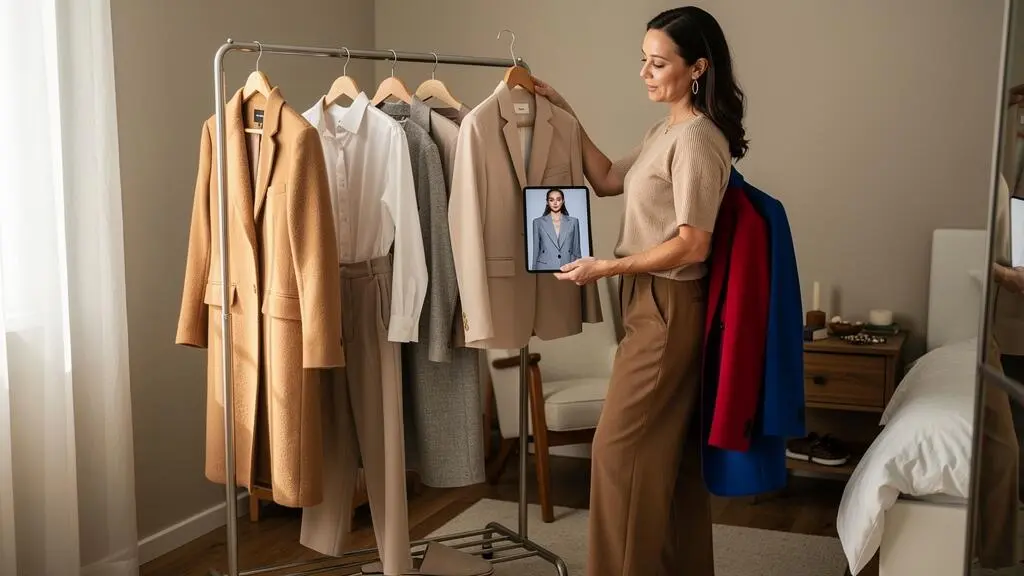
Fashion moves internationally faster than most wardrobes can realistically adapt. A silhouette emerges on a runway, gains visibility through influencers, appears across high-street collections and suddenly seems indispensable. Weeks later, the same look can feel exhausted. The problem is not an interest in fashion trends. It is confusing visibility with lasting relevance.
The most effective way to use global fashion currents is to treat them as design information, not shopping instructions. Identify the wider direction behind a look, translate one useful element into your existing style and assess whether it will remain wearable when the online conversation moves elsewhere.
For UK fashion enthusiasts navigating London street style, international fashion weeks, social media and high-street retail, this distinction matters. A trend might be visually compelling in Copenhagen, Paris or Seoul yet unsuitable for your daily commute, workplace or personal proportions.
Selective adoption allows fashion to remain expressive without making every new season a reason to rebuild your wardrobe.
How to follow fashion without becoming dependent on trends
- Read the direction, not the hype: distinguish broader changes in silhouette, fabric and styling from viral products that depend on novelty.
- Translate rather than imitate: introduce one new visual element into outfits built around pieces you already wear.
- Buy for continued usefulness: assess wardrobe compatibility, timing and occasion before committing to a trend.
- Why Do Some Trends Explode in 2 Weeks Then Disappear Overnight?
- How to Turn a Runway Trend Into One Wearable Detail Without Looking Costume-Like?
- Trend-Led or Theme-Led Wardrobe: Which Keeps Your Style Coherent All Year?
- The Trend-Stacking Mistake That Makes You Look Dated Faster
- When Should You Buy Into a Trend So It Still Feels Fresh After 6 Months?
- The Styling Mistake That Makes You Look Overdone in Under 30 Seconds
- The Code-Clash Mistake That Makes an Outfit Feel Confusing Instantly
- How Do You Read Aesthetic Codes So You Don’t Misjudge a Dress Code?
Why Do Some Trends Explode in 2 Weeks Then Disappear Overnight?
Some fashion trends appear and vanish quickly because social media visibility can accelerate faster than genuine wardrobe adoption. A distinctive item attracts attention, receives repeated exposure, becomes familiar and eventually loses its novelty. The apparent collapse may reflect declining online interest rather than universal rejection. Understanding this difference helps prevent purchases driven mainly by temporary recognition.
A useful way to interpret trend diffusion is through four stages:
- Seed: a new idea develops within a designer collection, subculture, creative community or existing fashion movement.
- Acceleration: influential accounts, media coverage and platform recommendations make the idea increasingly visible.
- Saturation: retailers and consumers reproduce the look widely, reducing its perceived originality.
- Burnout: attention moves towards another novelty, although some elements may remain useful or evolve into established styles.
This is an interpretive model, not a fixed timetable. Not every trend follows the same sequence, and a platform’s attention cycle does not establish how long an individual garment will remain fashionable.
The distinction between micro-trends and macro-currents is especially important. A viral handbag shape or extremely specific styling combination may derive much of its appeal from immediate recognisability. By contrast, a broader movement towards relaxed tailoring, for example, can influence multiple garments and accommodate different personal interpretations.
The University of Minnesota‘s fashion trend research textbook provides a framework for understanding how design changes interact with products, consumers and cultural contexts. Its wider forecasting approach encourages observation of recurring patterns rather than treating individual fashionable objects as definitive evidence of lasting change.
A practical diagnostic is to ask whether the trend offers something beyond being recognisable. Does the silhouette improve comfort? Does the colour work with clothing you own? Does the material suit your environment?
57%
Of respondents in Oxfam’s 2026 UK State of Style report said they felt pressure to update their wardrobes to keep up with changing trends. This is a reported perception, not evidence that every pressured consumer makes unnecessary purchases.
Oxfam GB, State of Style 2026.
Oxfam also reports that 57% said social media influenced their clothing purchases. These findings illustrate why heightened visibility deserves scrutiny before it becomes a shopping decision.
Buying at peak saturation presents another potential problem: a highly recognisable purchase can lose its novelty quickly, while resale demand may be uncertain. However, there is no universal evidence that every saturated trend suffers an immediate price collapse. Brand, condition, scarcity and continuing demand all matter.
A trend that serves an existing practical or aesthetic preference is more likely to remain personally relevant after the attention fades. The next challenge is converting that insight into something genuinely wearable.
How to Turn a Runway Trend Into One Wearable Detail Without Looking Costume-Like?
To make a runway trend wearable, identify one distinctive feature and integrate it into clothing you already understand. Choose a proportion, texture, colour or accessory rather than reproducing the complete look. Keeping the other styling decisions familiar preserves your personal identity while allowing the new influence to register as deliberate.
Runway outfits are designed to communicate a collection’s ideas clearly, often through exaggerated combinations. A dramatically shaped jacket, contrasting colour palette, unusual footwear and sculptural jewellery may reinforce one another in an editorial setting. Reproducing every element for everyday use can make the result feel costume-like.
The issue is not that dramatic fashion is inherently unwearable. It is that too many unfamiliar visual codes can exceed what your usual wardrobe and environment comfortably support.
Use the one-variable translation method to separate an appealing fashion direction from its presentation.
| Runway feature | Wearable interpretation | What stays familiar |
|---|---|---|
| Extreme shoulder volume | A blazer with slightly stronger shoulder construction | Usual trousers, knitwear and shoes |
| Head-to-toe saturated colour | One coloured cardigan or scarf | Existing neutral palette |
| Heavy textural layering | One tactile knit or textured jacket | Simple silhouettes and accessories |
| Experimental accessories | One distinctive belt or sculptural piece of jewellery | Established outfit proportions |
Consider a hypothetical runway look featuring an oversized burgundy coat, sheer skirt, metallic boots and substantial jewellery. Someone with a practical, understated wardrobe might extract only the coat colour and introduce it through a conventional wool jacket. The influence remains visible without requiring an entirely new outfit.
Research also supports distinguishing runway presentation from wider consumer adoption. A 2024 scientific study of fashion trend diffusion compared autumn-winter 2022 runway collections, Korean fashion influencers and popular retail products. The researchers found stronger similarities between influencer outfits and popular retail items than between runway looks and those retail products, while silhouette characteristics overlapped across the groups.
The study does not establish an identical pattern for UK shoppers, but it illustrates why runway inspiration should not be treated as a literal retail instruction.
For a practical translation exercise, save or photograph the look, name its separate styling decisions, then select the element that can work with at least a few existing outfits. Test that element through restyling before considering a purchase.
When the trend consists of an entire statement garment, such as a dramatic coat or bold print, extraction may be impossible. Instead, neutralise the surrounding outfit through familiar trousers, restrained accessories and simple footwear. Keep the statement intact, but reduce competition for attention.
Environment affects how far the translation can go. An experimental silhouette might feel entirely appropriate in a creative studio yet distracting in a conservative office. Neither context provides a universal standard of good taste.
Once an individual influence becomes wearable, the larger question is whether it belongs to a consistent personal wardrobe or simply adds another unrelated purchase.
Trend-Led or Theme-Led Wardrobe: Which Keeps Your Style Coherent All Year?
A theme-led wardrobe usually provides greater year-round coherence because new purchases reinforce a recognisable personal style instead of following every seasonal direction. A trend-led approach offers more novelty and experimentation but can create incompatible purchases. The strongest compromise is often a stable wardrobe built around personal themes, with deliberate room for selected trends.
A trend-led wardrobe responds primarily to what is currently receiving attention. One season might encourage minimalist tailoring, another romantic detailing, and another expressive sportswear. Each direction can be attractive individually without working well alongside the others.
A theme-led wardrobe begins from recurring preferences. Someone might choose architectural tailoring, relaxed workwear and muted texture as three defining themes. New fashion currents are assessed according to whether they strengthen those themes.
| Decision factor | Trend-led wardrobe | Theme-led wardrobe |
|---|---|---|
| Purchase trigger | Seasonal visibility and novelty | Compatibility with personal style |
| Visual coherence | Requires frequent coordination | Built around recurring design principles |
| Experimentation | Frequent and wide-ranging | Selective and theme-compatible |
| Shopping effort | Can require continual reassessment | Uses established purchase criteria |
| Main risk | Disconnected garments | Excessive predictability if too restrictive |
The difference is not inherently between fashionable and unfashionable clothing. Someone who dresses around soft tailoring can adopt new proportions, emerging colours or contemporary footwear while retaining a consistent visual identity.
Use two or three personal style themes as buying filters. Before purchasing something, ask which theme it belongs to and what existing garments will support it. If no convincing answer emerges, the item may be more compelling as an image than as a wardrobe addition.
The financial implications deserve attention, but the relationship is not as simple as assuming that interest in trends automatically produces wasteful behaviour.
A 2024 study of 420 US consumers, examining trend sensitivity, personal style orientation and frugality, found positive associations between these factors and sustainable clothing-use practices. The findings were observational and based on self-reported behaviour; they do not establish that following trends causes more sustainable consumption.
The lesson is that trend awareness and wardrobe longevity can coexist, provided acquisition is separated from the pleasure of discovering fashion.
A controlled trend allowance helps maintain that balance. Rather than prescribing a universal percentage, set a personal limit based on available wardrobe space, disposable income and genuine enjoyment of change. Someone who loves experimentation may reasonably reserve more room for novelty than someone who prefers consistency.
The less visible cost of an unstructured approach is decision fatigue. A crowded wardrobe can offer fewer usable outfits when its pieces follow incompatible aesthetic directions. Shopping effort increases while outfit planning becomes harder.
Personal themes create continuity, but individual outfits still need editing. Even trend-compatible purchases can become dated-looking when too many recognisable seasonal signals appear together.
The Trend-Stacking Mistake That Makes You Look Dated Faster
Trend-stacking happens when an outfit combines several highly recognisable micro-trends from the same fashion moment. The result may initially appear current, but it can become strongly associated with that specific period. When one conspicuous detail loses favour, the entire combination may feel dated, even though the individual garments remain wearable.
Imagine a hypothetical outfit combining a viral jacket shape, an equally recognisable seasonal shoe, a fashionable colour combination and a currently prominent accessory. None of these choices is necessarily poor. Together, however, they may make the outfit identifiable primarily by its trend references rather than its wearer’s individual style.
Each micro-trend can have a different attention cycle. An outfit containing several such details creates multiple opportunities for the combination to feel less current. The principle is a useful styling heuristic, not a statistically demonstrated rule about garment expiry.
The practical safeguard is one highly recognisable trend per outfit, supported by mostly familiar garments. A directional shoe might work with reliable tailoring, while an experimental jacket might benefit from conventional denim and understated footwear.
This does not mean every outfit should be minimalist. Maximalism can incorporate prints, contrasting textures, dramatic proportions and multiple references without looking accidental.
The distinction is coherence. Deliberate maximalist dressing often relies on recurring colour relationships, a consistent period influence, personal styling signatures or a carefully managed contrast. Accidental trend-stacking relies mainly on the fact that several pieces happen to be fashionable simultaneously.
Try a mirror test: could someone plausibly identify the exact fashion season being referenced? If the answer is obvious and that is not your intention, replace one strongly seasonal element with a familiar wardrobe staple.
Another useful test is to remove the most recognisable trend piece mentally. Does the remaining outfit still make sense? If not, the combination may rely too heavily on the excitement of individual products rather than an underlying styling idea.
A coherent outfit can accommodate several bold elements, but any new purchase still needs sensible timing. Finding the right interpretation of a trend often matters more than securing its earliest available version.
When Should You Buy Into a Trend So It Still Feels Fresh After 6 Months?
The safest time to adopt a fashion trend is often after its initial novelty has developed into several wearable interpretations, but before buying becomes an automatic response to saturation. There is no universal six-month guarantee. A purchase is more likely to remain satisfying when it fits existing outfits, serves a practical purpose and does not depend on continuing public attention.
Buying early offers a distinctive benefit: the opportunity to wear a new direction before it becomes widespread. For someone who genuinely enjoys fashion experimentation, that may be worth paying for.
But early adoption also brings uncertainty. Initial designs may emphasise visual impact over everyday usefulness, while subsequent interpretations may offer more versatile fabrics, proportions or construction.
At peak visibility, buyers benefit from abundant examples and easier recognition of the trend. Yet social familiarity can make a purchase feel less distinctive shortly afterwards.
Later interpretations may be more useful because they have moved beyond literal imitation. A dramatic runway silhouette might become a subtly shaped high-street jacket, or an experimental colour palette might appear in a fabric and cut that suit an established wardrobe.
Look for three observable signals before committing:
- Multiple interpretations: the direction appears across different garments, rather than being confined to one viral product.
- Styling adaptation: people combine it with different personal aesthetics instead of reproducing the same outfit.
- Reduced novelty language: coverage and styling discussions increasingly focus on how the item works, rather than merely announcing its arrival.
These are decision cues, not proof that the trend has reached a particular scientific lifecycle stage. Mainstream availability can indicate diffusion without guaranteeing durability.
For UK shoppers, repeated exposure across different high-street collections may provide useful evidence that an idea is becoming adaptable. It can also signal substantial saturation. The stronger indicator is whether the specific version suits your life.
The five-step trend purchase audit
- Identify the actual attraction. Write one sentence naming the fit, fabric, colour or styling feature you want, rather than the trend’s social media label.
- Build three existing outfits. Photograph or lay out three combinations using clothes you already own, with the proposed purchase as the only addition.
- Check six-month relevance. Write down at least two realistic occasions when you would wear the item six months from now, even if its online popularity disappeared.
- Estimate cost per wear. Divide the proposed purchase price by an honest estimate of expected wears, and record whether the result feels acceptable for your budget.
- Document the alternative. Compare the proposed item with one existing, second-hand or differently cut option, then record a buy, delay or reject decision.
The cost-per-wear exercise is a personal planning tool, not a prediction of future value. Resale prospects also require separate judgement: construction, brand demand, condition and garment rarity can matter more than whether a trend is currently popular.
Above all, ask whether the garment will continue solving a real outfit problem when nobody is talking about it. That question strips away the least durable part of the purchase motivation.
Good timing reduces unnecessary purchases, but it does not guarantee good styling. Once a garment enters the wardrobe, the next task is controlling how much visual attention the complete outfit demands.
The Styling Mistake That Makes You Look Overdone in Under 30 Seconds
An outfit often looks overdone because too many visual elements compete for attention, rather than because any single garment is inappropriate. Strong colour, exaggerated volume, conspicuous hardware, print and statement accessories may each work independently. Combined without hierarchy, they can make the outfit difficult to interpret at a glance.
Fashion communication relies partly on visual hierarchy: the eye identifies dominant shapes, contrasts and details before considering the subtleties of individual garments.
A jacket with dramatic shoulders can provide a clear focal point. Add an equally bold patterned skirt, oversized jewellery and highly contrasting footwear, and that hierarchy may disappear.
Subtraction is usually more effective than adding another balancing statement. Before leaving, identify the outfit’s intended focal point and reduce competing signals one at a time.
This can mean swapping large earrings for smaller ones, choosing quieter footwear, removing a contrasting belt or replacing a statement bag with a simpler alternative. The objective is not to erase personality. It is to make the most important decision legible.
A single dominant feature often creates clarity; two may work well when visually coordinated; three or more can require greater styling skill and contextual awareness. These are practical guidelines rather than universal limits.
Context also changes the judgement. An embellished jacket, striking jewellery and evening footwear might suit a fashion-focused event. The same combination could feel unnecessarily elaborate at a casual coffee meeting.
Instead of asking whether an outfit is objectively too much, ask whether its level of visual intensity suits the occasion. Fashion events, creative workplaces and formal celebrations permit different kinds of emphasis than ordinary errands or restrained professional settings.
Trend pieces deserve particular attention because they are frequently designed to be noticed. Adding several of them can inadvertently create an outfit built entirely around focal points.
Use a quick final check: identify the first thing someone is likely to notice, then decide whether every other element supports it, competes with it or introduces an unrelated message.
Visual restraint alone is not sufficient when garments communicate conflicting aesthetic messages. The next judgement concerns whether different levels of formality, function and cultural association belong together.
The Code-Clash Mistake That Makes an Outfit Feel Confusing Instantly
An aesthetic code-clash occurs when clothes communicate different style registers without a clear relationship between them. Technical outerwear, formal tailoring, evening fabrics and casual footwear can coexist successfully, but they need a shared element or deliberate contrast. Without that connection, an outfit may appear unresolved rather than creatively mixed.
Aesthetic codes are the silent signals conveyed by materials, construction, silhouette, footwear and finishing. A polished leather shoe suggests a different register from a performance trainer. Crisp wool tailoring communicates differently from lightweight sports nylon.
Problems arise when separate garments appear to belong to incompatible environments and nothing explains the combination.
Consider three common examples:
- A formal blazer worn with extremely casual trousers but no connecting texture, shoe or accessory.
- A technical jacket combined with traditional business tailoring without any deliberate transition between the two.
- A highly recognisable trend item placed inside an otherwise classic outfit without a colour, proportion or styling relationship.
The solution is often a bridge item: something that shares characteristics with both registers.
A refined leather trainer, for example, may connect relaxed outerwear with tailored trousers. A simple knit can soften a formal jacket while maintaining its structured character. Alternatively, a restrained belt, consistent colour palette or carefully chosen outer layer can create continuity.
Not every outfit needs such a bridge. Strong contrast can itself be the point, particularly when it is anchored by a consistent silhouette, material quality or personal aesthetic. Intentional tension is different from combining unrelated pieces without a clear styling decision.
The read-back test makes this easier to recognise. Describe your outfit aloud using three words identifying its dominant registers, such as relaxed, tailored and modern.
If the words suggest competing intentions — perhaps sporty, corporate and evening — identify which one should lead. Then either adjust the conflicting garment or introduce a bridge that makes the relationship understandable.
There are no permanently incompatible categories. Trainers and tailoring can work together, just as technical materials can complement classic coats. What matters is the quality of the connection and whether the wearer understands the visual message.
Learning to reconcile codes within an outfit makes it easier to interpret the expectations of a particular environment. That matters especially when an invitation offers only a vague description of how guests should dress.
Key takeaways before choosing an outfit for an occasion
- Judge a new fashion influence not only by personal appeal but by the formality and cultural expectations of the setting.
- Use familiar garments or shared design details to connect contrasting style registers without losing individuality.
- When a dress code is ambiguous, assess the venue, host, time and likely range of acceptable outfits before selecting a trend-forward look.
How Do You Read Aesthetic Codes So You Don’t Misjudge a Dress Code?
To interpret a dress code accurately, examine the event’s environment rather than relying solely on labels such as smart casual or cocktail attire. Venue, time of day, invitation wording and the host’s usual expectations help establish the appropriate level of formality. Once that baseline is clear, you can decide how much personal expression or trend-led styling the occasion supports.
Dress code labels describe ranges, not perfectly standardised outfits. Smart casual at a creative industry gathering can differ substantially from smart casual at a traditional business reception.
Even cocktail attire allows different interpretations depending on the venue, cultural setting and expectations of the people organising the event.
Start with context before considering clothes. An afternoon gathering in a relaxed venue suggests different choices from an evening event in a formal dining room, even if both invitations use similar wording.
Four signals can help establish the event’s baseline:
- Venue: its atmosphere, level of formality and practical conditions, including weather and outdoor access.
- Time: whether the occasion is daytime, early evening or a formal night-time event.
- Invitation wording: any specific expectations beyond broad labels, including footwear or garment restrictions.
- Host and audience: their usual style and the purpose of the gathering, where that information is reasonably available.
Imagine a hypothetical smart-casual invitation to a professional reception in central London. A guest might consider everything from dark jeans and knitwear to a tailored suit.
Rather than treating either extreme as automatically correct, identify the likely baseline: perhaps tailored trousers, a refined knit or shirt, and polished footwear. A current silhouette or distinctive accessory can then provide personality without introducing unnecessary uncertainty.
Trend selection becomes more sensitive when garments carry strong register signals. Sheer layers may feel appropriate at an expressive evening event but uncomfortable or unsuitable in some professional settings. Conspicuous logos, exaggerated proportions and technical sportswear can similarly alter how formal an outfit appears.
The quality or price of a garment does not automatically determine its appropriateness. An expensive technical jacket can still read as casual; an understated, well-fitting high-street outfit may communicate greater formality.
Before an event, imagine the most conservative plausible interpretation and the most expressive plausible interpretation of the dress code. Then deliberately position your outfit somewhere between those boundaries, guided by the setting and your comfort.
If uncertainty remains, asking the host for a specific example is often more reliable than guessing from a broad label.
This is particularly useful when incorporating global fashion currents. A styling detail associated with one city’s streetwear scene or fashion-week audience does not automatically carry the same meaning in every workplace, social event or national context.
International influences become more versatile when their underlying design qualities are separated from their original styling environment.
For your next outfit, choose one trend you genuinely like, identify the problem or preference it addresses, and combine it with clothing you already trust. Check the occasion, photograph the result and decide whether the look still feels like yours. That is a more reliable measure of fashion relevance than how frequently an item appears on a feed.
Can you enjoy fashion trends without buying new clothes?
Yes. Trend participation can involve changing proportions, experimenting with layering, combining familiar colours differently or restyling accessories already in your wardrobe. Observing a new fashion direction does not create an obligation to purchase. Existing garments may already express some of its defining characteristics.
How can you tell whether a fashion trend suits your personal proportions?
Assess the trend as a complete silhouette rather than judging a garment in isolation. Consider where volume is concentrated, where the outfit creates visual breaks and whether the resulting proportions feel comfortable. There is no universally flattering formula: movement, personal preference and the relationship between garments matter more than rigid body-shape rules.
Is buying second-hand a sensible way to experiment with trends?
Second-hand shopping can offer access to different silhouettes, colours and historical fashion influences without necessarily requiring newly manufactured clothing. Availability, garment condition, fit and price still need checking. A second-hand item is not automatically worthwhile simply because it costs less or resembles a current trend.
Should you stop wearing a trend when it becomes unfashionable?
No. Declining popularity does not eliminate a garment’s usefulness or visual appeal. If the piece fits, works with your wardrobe and still expresses your preferences, there is no practical reason to retire it solely because online attention has shifted. Restyling it with less recognisably seasonal pieces can also change how contemporary it feels.
How can you develop a signature style while following global fashion?
Identify recurring preferences in your most frequently worn outfits, such as clean tailoring, earthy colours, expressive accessories or relaxed proportions. Use those preferences as filters when exploring international fashion influences. A signature style develops through repeated, intentional choices; it does not require rejecting new ideas or remaining visually unchanged.