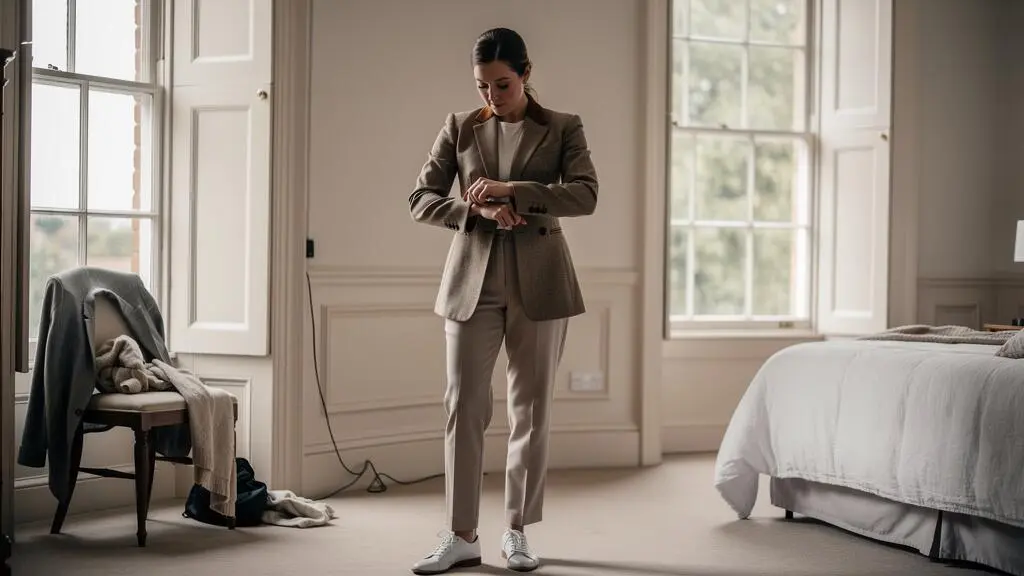
Wearing archival vintage without looking like fancy dress is primarily a question of styling context. An authentic 1930s silk slip, a sharply tailored 1950s jacket or an original 1980s designer skirt can look entirely at home in a contemporary wardrobe when its historical character is balanced by modern proportions, textures and accessories. The mistake is rarely the vintage garment itself. It is allowing too many recognisable period references to dominate the same outfit.
For UK vintage enthusiasts and fashion students, the most useful approach is to treat an archival piece as an individual design element rather than the starting point for recreating an entire historical look. That means understanding its silhouette, recognising the details that make it distinctive, checking its condition and deciding how much visual attention it should receive. Authenticity does not require period accuracy in everyday dressing. It requires respect for the garment’s history while giving it a convincing place in the present.
The principles of modern archival vintage styling
- Build around one recognisable historical statement and balance it with contemporary clothing.
- Assess construction, condition and provenance before buying or wearing an archival piece.
- Prioritise compatible silhouettes, thoughtful proportions and restrained accessories over head-to-toe period styling.
- Protect fragile fabrics through appropriate inspection, storage and minimal necessary cleaning.
- Why Do Some Vintage Pieces Look Costume-Like Even When They’re Authentic?
- How to Check an Archival Vintage Piece for Hidden Damage in 3 Minutes?
- One Archival Hero Piece or Three Vintage Finds: Which Builds More Wearable Outfits?
- The Storage Mistake That Can Ruin Vintage Fabric in a Single Winter
- When Should You Clean Vintage Clothing to Avoid Fibre Breakage?
- How to Judge Design Originality Without Being a Fashion Insider?
- How to Check if a Piece Is Truly Art Deco Using 6 Design Clues?
- Why Does Art Deco Jewellery Still Look Modern While Other Vintage Looks Dated?
Why Do Some Vintage Pieces Look Costume-Like Even When They’re Authentic?
Authentic vintage pieces can look like fancy dress when the rest of an outfit reinforces exactly the same historical period. A beautifully preserved 1940s dress, period-appropriate shoes, matching accessories and an era-specific hairstyle can create a convincing historical reconstruction rather than a contemporary outfit. By contrast, placing that same dress alongside modern footwear or an unexpected contemporary layer changes how the garment is interpreted. The distinction lies in visual context, not authenticity.
This is particularly important with archival fashion because some garments carry unusually strong historical codes. Military-inspired uniforms, ceremonial dresses, theatrical eveningwear and runway pieces were designed to communicate a particular identity. Their original silhouettes, embellishments, proportions and materials can make them immediately recognisable. Reproducing all those codes in one outfit amplifies their historical character.
A useful counterpoint is the contrast between formal and informal elements. British Vogue’s archival Armani styling editorial offers a practical example: Tish Weinstock wears an evening gown with worn cowboy boots and a studded belt, while a 1930s silk slip is combined with a contemporary Armani blazer. A skirt from Giorgio Armani’s autumn/winter 1987 collection is also styled with a newer waistcoat and cowboy boots. These combinations demonstrate how different stylistic registers can coexist without reconstructing an original period look.
The principle is not that every vintage outfit needs trainers or deliberately contrasting accessories. It is that the historical piece should have room to stand out without every other element repeating its original styling language.
Before putting an archival garment into an outfit, consider three diagnostic questions:
- Does it have a complete period silhouette? A strongly shaped shoulder, defined waist, distinctive hemline or historically specific volume can make a garment immediately identifiable.
- Does it carry recognisable historical details? Unusual buttons, decorative closures, embroidery, characteristic prints and distinctive collars reinforce its period identity.
- Does it belong to a formal or theatrical register? Evening gowns, ceremonial tailoring and elaborate accessories usually need more contemporary balancing than understated everyday garments.
The more answers are yes, the more deliberate the contemporary counterpoint should be. A highly structured vintage jacket might work with relaxed trousers and a simple top. An ornate evening skirt might sit more naturally alongside an understated knit and contemporary footwear.
There is also a difference between intentional historical mixing and simply combining unrelated decades. A 1960s psychedelic blouse, 1940s tailored trousers and 1980s statement jewellery do not automatically create a sophisticated eclectic look. Without a shared colour palette, compatible proportions or a clear focal point, the result can resemble an unedited charity-shop rail.
Instead, establish a visual connection. Repeat one colour, balance volume, or choose a common material characteristic. The aim is not to hide the garment’s origin but to make the overall outfit feel considered.
For a useful starting point, examine British Vogue’s archival Armani styling editorial, which documents specific combinations of historical designer garments and contemporary wardrobe pieces.
Once the styling principle is clear, the next consideration is the garment itself. A beautiful silhouette is only useful if the fabric, seams and construction remain sound enough to support regular wear.
How to Check an Archival Vintage Piece for Hidden Damage in 3 Minutes?
A quick archival vintage inspection should focus on the garment’s structural weak points rather than its overall appearance. Check the seams, underarms, armholes, hems and areas of friction under natural light before examining the fabric against a brighter background. This three-minute approach is a practical buying filter, not a substitute for specialist conservation assessment, particularly when dealing with fragile silk, old lace or historically important clothing.
Start by examining the garment’s general construction. Look at the labels, stitching and areas where different fabric panels meet. Loose seams, missing stitches and weakened thread can indicate that the garment needs repair before it is worn. Pay particular attention to shoulder seams, waistband attachments and fastenings, which may carry considerable tension.
Next, inspect the underarms and armholes. These areas can show discolouration, perspiration marks, weakened fabric and previous repairs. Move on to cuffs, collars, hems and other surfaces that have experienced repeated rubbing. A garment can look excellent from the front while showing considerable wear at its edges.
The next step is to examine the fabric itself. Hold it against a naturally bright window or another suitable light source without stretching it. A pale background can make thinning, holes and irregularities easier to notice. Fine silk, crepe and lightweight jersey deserve particular care because deterioration may not be obvious under ordinary indoor lighting.
For delicate or historically important textiles, clean cotton gloves may be appropriate when handling the garment. Avoid rubbing the fabric, pulling at damaged seams or repeatedly flexing a weakened area simply to test its strength. A visual examination should reveal potential problems without creating new ones.
It is important to distinguish between damage that might be manageable and deterioration that compromises the garment’s structure.
| Condition | Potential implication | Practical decision |
|---|---|---|
| Missing buttons or damaged fastening | Usually a localised repair issue | Check whether compatible replacements are available. |
| Loose seam or tired lining | May be repairable without altering the original construction | Assess repair requirements before wearing. |
| Small localised hole | May indicate friction or fibre weakness | Determine whether the surrounding fabric can support repair. |
| Splitting, powdering or fragmenting fabric | Potential structural deterioration | Avoid ordinary cleaning and seek conservation advice. |
| Persistent musty smell | May indicate previous damp storage or possible mould | Investigate the storage history and isolate the garment if mould is suspected. |
The Canadian Conservation Institute makes an important distinction between stable textiles and structurally compromised objects. Textiles that are splitting, powdering or fragmenting should not undergo ordinary surface-cleaning procedures. Cleaning damage can be irreversible, even when the initial intention is simply to refresh an old garment.
Odour deserves separate attention. A persistent musty smell can justify further investigation, particularly if the garment has been stored in a damp environment. However, smell alone does not establish that active mould is present. Inspect for visible growth, unusual staining and evidence of unsuitable storage before deciding what treatment is appropriate.
For a consistent buying assessment, use this five-action checklist. It is a practical inspection framework rather than a procedure formally prescribed by a conservation institution.
A five-step archival garment inspection checklist
- Examine the labels, shoulder seams and main construction points. Deliverable: a written note of loose stitching or alterations.
- Inspect underarms, armholes and cuffs. Deliverable: a list of visible stains, thinning or wear.
- Check hems, fastenings and friction areas. Deliverable: a record of missing buttons, holes and repair requirements.
- Examine fragile fabric under natural backlighting without pulling or stretching it. Deliverable: a photograph of any visible thinning or irregularities.
- Assess odour and signs of previous damp storage. Deliverable: a purchase decision marked as suitable to wear, requiring professional assessment or unsuitable in its current condition.
For more detailed guidance, the Canadian Conservation Institute’s textile care recommendations explain how humidity, handling, cleaning and physical deterioration affect historic clothing.
Once condition has been assessed, the question becomes one of wardrobe strategy: whether to invest in one distinctive archival garment or build a more flexible rotation from several vintage finds.
One Archival Hero Piece or Three Vintage Finds: Which Builds More Wearable Outfits?
One archival hero piece is generally the stronger choice when the garment has an unusually distinctive silhouette, exceptional craftsmanship or significant historical presence. Three more affordable vintage finds can offer greater everyday flexibility, particularly when they are easy to combine with an existing wardrobe. The better investment depends on versatility, condition, maintenance requirements and how frequently each piece can realistically be worn.
An archival hero piece provides a clear focal point. It might be a sculptural 1980s jacket, an original designer evening skirt or a sharply tailored mid-century coat. Such garments often have a strong visual identity, meaning they do not need several additional vintage elements to create an interesting outfit.
The disadvantage is that the rest of the wardrobe must work around them. A dramatic jacket that only suits one particular pair of trousers or one formal occasion may remain unworn for much of the year. Its purchase price is only one part of the investment: storage, specialist repairs and appropriate cleaning can also influence its practical value.
Three less expensive finds can create a different kind of wardrobe. A vintage blouse, a pair of tailored trousers and a simple waistcoat may each work with several contemporary garments. Their combined value comes from the number of useful combinations they create rather than the individual rarity of any one item.
However, buying three pieces does not automatically produce more wearable outfits. If each comes from a different decade and has an incompatible colour palette, silhouette or level of formality, the wardrobe may become more complicated rather than more versatile.
A simple way to evaluate either strategy is to calculate potential outfit combinations before purchasing. Consider how many garments already owned can work with the new piece without requiring additional purchases.
| Decision factor | One archival hero | Three vintage finds |
|---|---|---|
| Visual impact | High when the design is distinctive | Depends on how the pieces work together |
| Everyday flexibility | Can be limited by silhouette or formality | Potentially greater with versatile separates |
| Styling approach | Keep supporting garments relatively restrained | Build a coherent relationship between all three pieces |
| Maintenance | One potentially valuable or fragile garment requires careful attention | Maintenance is distributed across several garments |
| Wardrobe role | Statement, occasion or defining piece | Rotation of complementary everyday garments |
For a more meaningful financial comparison, calculate the estimated cost per wear:
Cost per wear = Total purchase and maintenance cost ÷ Number of actual wears.
This is a planning tool, not a guarantee of financial value. A £300 archival jacket worn regularly might be more useful than three inexpensive garments that remain in storage. Equally, a fragile evening dress requiring specialist conservation may be a less practical purchase than several robust vintage separates.
The type of garment matters. Formal dresses, sculptural tailoring and highly decorated runway pieces often make better individual statements. Utilitarian garments such as simple shirts, trousers and understated waistcoats are generally easier to incorporate into a regular rotation.
There is also an emotional consideration. A rare archival garment may be worth owning because of its design history, even if it is not the most economical everyday purchase. The important distinction is to recognise that decision as one of personal collecting rather than everyday wardrobe efficiency.
Before committing, identify at least three existing garments that could work with the purchase. This is a useful personal test, not a universal threshold for wardrobe versatility.
Whichever approach is preferred, the longevity of archival clothing depends on what happens between wears. Storage is particularly important because historical textiles can be vulnerable to environmental changes and inappropriate support.
The Storage Mistake That Can Ruin Vintage Fabric in a Single Winter
One of the most damaging storage mistakes is leaving fragile vintage clothing hanging from inadequate supports or inside ordinary plastic garment bags. The weight of a garment can place unnecessary tension on weakened shoulders and seams, while restricted air circulation can contribute to unsuitable moisture conditions. Fragile dresses, bias-cut garments, knits and heavily decorated pieces often need flat storage rather than conventional hanging.
Historical fabrics do not necessarily behave like contemporary textiles. Years of light exposure, handling, chemical deterioration and previous cleaning can reduce their ability to withstand tension. A garment that appears stable when worn may become vulnerable when its entire weight is concentrated around narrow shoulder seams for extended periods.
The Canadian Conservation Institute recommends flat storage for most textiles because it supports the object across its surface. Hanging is particularly unsuitable for fragile costumes, knitted garments, bias-cut pieces, heavily decorated clothing and garments with weak shoulder seams.
For garments that cannot be stored completely flat, folds should be cushioned with acid-free tissue or suitable muslin. Changing the position of folds periodically can help reduce the risk of permanent creasing. Rolling may also be appropriate for certain flat textiles, although it is not a universal solution for shaped garments.
Material choice matters. Clean, dry clothing should be stored in a cool, dark, dry and well-ventilated environment. Acid-free cardboard boxes and suitable polyethylene storage materials can be appropriate, depending on the object and its condition. Ordinary plastic garment bags supplied by dry cleaners are different: the Institute warns that restricted air circulation may encourage moisture accumulation.
British homes can present additional practical challenges. Central heating, fluctuating indoor temperatures, damp exterior walls and poorly ventilated cupboards can create difficult storage conditions. Loft spaces and outbuildings may experience substantial environmental fluctuations, making them unsuitable for valuable or fragile clothing unless their conditions are properly controlled.
Storage requirements also depend on the textile and garment construction:
- Silk and lightweight crepe: avoid unnecessary hanging when the fabric or seams are weakened. Use appropriate flat support and cushioned folds.
- Wool: pay particular attention to insect damage, especially where garments have been stored without regular inspection.
- Knitted garments: support their full weight rather than allowing the fabric to stretch on a hanger.
- Beaded and embellished dresses: consider the additional weight of decoration and the stress it places on seams and shoulder areas.
- Structured tailoring: assess the condition of the shoulder construction before deciding whether supportive hanging is suitable.
Light exposure is another often overlooked risk. Direct sunlight can cause irreversible fading and fibre brittleness. Keeping archival clothing in a dark storage area when not in use reduces unnecessary exposure.
A simple seasonal inspection routine can help identify developing problems before they become more serious. Examine stored garments for new holes, grazed surfaces, insect activity, unusual odours and changes in fabric condition. The Canadian Conservation Institute specifically recommends checking for signs of insect activity, including larval skins, webbing and damaged textile surfaces. Twice-yearly checks can be a practical household habit, although this interval is not a prescribed institutional requirement.
Storage should also be reconsidered after a garment has been worn in wet weather or exposed to perspiration. Textiles should be clean and dry before being returned to long-term storage. If mould is suspected, isolate the affected garment and seek professional advice rather than brushing or cleaning it casually.
Good storage reduces deterioration, but cleaning introduces a separate set of risks. The correct approach is to clean according to the garment’s condition and construction rather than following a routine designed for modern everyday clothing.
When Should You Clean Vintage Clothing to Avoid Fibre Breakage?
Vintage clothing should be cleaned when its actual condition requires it, not automatically after every wear or according to a fixed calendar. Old fibres, weakened seams and previous treatments can make cleaning more hazardous than it would be for modern clothing. Visible soiling, perspiration, persistent odour and prolonged wear may justify attention, but the appropriate treatment depends on the textile’s stability and construction.
The first distinction is between refreshing a garment and removing contamination. A vintage jacket worn briefly in a clean indoor environment may need nothing more than appropriate airing before storage. A garment exposed to perspiration, food stains or damp conditions may require a more considered intervention.
Cleaning should never be treated as an automatic improvement. The Canadian Conservation Institute warns that wet and dry cleaning can cause irreversible damage to historic textiles. Water, solvents, mechanical handling and elevated drying temperatures can all affect fragile fibres or previously weakened construction.
Dry cleaning is therefore not necessarily the safest option simply because a garment is delicate. Commercial processes can involve solvents, physical manipulation and heat. A cleaner familiar with historic clothing should be told the approximate age, fabric composition, previous repairs and any known areas of weakness before treatment is considered.
Wet cleaning requires similar caution. The Institute identifies careful hand washing as a possibility for strong, non-coloured textiles, but this does not mean every silk, wool or cotton garment is suitable for immersion. Colour instability, fabric deterioration, trims, linings and construction methods can make even apparently gentle washing unsuitable.
A useful decision hierarchy is based on the least intervention necessary:
- For light refreshing: consider appropriate airing in a clean, shaded and well-ventilated space, provided the textile is stable.
- For visible surface contamination: assess the nature of the mark before attempting removal. Avoid rubbing or aggressive spot treatment.
- For structurally fragile textiles: avoid ordinary washing and seek specialist textile conservation advice.
- For valuable or complex garments: consult a professional familiar with historic textiles and discuss testing before treatment.
Steaming also deserves caution. Although it can be useful for some modern garments, direct or excessive steam exposure is not a universal solution for fragile archival fabrics. Heat and moisture may affect delicate fibres, linings, trims and previous repairs. A garment should not be steamed simply because it has developed creases in storage.
Old stains require particularly careful judgement. Some marks have become chemically or physically integrated into the textile over time. Repeated attempts to remove them can damage the surrounding fibres, creating a larger problem than the original stain. A stable historical mark may be preferable to an unsuccessful cleaning intervention.
Ironing should likewise be approached conservatively. The Canadian Conservation Institute does not recommend ironing historic fabrics. For valuable or fragile clothing, professional conservation advice is preferable to experimenting with heat, pressure or moisture at home.
There is an important distinction between ordinary vintage clothing and historically significant archival garments. A robust second-hand cotton shirt in good condition may tolerate more conventional care than a fragile 1930s silk dress with weakened seams and delicate construction. The fabric label alone cannot establish whether a garment is safe to wash.
Ultimately, responsible cleaning means accepting that preservation sometimes requires leaving a garment alone. A little patina, a stable crease or a non-progressive historical mark may be part of its material history rather than a defect that must be eliminated.
Preservation protects the garment, but identifying what makes it historically original is equally important. Construction details, fasteners and manufacturing clues can help distinguish an interesting vintage object from a later interpretation of an earlier design.
How to Judge Design Originality Without Being a Fashion Insider?
You do not need specialist fashion knowledge to make a more informed assessment of vintage design originality. Start with construction, fastenings, labels and material details rather than relying on a garment’s overall appearance. These clues can help establish whether its design and manufacturing characteristics are consistent with the period claimed by the seller, although no single detail proves authenticity or designer attribution.
Silhouette is often the easiest feature to recognise but not necessarily the most reliable for dating a garment. Historical proportions can be reproduced, and contemporary brands regularly revisit earlier design periods. A dress that looks convincingly 1950s-inspired may be a modern reproduction rather than an original mid-century garment.
Construction provides additional information. Examine the way panels are assembled, how seams are finished, whether the lining is integrated into the garment and how fastenings are attached. These details can reveal manufacturing methods and provide useful points of comparison with documented examples.
Labels are another useful source of evidence. Composition information, manufacturer details, country-of-origin markings and care instructions may help narrow down a garment’s production history. However, labels can be replaced, removed or added during alterations, so their presence should be considered alongside other evidence.
Fasteners are particularly interesting because their manufacturing history can help establish a likely date range. Research archived by the Fashion Institute of Technology examines how zipper characteristics and manufacturer markings can help date garments. Emily Nissen‘s 2020 master’s thesis, A History of Zippers, and a Visual Guide to Dating Garments Using Zippers, includes an illustrated appendix of 300 dated examples drawn from educational and vintage collections.
The research is useful because it demonstrates that even relatively small components can provide historical clues. A zipper’s manufacturer, markings and construction may help establish whether a garment is consistent with a particular manufacturing period. The guide is explicitly representative rather than comprehensive, and a zipper may also have been replaced during a later alteration.
For that reason, originality should be assessed through several independent observations rather than a single apparent signature.
- Construction: inspect seams, linings, hems and the way individual panels are joined.
- Fastenings: examine zippers, buttons, hooks and manufacturer markings.
- Labels: compare composition and manufacturer information with documented historical examples.
- Materials: assess whether the fabric and its finish are consistent with the proposed period.
- Provenance: look for credible documentation, previous ownership information or a traceable collection history.
For fashion students and independent collectors, accessible documentary research can be particularly useful. Museum collections, digitised fashion archives, historical advertisements and academic garment studies provide reference points against which a vintage piece can be compared.
The Fashion Institute of Technology’s institutional repository provides a useful starting point through its research on dating garments by their zippers. The study is focused particularly on post-war clothing, so it should not be treated as a comprehensive dating reference for earlier garments.
It is also worth separating originality from prestige. A garment made by an unfamiliar manufacturer may have exceptional design interest, while a piece carrying a famous label may have been altered, repaired or reproduced. A recognisable name is not a substitute for evaluating the actual object.
For contemporary styling, the most useful question is often whether the garment has a compelling cut, material or detail that remains relevant today. An unusual collar, beautifully proportioned sleeve or interesting textile can contribute more to a modern outfit than a famous label alone.
The same distinction between visual style and historical manufacture becomes particularly important with jewellery. Art Deco is one of the most recognisable vintage design languages, but a geometric motif does not automatically make a piece an original object from the 1920s or 1930s.
How to Check if a Piece Is Truly Art Deco Using 6 Design Clues?
Art Deco jewellery can be recognised through a combination of geometric construction, symmetrical arrangements, strong contrasts, streamlined motifs and characteristic materials. The style is particularly associated with the 1920s and 1930s. However, these visual characteristics establish stylistic resemblance rather than manufacturing date. To assess whether a piece is genuinely period Art Deco, design clues must be considered alongside construction, materials, condition and provenance.
The Gemological Institute of America identifies several recurring characteristics that distinguish Art Deco jewellery from earlier and later historical styles. Six useful clues can help organise a first visual assessment.
- Geometric shapes and symmetry. Look for deliberate arrangements of straight lines, stepped forms, repeated angles and symmetrical compositions. Unlike the flowing organic shapes associated with Art Nouveau, Art Deco frequently uses more structured visual geometry.
- Strong colour contrasts. Black onyx combined with white diamonds is a recognised example. Contrasting gemstones can create a sharply defined graphic effect.
- Repeated decorative patterns. Repeated lines, geometric borders and structured arrangements often create a sense of rhythm rather than relying on soft floral ornament.
- Streamlined and abstract forms. Simplified shapes and controlled ornamentation are characteristic of many Art Deco designs.
- Characteristic metals and gemstones. Platinum was popular during the period, and designs frequently incorporated diamonds alongside sapphires, rubies and emeralds.
- Influences from different design traditions. Art Deco also incorporated influences such as Mughal carved gemstones, demonstrating that the style was more diverse than a simple monochrome geometric aesthetic.
These six clues are a practical recognition framework, not an official authentication test. A piece does not need to display every feature to have Art Deco characteristics, and the presence of one or two cannot establish its date of manufacture.
Metal choice is particularly easy to misinterpret. Platinum is strongly associated with Art Deco jewellery, but the same material was also used in earlier Edwardian jewellery. Similarly, geometric shapes can appear in later modernist designs and contemporary reproductions.
Comparing Art Deco with neighbouring periods helps avoid overly confident attribution. Art Nouveau jewellery is often associated with organic forms such as flowers, butterflies, animals and insects. Edwardian Garland designs frequently use flowers, ribbons and bows. Retro jewellery of the 1940s, meanwhile, is associated with gold or rose gold and more sculptural, bold curves.
The differences are useful, but historical periods do not always divide neatly. Late-1930s pieces can display overlapping characteristics, while later revival designs may deliberately reproduce earlier motifs. A binary classification can therefore be less useful than describing the degree to which a piece reflects Art Deco design principles.
Technical examination provides another layer of information. Look at the quality and consistency of the setting, the construction of the mount, the condition of the metal and the fastening mechanism. These details may help establish whether the object is consistent with period manufacturing practices, but the design overview alone cannot validate specific clasp types or setting techniques as conclusive dating evidence.
For a more informed first assessment, compare the piece with documented examples rather than relying exclusively on a seller’s description. The GIA’s overview of historic jewellery styles provides a useful historical comparison of Art Deco, Art Nouveau, Edwardian and Retro jewellery.
For collectors, the distinction matters commercially as well as historically. An Art Deco-inspired contemporary ring may be an excellent design purchase without being an original 1920s object. Accurate descriptions protect both the buyer and the historical integrity of the piece.
Understanding these characteristics also explains why Art Deco jewellery can integrate so naturally into contemporary dressing. Its visual language offers a distinctive historical reference without necessarily requiring the rest of an outfit to follow the same period.
Key considerations before building a modern archival wardrobe
- Choose historical pieces whose proportions and design language can coexist with contemporary clothing rather than relying on complete period styling.
- Prioritise the condition and construction of an archival garment, because preservation determines whether it can realistically become part of an everyday wardrobe.
- Look for historical design elements that provide character without overwhelming the outfit, particularly geometric forms, considered proportions and restrained ornamentation.
Why Does Art Deco Jewellery Still Look Modern While Other Vintage Looks Dated?
Art Deco jewellery can look remarkably at home in contemporary outfits because its geometric forms, structured proportions and controlled ornamentation are compatible with many modern design languages. Straight lines, symmetrical shapes and strong contrasts can complement minimalist clothing without requiring an entire historical outfit. This visual compatibility helps explain its continuing appeal, although it does not mean every Art Deco piece will look contemporary or that other vintage styles are inherently outdated.
One important characteristic is the way Art Deco uses geometry. Rather than depending primarily on soft, romantic ornamentation, many designs rely on repeated shapes, clear edges and carefully organised proportions. These elements are familiar in contemporary architecture, product design and modern jewellery, making the historical reference relatively easy to integrate into current clothing.
A geometric Art Deco ring, for example, can sit comfortably alongside a plain knit, a contemporary tailored jacket or a simple evening dress. The jewellery provides historical character while the rest of the outfit establishes a modern context.
Contrast also plays an important role. Black onyx and white diamonds, coloured gemstones against pale metals, or strong symmetrical settings create visual definition without necessarily introducing an elaborate period silhouette. The result can be distinctive but not overly theatrical.
This is different from saying that Art Deco jewellery is historically neutral. Its motifs remain identifiable, particularly to collectors and people familiar with jewellery history. The distinction is that a historical design can remain visually compatible with contemporary clothing even when its origins are obvious.
Other vintage jewellery styles can require a different approach. Highly organic Art Nouveau pieces, for example, may introduce flowing floral or natural motifs that establish a stronger romantic register. Edwardian Garland jewellery can carry a similarly recognisable decorative vocabulary through bows, ribbons and floral arrangements.
Neither style is less valuable or less wearable. The difference lies in how much additional styling context the jewellery introduces. A contemporary outfit with several romantic vintage elements may reinforce a historical aesthetic, whereas a single Art Deco piece can often function as a controlled point of contrast.
This creates a useful selection principle for archival fashion more broadly. Pieces that integrate easily into a contemporary wardrobe often share some combination of:
- Clear geometry: recognisable shapes that work with contemporary tailoring and simple silhouettes.
- Controlled scale: details that contribute character without dominating every element of the outfit.
- Visual restraint: a balance between ornamentation and simplicity.
- Material contrast: combinations of texture, colour and finish that remain interesting alongside modern fabrics.
- Stylistic flexibility: the ability to work with different levels of formality rather than requiring a complete period look.
These characteristics are not exclusive to Art Deco. A beautifully cut 1970s wool coat, a restrained 1960s leather bag or a simple mid-century blouse can also integrate effectively into contemporary dressing. The important consideration is the relationship between the historical garment and the overall proportions of the outfit.
For vintage enthusiasts, Art Deco jewellery can therefore act as a useful entry point into archival styling. It offers a recognisable historical reference while remaining relatively easy to combine with modern basics. An original geometric brooch, a pair of period earrings or a structured ring can add historical depth to an otherwise contemporary outfit.
The same approach works beyond jewellery. Rather than recreating an entire decade, select one design element that communicates its history clearly. Let the remaining clothing establish the context in which that piece is worn today.
For a more wearable archival wardrobe, begin with one authentic piece that genuinely appeals to you, assess its condition and consider how it relates to clothing already owned. A thoughtful combination of historical design and modern everyday dressing offers a more lasting relationship with vintage fashion than a complete period reconstruction.
How many vintage pieces should you wear in one outfit?
There is no fixed number, but one distinctive archival piece is a useful starting point. A vintage jacket, dress or piece of jewellery can establish the outfit’s historical character while contemporary clothing provides balance. Additional vintage pieces work best when they share compatible colours, proportions or design details rather than simply belonging to different decades.
Can you wear head-to-toe vintage without looking like fancy dress?
Yes. Head-to-toe vintage can look intentional when the garments have coherent proportions, a consistent colour palette and a clear styling direction. The difference between a considered historical-inspired outfit and fancy dress is often the quality of the styling and the relationship between the pieces. Contemporary grooming, restrained accessories or an unexpected silhouette can also introduce a modern perspective.
Is archival vintage always more valuable than ordinary vintage clothing?
No. Archival significance, designer attribution, rarity, condition, provenance and market demand are separate considerations. An unusual vintage garment from an unfamiliar maker may have considerable design interest, while a famous designer label does not automatically establish authenticity or value. Assess the individual garment rather than assuming that the word archival guarantees a premium.
Should fragile vintage silk always be dry-cleaned?
No. Dry cleaning can damage weakened historic textiles through solvents, manipulation and elevated temperatures. Some garments may be suitable for specialist cleaning, while others should not undergo ordinary cleaning at all. Examine the fabric’s condition, construction and previous treatments, and seek professional textile conservation advice when a valuable or fragile silk garment is involved.
How can you tell whether Art Deco jewellery is an original period piece?
Look for a combination of period-consistent geometric design, materials, setting construction and manufacturing characteristics. Platinum, contrasting gemstones and symmetrical patterns can support an Art Deco attribution, but none independently proves that a piece was made during the 1920s or 1930s. Compare it with documented examples and seek a qualified jewellery specialist’s assessment when authenticity or financial value is important.