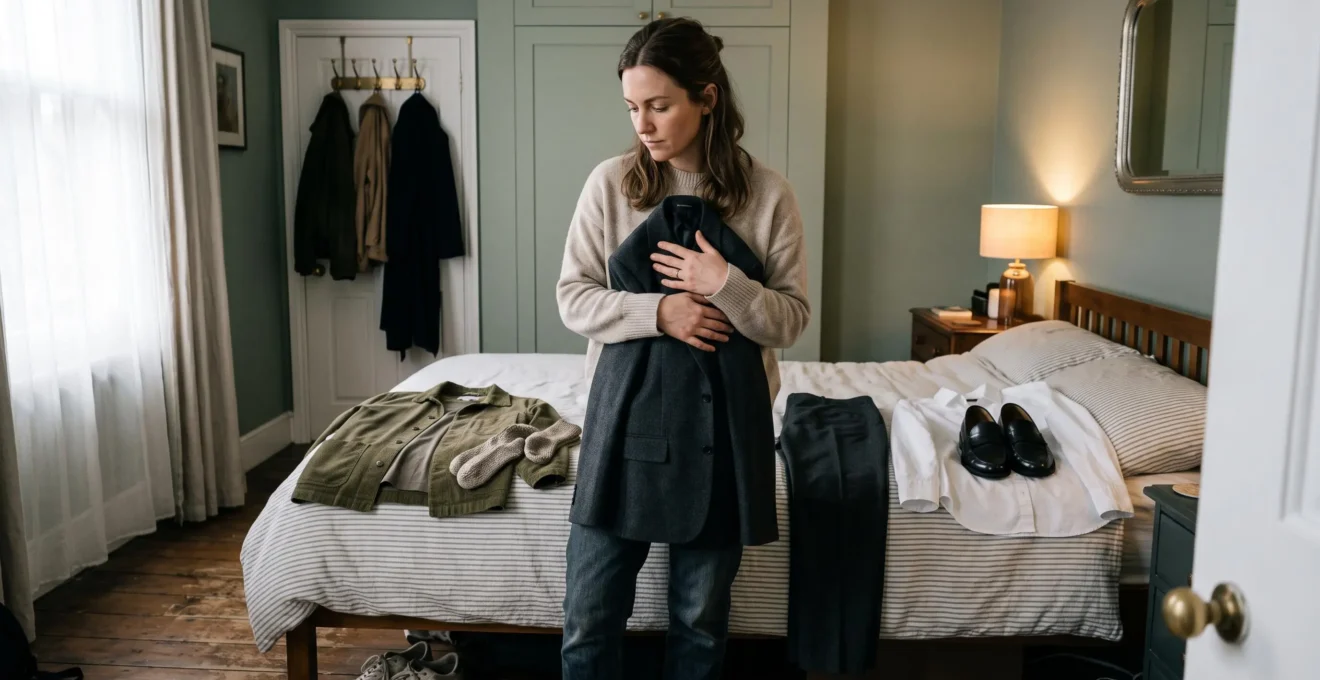
A perfectly good outfit can feel wrong the moment you enter a room. The problem is often not its quality, price or attractiveness. It is the message the clothes send compared with what everyone else expects.
In British social life, aesthetic codes operate alongside written dress codes. An invitation might say “smart casual”, but the same words can mean different things at a workplace dinner, a wedding reception or a fashionable restaurant. Understanding the distinction helps you choose an outfit that feels intentional rather than conspicuously overdressed or unexpectedly casual.
The practical approach is to read three signals together: the occasion’s formality, the venue’s usual style and the visual language of your clothes. Tailoring, footwear, colour, fabric, logos and accessories all contribute to that language.
Once these signals become recognisable, getting dressed becomes less about guessing what looks impressive and more about choosing what makes sense for the room.
Reading UK aesthetic codes at a glance
- Context sets the standard: an outfit looks appropriate when its formality and visual signals fit the occasion, venue and people attending.
- Decode before dressing: use invitation wording, venue information and event timing to identify the likely expectations.
- Keep the signals coherent: combine compatible levels of tailoring, fabric, footwear and accessories rather than mixing contradictory dress codes.
- Why Can the Same Outfit Look “Classy” in One Place but “Too Much” in Another?
- How to Decode a UK Dress Code From the Invite Text and Venue in 5 Minutes
- Quiet Luxury or Smart Casual: Which Code Fits Work Dinners Better?
- The Code-Clash Mistake That Makes an Outfit Feel Confusing Instantly
- When Should You Commit to a Default Aesthetic Code So Getting Dressed Gets Easier?
- The Eveningwear Mistake That Makes You Look Out of Place at Black-Tie Optional Events
- Quiet Luxury or Logos: Which Signals Better Taste in the UK Workplace?
- Why Does Luxury Casualwear Feel Better Even When It Looks Simple?
Why Can the Same Outfit Look “Classy” in One Place but “Too Much” in Another?
The same outfit can look sophisticated in one setting and excessive in another because people interpret clothing against the expectations of their surroundings. A tailored blazer, polished loafers and expensive-looking accessories may appear restrained at a formal gathering but unusually deliberate at a relaxed creative event. Appropriateness is contextual, not an absolute quality of the clothes.
Imagine two hypothetical London invitations. The first is dinner at a traditional Mayfair members’ club, where tailored clothing may be expected. The second is an informal East London gallery opening attended by people in relaxed, experimental outfits.
The same navy blazer, pressed trousers and loafers could communicate familiarity with the first setting while appearing comparatively corporate in the second. Neither reading is guaranteed: individual venues, hosts and guest groups differ. The contrast simply demonstrates how surrounding expectations change an outfit’s meaning.
A useful distinction is between looking formal and looking effortful. Formality concerns the clothing’s relationship to established conventions. Visible effort concerns how deliberately assembled or attention-seeking the outfit appears.
In some British professional and social circles, relaxed tailoring, subdued colour and naturally worn textures can suggest confidence. Elsewhere, striking accessories and obvious attention to styling are entirely appropriate.
Assess the fit between clothing and setting through three factors:
- Venue baseline: what do people ordinarily wear there at that time?
- Occasion: is this an ordinary gathering, a celebration or a formal ceremony?
- Signal density: how many conspicuous elements compete for attention, including logos, embellishment and strong trends?
These dimensions need not agree. A formal venue can host a relaxed event, and a casual location can accommodate an exceptionally dressy wedding.
The principle is consistent with Debrett’s advice on dressing for a job interview, which recommends researching an organisation’s clothing culture rather than assuming that the most formal option is always best. That guidance concerns interviews, but its contextual approach is useful when considering other situations.
Instead of comparing your outfit with the most understated person you might encounter, compare it with the likely range of acceptable looks. One unusually casual guest does not redefine the entire dress code.
Once you understand that a dress code is partly relational, the next task is gathering enough information about an unfamiliar event to make a sensible choice.
How to Decode a UK Dress Code From the Invite Text and Venue in 5 Minutes
To decode a UK dress code quickly, begin with the invitation’s exact wording, examine the venue and consider when the event takes place. Explicit instructions carry more weight than general aesthetic preferences. When the wording is ambiguous, use the host’s style and the venue’s usual guests to narrow the possibilities rather than automatically dressing up or down.
Start by distinguishing three levels of invitation language. “Black tie” sets a relatively specific formal expectation. “Smart casual” leaves room for interpretation. Phrases such as “festive”, “dress to impress” or “come as yourself” require more judgement about the event itself.
The presentation of the invitation can offer another clue. A carefully produced printed invitation may suggest greater ceremony than a casual group message, although neither establishes the clothing requirements on its own.
In Debrett’s guidance on events and dress codes, the publisher emphasises that smart casual depends on the invitation and the type of event. It also recommends considering the occasion, time of day, season and other guests’ clothing expectations.
Next, inspect the venue’s website and recent photographs of comparable gatherings. Guest photographs tagged at the location may help, but distinguish images from a formal private function from those showing an ordinary evening. A restaurant’s daytime clientele may look quite different from its evening guests.
For an ambiguous smart-casual event, a practical editorial rule is to identify the most formal credible expectation and relax the remaining outfit elements slightly. For example, tailored trousers and a soft knit can bridge the gap between businesswear and casual clothing without looking like either extreme.
Hybrid events require particular attention. Afternoon drinks that continue into dinner may call for a flexible base outfit, such as refined separates with a removable structured jacket. You can adjust the degree of formality without changing everything.
Your five-minute dress-code decoding checklist
- Extract the instruction: copy the invitation’s precise dress-code phrase into a note.
- Identify the setting: record the venue type and whether the event is private, professional or social.
- Check comparable images: find a relevant event photograph and note the apparent range of formality.
- Choose an anchor: write down one garment that clearly fits the event, such as tailored trousers, a dress or a dark suit.
- Plan an adjustment: identify one layer, shoe or accessory change that can shift the look if expectations differ.
If the invitation remains genuinely unclear, ask the host. A short question about whether guests are expected to wear jackets, dresses or formal eveningwear is more reliable than interpreting ambiguous wording indefinitely.
That preparation becomes particularly useful for work dinners, where guests must balance social ease with professional credibility.
Quiet Luxury or Smart Casual: Which Code Fits Work Dinners Better?
Smart casual generally provides the more useful starting point for a UK work dinner because it describes the expected level of formality. Quiet luxury describes a different quality: understated styling, refined materials and minimal visible branding. The two are complementary rather than competing dress codes. Combining smart-casual structure with restrained detailing is often a versatile approach, provided it suits the organisation.
Think of smart casual as answering “how dressed up?” and quiet luxury as answering “how visibly expensive or attention-seeking?” An outfit can be both. For example, well-fitting wool trousers, a simple knit and understated leather shoes may satisfy a moderately smart occasion without overt luxury signals.
However, workplace expectations depend on seniority, industry, organisation and the purpose of the meal. A dinner with senior clients may warrant a more traditional silhouette than a relaxed evening with colleagues.
The following comparison is a practical decision framework, not a universal classification of British workplaces.
| Situation | Useful starting code | Possible outfit approach |
|---|---|---|
| Formal client dinner | Refined smart casual or business-appropriate tailoring | Structured separates, polished footwear and restrained accessories |
| Senior stakeholder dinner | Understated tailoring | Coherent colours, comfortable formal pieces and subtle details |
| Peer-level team dinner | Relaxed smart casual | Soft knitwear, tailored or neat casual trousers and personality-led accessories |
| Creative-industry gathering | Context-specific smart casual | Relaxed silhouettes, considered textures and individual styling choices |
Understatement can communicate confidence in some British professional settings. Yet it would be misleading to suggest that every UK employer interprets logos as insecurity or that quiet luxury automatically signals competence.
There is also a practical risk in taking minimalism too far. Very severe tailoring, immaculate accessories and uniformly dark colours can create an imposing impression at an event intended to encourage conversation.
One softer element often improves the balance: a textured jumper, relaxed shirt, slightly worn-in leather or less rigid jacket. The aim is not to look inexpensive or careless, but to appear comfortable in the clothes.
The safest choice is therefore not necessarily the costliest outfit. It is the one that respects the meal’s professional purpose without sacrificing the ease expected in a social setting.
Even when each garment looks appropriate individually, however, the combination can fail if its elements communicate incompatible intentions.
The Code-Clash Mistake That Makes an Outfit Feel Confusing Instantly
A code clash occurs when an outfit combines garments that suggest incompatible occasions without a clear styling intention. The issue is not simply being overdressed or underdressed. It is that the outfit sends competing messages, such as formal eveningwear paired with overtly casual details. Deliberate contrast can work, but accidental contrast makes the intended dress code difficult to read.
Consider a formal evening top worn with heavily distressed weekend denim and chunky running trainers. Each item may have a valid place in an attractive outfit, but together they can create uncertainty about whether the wearer intended an evening look, a streetwear look or something between them.
That does not mean mixing formal and informal clothing is inherently wrong. Contemporary fashion regularly uses contrast. The difference is whether the contrasting elements have a coherent relationship with the occasion.
A simple audit involves reading each garment as a word and asking whether the entire outfit forms a recognisable sentence. A tailored coat might say “formal”, joggers might say “leisure”, and performance trainers might say “sport”. If the invitation asks for traditional smart casual, this combination may need adjustment.
The quickest correction is often a translator piece: an ordinary garment that helps two different registers work together.
- A structured coat can give refined shape to otherwise relaxed separates.
- Simple leather footwear can make an ambiguous outfit read more formally.
- Plain accessories can reduce competition between an expressive top and tailored clothing.
- A neutral knit can connect statement outerwear with informal trousers.
There is no need to replace the entire outfit. Identify the item that is furthest from the event’s expected formality and adjust that first.
A more subtle clash involves perceived price and status. One conspicuous designer statement piece surrounded by unrelated basics can appear disconnected from the outfit’s overall styling. However, mixing inexpensive and expensive garments is not itself a problem. Consistent fit, colour, texture and proportion matter more than matching price labels.
In creative settings, a deliberately contradictory outfit may be entirely successful. For traditional weddings, formal dinners and conservative professional events, coherence is usually the lower-risk option.
When those adjustments become familiar, it may be worth developing a dependable everyday aesthetic rather than decoding every outfit from nothing.
When Should You Commit to a Default Aesthetic Code So Getting Dressed Gets Easier?
A default aesthetic code becomes useful when most of your regular events require a similar level of formality. Rather than reinventing your appearance for every invitation, you develop a dependable base of fits, colours and materials. The goal is faster, more consistent decisions without turning your wardrobe into a rigid uniform that cannot accommodate unusual occasions.
The important reference point is your actual calendar, not the lifestyle you imagine dressing for. Someone attending frequent client dinners has different requirements from someone whose social plans mostly involve informal restaurants and occasional weddings.
A practical threshold is to consider a default particularly worthwhile when roughly four out of five occasions fall within a similar dressiness range. This is a suggested wardrobe-planning heuristic, not a scientifically established rule.
To test the idea, review the previous three months. Record the events you attended and group them into informal, smart casual and formal categories. Then imagine wearing your proposed default outfit to each.
If it would have worked with minor changes for all but one or two occasions, you probably have a useful starting point. If it fails repeatedly, the issue may be a missing category of clothes rather than the need for a more elaborate personal style.
Build the default around relatively stable features:
- Fit philosophy: relaxed tailoring, structured silhouettes or another consistent proportion.
- Palette: colours that combine easily without restricting every outfit to the same shades.
- Materials: fabrics suitable for the weather, comfort needs and degree of formality you usually encounter.
- Flexibility: at least one practical adjustment for more formal or relaxed events.
The trade-off is reduced range. A tightly curated wardrobe may make daily decisions easier while leaving you underprepared for a gala, unusually formal wedding or creative event.
A better commitment is to a consistent foundation, not one fixed look. Keep a small number of adaptable pieces that allow the same base to shift towards different social codes.
Revisit the system seasonally or after an event where your clothes felt noticeably wrong. Rather than treating that experience as a personal styling failure, use it to identify which wardrobe adjustment would have helped.
That flexibility matters most when an invitation introduces a formal category outside your normal routine, particularly one with the word “optional” attached.
The Eveningwear Mistake That Makes You Look Out of Place at Black-Tie Optional Events
The central mistake at a black-tie optional event is treating “optional” as permission to ignore formal eveningwear conventions. The phrase normally allows several formal choices, not an unrestricted casual dress code. A well-executed dark suit or an appropriate dressy outfit can be as suitable as traditional black tie, depending on the host’s expectations and the event.
Traditional black tie has identifiable eveningwear conventions, including a dinner jacket, appropriate formal shirt and bow tie for those choosing that style. Black-tie optional provides greater flexibility while retaining a formal baseline.
According to the Emily Post Institute‘s black-tie dress code guidance, a tuxedo is an acceptable option, but a dark suit with a white dress shirt and conservative tie is also suitable. Other accepted choices include evening gowns, dressy cocktail dresses and formal separates.
This is North American etiquette guidance, so it should not override specific instructions from a British host or venue. In the UK, the exact language of the invitation remains important, particularly when it refers to black tie without the optional qualification.
A useful approach is to imagine a formality spectrum with traditional black tie at one end and refined dark tailoring at the other. Your position within that range can depend on your role at the event, its ceremonial character and the host’s preferences.
For a formal reception where you have a prominent role, traditional eveningwear may be a sensible option. For an event where the host explicitly welcomes alternatives, polished dark tailoring can provide an equally appropriate response.
The details matter. Daytime-looking footwear, conspicuously casual accessories or poorly coordinated fabrics can contradict the formal silhouette. A dark suit with a refined shirt and suitable leather shoes generally communicates its intended code more clearly than an expensive-looking outfit with casual finishing touches.
If attending with a partner or companion, discuss the intended level of dress beforehand. The objective is not identical clothing or matching colours, but avoiding a significant difference in formality when the event expects a coordinated presentation.
There is no evidence in the supplied etiquette guidance that most guests universally choose dark suits over tuxedos or that one partner’s outfit must determine the other’s. Where uncertainty persists, the invitation and host are the best references.
This same distinction between a formal requirement and a stylistic signal explains why understated luxury and conspicuous branding can produce very different impressions at work.
Quiet Luxury or Logos: Which Signals Better Taste in the UK Workplace?
Quiet luxury can be a discreet choice in some UK workplaces because it communicates through fit, fabric and restrained detailing rather than prominent branding. Logos communicate more explicitly and may suit industries where fashion awareness or creative identity matters. Neither automatically proves better taste: the appropriate choice depends on organisational culture, professional role and how the garment fits the rest of the outfit.
These two approaches rely on different forms of recognition. Visible branding offers an immediately identifiable reference to a company or product. Quiet-luxury styling depends on subtler details, such as the cut of a jacket, the texture of a knit or the proportion of a shoe.
It is tempting to equate British professional taste with understatement. That association can be useful as a styling hypothesis, but it should not be treated as a universal rule across UK industries or regions.
A traditional professional-services environment might favour limited branding and restrained clothing, while a fashion business, creative agency or design-oriented organisation may welcome more recognisable labels. Technology and media workplaces can vary significantly even within the same sector.
There is also a difference in how styling risks become visible. A large logo draws attention immediately, so an unsuitable branding choice is difficult to overlook. A minimalist outfit creates fewer obvious visual distractions, but depends heavily on the garment’s fit and finish.
That does not mean unbranded clothes must be expensive. Thoughtful tailoring, maintenance and fabric selection can matter more than a luxury label or retail price.
A practical way to combine both approaches is to limit branding to one modest detail when the environment welcomes it. A small heritage-associated mark on an otherwise restrained outfit may sit comfortably within the overall look. Repeated, oversized logos create a different visual emphasis.
Neither method can guarantee how colleagues or clients will interpret your status. Workplace familiarity, personality, professional conduct and local dress customs all influence how clothing is received.
The more transferable lesson is to invest attention in the qualities of clothing that remain relevant even when logos and fashion trends change.
What to remember before choosing your next outfit
- Buy for your real wardrobe: judge a new garment by how often it will work with clothing and occasions you already have.
- Separate quality from price: comfortable fabric, suitable fit and sound construction deserve direct inspection rather than assumptions based on a label.
- Think beyond first impressions: consider how the piece feels, washes, wears and fits into your long-term aesthetic.
Why Does Luxury Casualwear Feel Better Even When It Looks Simple?
Luxury casualwear can feel noticeably better because a visually simple garment may contain more considered fabric, construction and fit details than its appearance reveals. Fibre choice, textile weight, drape, seam finishing and pattern design can all affect comfort and movement. However, a higher price does not automatically guarantee better materials, fit or durability, so the individual garment must be assessed.
Compare two plain jumpers with similar colours and silhouettes. One may feel softer, move more naturally and hold its shape better during wear. The differences might come from the knit structure, yarn, finishing or fit rather than any visible branding.
Fabric hand-feel is only part of the equation. Weight affects how clothing hangs, while pattern cutting determines how the garment follows the body when sitting, walking or reaching. Seam placement, hems and hardware can influence both comfort and perceived refinement.
This makes simple casualwear particularly relevant to understated aesthetics. Without prominent logos or embellishment, the garment’s silhouette, texture and finishing become more noticeable. A well-chosen knit, coat or pair of trousers can support several different outfits.
But luxury pricing should not be confused with measurable longevity. Research reported in 2025 by the University of Leeds examined 47 T-shirts sold by UK clothing brands, including luxury products, and found no correlation between price and durability within that sample.
47 T-shirts tested
A University of Leeds clothing durability project assessed a sample of 47 T-shirts using physical and visual testing, including repeated laundering. The reported findings identified no correlation between price and durability within the tested sample. This does not establish the durability of other garment categories.
University of Leeds research report on T-shirt durability, published 28 July 2025.
The findings are a useful corrective to the assumption that expensive basics necessarily last longer. The research does not measure every dimension of luxury, such as fit, craftsmanship or the pleasure of wearing a particular fabric.
When deciding where to spend more, prioritise garments that you wear repeatedly and whose construction you can evaluate directly. Knitwear, trousers, footwear and outerwear are useful candidates because their comfort and appearance influence a substantial part of an outfit. This is a purchasing heuristic rather than proof that expensive versions of those products perform better.
Assess each garment by trying it on, examining stitching and fabric, reading care instructions and considering whether you can maintain it properly. A modestly priced piece that fits beautifully and remains comfortable may be a better wardrobe investment than a luxury alternative chosen for its reputation.
Ageing can also contribute to an outfit’s character. Some materials develop an attractive softened appearance or patina; others pill, fade, stretch or deteriorate. These outcomes depend on the material, construction, use and care, not simply the price.
For your next event, identify the required level of formality first, choose a coherent outfit from what you own and inspect whether its fit, fabric and finishing support the intended impression. Better dress-code decisions usually begin with clearer judgement, not another purchase.
Can you wear trainers to a smart-casual event in the UK?
Sometimes. Clean, understated trainers can suit informal interpretations of smart casual, particularly in relaxed workplaces and contemporary social venues. More formal events may expect leather shoes or other dressier footwear. Check the invitation and venue, and avoid assuming that every smart-casual event accepts trainers.
Should you ask the host about an unclear dress code?
Yes. Asking is appropriate when the invitation does not establish the expected level of formality. A specific question, such as whether tailored jackets or formal eveningwear are expected, is usually easier to answer than asking what everyone will be wearing. The host’s instructions take priority over general etiquette advice.
Is it better to be slightly overdressed or slightly underdressed?
Neither is universally preferable. For a formal ceremony, ignoring a clearly stated dress code creates a greater risk than choosing an appropriately refined outfit. At a deliberately informal gathering, excessive formality can feel equally misplaced. When uncertain, choose an outfit within the likely acceptable range and use removable layers or adaptable accessories.
Does quiet luxury require buying designer clothing?
No. Quiet luxury is commonly associated with refined materials, considered proportions and discreet styling, but these visual qualities are not exclusive to designer labels. Well-fitting, well-maintained unbranded clothes can create a similar understated impression. Premium prices do not guarantee superior durability, as the University of Leeds T-shirt research illustrates within its limited sample.
How do you dress appropriately for an event without losing your personal style?
Keep the event’s expected formality as the foundation, then express personal taste through compatible colours, textures, silhouettes or accessories. A distinctive scarf, interesting fabric or carefully selected shoe can add personality without contradicting the dress code. The aim is to adapt your personal style to the occasion rather than replace it entirely.