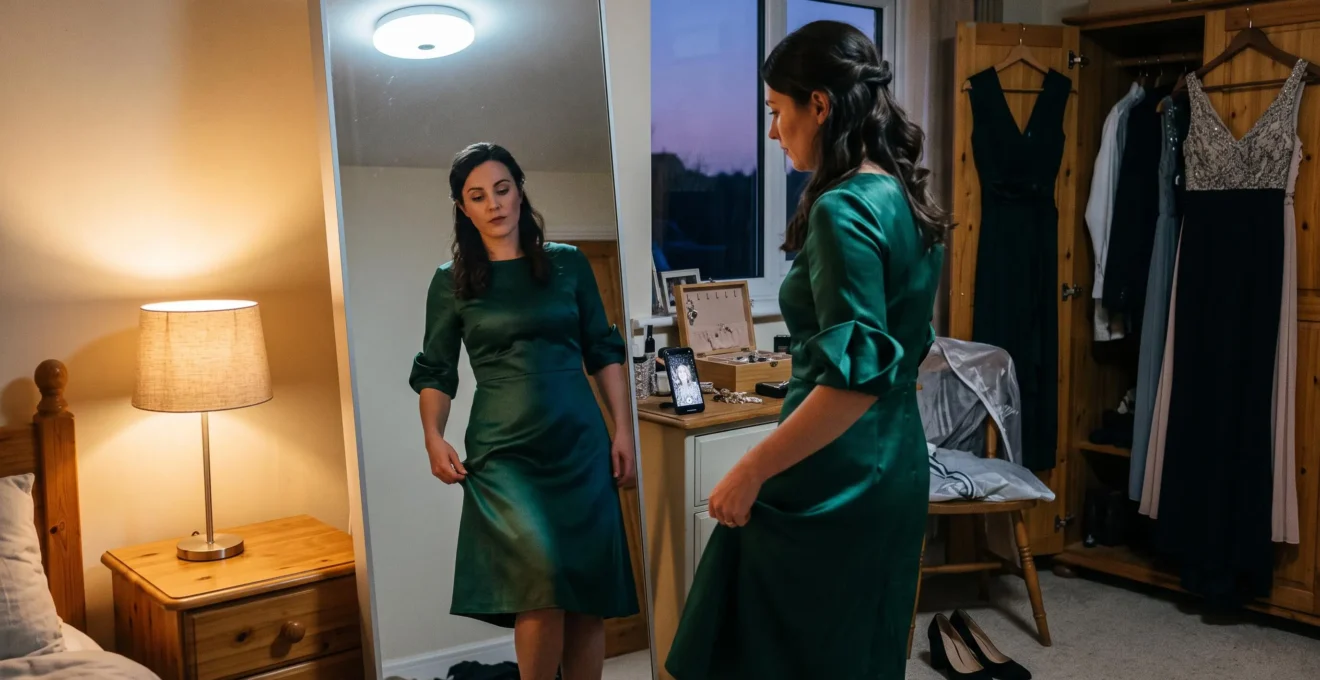
Evening glamour looks expensive when the clothes fit convincingly, the fabric responds beautifully to light, and every accessory feels intentional. A designer label cannot compensate for a pulling zip, an awkward hem or shoes that make walking uncomfortable. Equally, a well-fitted high-street dress can look remarkably polished when its proportions and finishing details are right.
For weddings, charity galas, theatre evenings and formal dinners in the UK, the challenge is finding the right degree of glamour. A dramatic satin gown may be wonderful beneath chandeliers but less forgiving under direct photography. A beautifully cut cocktail dress might suit three different occasions, yet need different styling for each.
The most reliable approach is to concentrate on a few visible decisions: fabric, silhouette, fit, footwear and finishing. These create the impression of thoughtful dressing without requiring excessive spending, restrictive shapewear or painful heels.
Looking glamorous is not about accumulating expensive-looking elements. It is about making the elements you choose work together, in the actual room where you will wear them.
Evening glamour: the essentials
- Prioritise excellent fit, controlled shine and considered proportions over labels or excessive embellishment.
- Test clothing under different lighting and through real movement before committing to an outfit.
- Choose one statement element, then build comfortable, event-appropriate supporting pieces around it.
- Why Do Some Fabrics Look Stunning in Low Light but Awful in Flash Photos?
- How to Add Glamour to an Evening Look Without Sacrificing Comfort for 6 Hours?
- Statement Dress or Statement Accessories: Which Gives More Impact Under £300?
- The Eveningwear Mistake That Makes You Look Out of Place at Black-Tie Optional Events
- A 30-Minute Pre-Event Checklist That Stops 90% of Glamour Wardrobe Emergencies
- How to Build a Contemporary Elegant Outfit in 10 Minutes Without Overthinking?
- How to Make One Cocktail Dress Work for Dinner, Theatre, and a Work Party?
- Which Evening Gown Silhouettes Flatter You Most Without Needing Extreme Shapewear?
Why Do Some Fabrics Look Stunning in Low Light but Awful in Flash Photos?
Shiny fabrics can look exceptionally glamorous in soft evening light because their reflections create movement and depth. Direct flash, however, can produce bright highlights that obscure texture or emphasise creases. Neither satin nor sequins are inherently unflattering in photographs; the result depends on fabric construction, fit, lighting angle and camera exposure.
A candlelit dining room produces a different visual effect from a camera flash. Low, diffuse lighting can make satin appear fluid and metallic threads sparkle subtly. Direct, concentrated light may create intense reflections on smooth areas and sharp contrast wherever the fabric folds.
Photographic exposure matters. Nikon‘s explanation of photographic exposure and histograms describes how overly bright image areas can lose visible detail. Applied to eveningwear, this means an intensely reflective surface may reproduce differently from how it appears to the eye. It does not mean that glossy fabrics always photograph badly.
Fabric quality and construction are just as important as reflectivity. Thin satin pulled tightly across the body can show tension marks, while heavier satin with appropriate lining may fall smoothly. Crepe often creates a controlled surface, velvet changes appearance with its pile and light direction, and structured silk can offer a balance between sheen and shape.
Before an event, perform a simple two-lighting comparison:
- Wear the complete outfit, including the intended underwear and shoes.
- Take a photograph under bright overhead lighting, with flash if that is how event photographs are likely to be taken.
- Repeat beside a warm lamp, without flash.
- Compare visible seams, creases, colour, highlights and the outline of undergarments.
This is a practical styling test, not a scientific fabric assessment. Its value is revealing differences in your particular outfit before they become surprises.
Deep navy, burgundy and forest green can also lose visible colour distinction in some photographs, especially where exposure is poor or shadows are strong. Do not assume these shades will always photograph as black; check them with your own camera.
For photography-heavy events, a mid-sheen fabric with enough structure to retain its shape is often a dependable compromise. For a quieter dinner, a more reflective material can be especially effective.
The fabric that appears richest on a hanger is not necessarily the one that looks most sophisticated after several hours of movement, photography and sitting.
How to Add Glamour to an Evening Look Without Sacrificing Comfort for 6 Hours?
Comfortable evening glamour comes from concentrating visual impact in two or three places rather than relying on tight clothing or towering heels. An elegant silhouette, attractive fabric and one strong accessory can create a formal appearance while leaving room to sit, move and eat. The crucial test is whether the outfit remains comfortable throughout the event.
A six-hour evening is rarely six hours of standing still. A wedding may involve travelling, a ceremony, a lengthy meal and dancing. A drinks reception may require considerably more standing than a formal dinner.
Test your clothing against the activities you will actually perform:
- Sit test: Sit on a firm chair for several minutes. Check whether the waistband presses, the skirt rides up or the lining pulls.
- Arm-raise test: Lift your arms as though greeting someone, reaching for a coat or dancing. Check the neckline, straps and shoulders.
- Walking test: Walk, turn and climb a few steps in the shoes you intend to wear. Notice whether the dress catches beneath your feet or restricts your stride.
Pay attention to hidden discomfort. Rigid boning can press against the ribs. A back zip with no fabric give may become uncomfortable after dinner. A lining without stretch can restrict movement even when the outer dress feels flexible.
Choose a dress with comfortable construction, and consider alterations where necessary. For handbags, a small bag with a discreet strap can be more practical at a standing reception than a clutch that occupies one hand throughout the evening.
Footwear deserves particular attention. Guy’s and St Thomas’ NHS footwear advice recommends adequate toe space, cushioning and secure fit. For people seeking to reduce foot discomfort, its guidance favours lower, more stable heels, including heels under 4 cm. This is health-oriented guidance rather than an obligatory eveningwear dress code.
Plan around the event’s later hours. A jacket or elegant wrap can provide warmth when leaving a venue, while discreet spare flats may make the journey home easier.
A simple scheduling rule helps: choose the outfit for the most physically demanding part of the evening, not merely the arrival photographs. For a standing drinks event, footwear and bag practicality may determine comfort; for a seated dinner, bodice fit and waist pressure are more important.
True polish is visible in relaxed posture and effortless movement. An outfit that lets you enjoy the occasion will usually communicate more confidence than one requiring constant adjustment.
Statement Dress or Statement Accessories: Which Gives More Impact Under £300?
Under a £300 budget, statement accessories often provide better long-term value when you have several events to attend, while a striking dress can deliver greater immediate impact for one important occasion. The decision depends on your existing wardrobe, the number of future wears, the dress code and whether the garment needs alterations.
Consider a hypothetical situation: you own a well-fitting navy cocktail dress and have three occasions approaching. Buying another dramatic dress may create one distinctly different outfit. Choosing a sculptural cuff, versatile evening shoes or an exceptional bag could make your existing dress work in several ways.
For a single formal wedding where your wardrobe has no suitable foundation, the decision may reverse. A properly fitted gown could matter more than a collection of accessories.
The following budget allocations are illustrative styling scenarios, not observed UK retail prices or guaranteed purchasing outcomes.
| Decision factor | Statement dress strategy | Statement accessories strategy |
|---|---|---|
| Example allocation | £240 dress, £40 alterations, £20 finishing essentials | £100 shoes, £110 bag, £60 jewellery, £30 finishing essentials |
| Best situation | One important event with a specific formal dress code | Several occasions with a reliable base dress already owned |
| Main risk | Fit, fabric movement and limited opportunities to re-wear | Accessories may not compensate for a poorly fitting base dress |
| Potential reuse | Depends on how adaptable the dress is | Pieces can move between dresses and tailored separates |
| What to check | Alterations, cleaning and future wearability | Compatibility with existing clothes and footwear comfort |
In the UK, rental services, sample sales and pre-owned fashion platforms can expand the available options without requiring every piece to be purchased new. Rental may provide access to a special-occasion garment, but check deposits, cleaning terms, damage liability and return dates. Sample sales can involve limited sizing or restricted returns. Pre-owned clothing requires careful assessment of measurements, condition, photographs and authenticity claims.
The Ellen MacArthur Foundation‘s analysis of circular fashion business models identifies rental, resale, repair and remaking as approaches that can keep garments in use. It does not establish which shopping route will produce the most glamorous result for £300.
The weakest strategy is often spreading the budget so thinly that neither the dress nor the accessories stand out. Concentrate spending where the visual and practical improvement will be greatest.
Also consider resale realistically. A recognisable designer name does not guarantee a favourable resale price, particularly when condition, sizing and demand are uncertain. Alterations can improve personal wearability but may narrow the pool of future buyers.
A smaller wardrobe of carefully chosen, genuinely wearable pieces can create more distinctive evening looks than a succession of purchases made for isolated occasions.
The Eveningwear Mistake That Makes You Look Out of Place at Black-Tie Optional Events
The most common mistake at a black-tie-optional event is interpreting “optional” as permission to dress casually. The invitation generally retains a formal evening standard while allowing alternatives to the strictest black-tie outfits. A polished cocktail dress, elegant separates or an evening gown may all work, provided the fabric, fit and accessories suit the occasion.
In practice, the distinction is between flexible formalwear and ordinary smart daywear. A cotton sundress with daytime sandals might feel elegant at lunch but appear too informal at an evening gala. Meanwhile, a well-constructed midi cocktail dress with refined jewellery and formal shoes may fit the room perfectly.
The Emily Post Institute‘s dress-code guidance recognises formal gowns, dressy cocktail dresses and elegant separates as acceptable options for women at black-tie-optional events. These conventions provide a useful starting point, although a specific UK host may set more particular expectations.
Assess four clues before choosing the outfit:
- Venue: A grand hotel ballroom often suggests a more formal presentation than a relaxed private restaurant.
- Start time: An evening reception may favour dressier finishes than an afternoon celebration.
- Host and occasion: A charity fundraising dinner, corporate gala and wedding can create different expectations.
- Invitation wording: Specific guidance from the host should take precedence over assumptions about the venue.
For a hypothetical country-house wedding with black tie optional on the invitation, a refined midi dress in substantial crepe, elegant shoes and a small evening bag could be suitable. For a hypothetical ballroom charity gala, a longer dress or more formal cocktail outfit might better match the setting. At a work gala, tailored evening separates may offer a confident balance of formality and practicality.
Remember that formality is communicated by the complete outfit. A short dress is not automatically casual, just as a floor-length dress is not automatically formal. Fabric quality, construction, grooming, accessories and overall coherence matter.
A well-fitted cocktail dress can outperform a poorly fitting gown when it looks deliberate and suits the invitation. Where the dress code is unclear, ask the host rather than purchasing an unnecessarily elaborate outfit.
The aim is not to dress more extravagantly than everyone else. It is to meet the occasion’s expectations while maintaining a style that feels natural to wear.
A 30-Minute Pre-Event Checklist That Stops 90% of Glamour Wardrobe Emergencies
A structured 30-minute outfit inspection can prevent many common eveningwear emergencies, including visible creases, loose fastenings, uncomfortable shoes and unexpected underwear lines. The “90%” figure is an illustrative headline, not a measured success rate. The most effective approach is to inspect the garment first, complete a full try-on and prepare practical backups.
Run the full check the day before the event, not just before leaving. A loose hem may require sewing, an awkward zip might need repair, and uncomfortable shoes may need replacing. Discovering these problems with time available makes the difference between a simple correction and a rushed outfit change.
The order also matters. Checking your bag before discovering that the dress is damaged wastes valuable time. Begin with issues that could make the outfit unwearable, then progress towards finishing details.
Your 30-minute eveningwear emergency-prevention checklist
- Minutes 0–6 — Inspect the garment. Check seams, hems, zips, straps, fastenings, loose embellishments and visible marks. Deliverable: an outfit confirmed wearable or a written list of repairs required.
- Minutes 6–13 — Complete the full try-on. Put on the intended underwear, hosiery, dress, shoes, jewellery and outer layer. Sit, raise your arms and walk. Deliverable: a final outfit combination that passes the movement test.
- Minutes 13–19 — Check lighting and photographs. Take front, side and back photographs under bright and warm lighting. Look for static cling, transparency, creases and makeup transfer. Deliverable: three reviewed photographs and any necessary adjustments.
- Minutes 19–25 — Prepare a small emergency kit. Pack suitable double-sided clothing tape, two sizes of safety pins, spare sheer tights if worn, blister plasters and an appropriate travel de-wrinkling solution. Keep foldable flats available for the journey home where useful. Deliverable: a packed, accessible kit.
- Minutes 25–30 — Rehearse the exit. Check the coat, bag, shoes, transport and weather conditions. Confirm that emergency supplies fit your bag and the outfit works with your outerwear. Deliverable: a complete, ready-to-leave eveningwear setup.
Some problems require additional care. A delicate fabric may not tolerate adhesive tape, steam or direct heat. Test any product discreetly and follow the garment’s care instructions. Safety pins are temporary solutions, not substitutes for secure repairs to a heavily stressed seam.
For static cling, consider whether the lining, hosiery or fabric combination is responsible before applying a treatment. For wrinkles caused by travel, hanging the garment in a suitable place may help, while other textiles require professional pressing.
An emergency kit should solve small problems without becoming another cumbersome accessory. Prioritise items matched to the clothes you are actually wearing.
With the practical risks covered in advance, the final moments before leaving can focus on enjoying the occasion rather than improvising repairs.
How to Build a Contemporary Elegant Outfit in 10 Minutes Without Overthinking?
Contemporary elegance becomes easier when you follow a simple formula: one polished foundation, one interesting texture or touch of shine, and one sculptural accessory. Preparing two or three reliable outfit combinations in advance removes most last-minute decisions. The result is restrained but expressive, with enough visual interest to feel special without becoming overstyled.
The key distinction between contemporary elegance and traditional evening glamour is not the absence of glamour. It is how the details are balanced. A modern outfit often combines clean lines, relaxed proportions and an unexpected texture rather than adding embellishment to every visible element.
Try preparing three repeatable evening uniforms:
- The column-dress formula: A clean-lined midi or maxi dress, refined earrings and uncomplicated shoes. Add a structured jacket when appropriate.
- The tailored-separates formula: Wide-leg evening trousers, an elegant top and one metallic or sculptural accessory. Keep the remaining pieces quiet.
- The slip-and-knitwear formula: A fluid slip skirt or dress with a fine, beautifully proportioned knit, restrained jewellery and polished footwear. Best suited to less formal evening settings.
These combinations work because the base is already familiar. You know which underwear works, how the clothes move and whether the shoes are comfortable. The ten minutes are spent assembling rather than experimenting.
Make one final mirror decision. Does one element clearly lead the outfit? Are the metallic details harmonious rather than competing? Does the hem work with the chosen shoe? There is no absolute rule limiting the number of metallic finishes, but keeping them visually coordinated often makes hurried styling easier.
For a formal dinner, a sleek black column dress with sculptural silver earrings may need little else. For a contemporary work celebration, softly tailored trousers and a satin blouse can feel elegant without demanding dramatic jewellery.
Once the outfit passes the fit, proportion and occasion checks, stop editing. Adding one more accessory rarely improves a look that already feels complete.
How to Make One Cocktail Dress Work for Dinner, Theatre, and a Work Party?
One cocktail dress can work across dinner, theatre and a work party when its construction is versatile and the styling changes to reflect the venue. Choose a dress with controlled structure, a flexible neckline and a hem that works with different shoes. Then adjust jewellery, layering, bags and hosiery rather than buying three separate outfits.
The dress itself determines how far restyling can go. A heavily embellished gown with dramatic cut-outs may remain strongly associated with one type of event. A structured crepe or similarly substantial cocktail dress in a versatile colour usually offers more room for interpretation.
Look for a neckline that feels finished with or without a necklace, secure straps or sleeves, and a length that works while sitting and standing. The dress should also be comfortable beneath a jacket or wrap.
Consider how the same understated navy midi dress could change across three situations:
| Styling element | Dinner | Theatre | Work party |
|---|---|---|---|
| Layer | Elegant draped shawl or refined evening jacket | Tailored coat or soft structured jacket | Tailored blazer |
| Shoes | Dressy heels or polished flats | Comfortable formal shoes suitable for walking | Refined low or block heels |
| Bag | Small evening bag | Practical compact shoulder bag | Small structured bag |
| Jewellery | Statement cuff or earrings | One understated focal piece | Minimal, polished jewellery |
| Hosiery | Optional, depending on shoes and weather | Chosen for comfort and conditions | Subtle tights when appropriate |
The work-party version requires particular judgement. Jewellery that appears sophisticated at a private dinner may feel theatrical when surrounded by colleagues in a relatively informal office setting. Reduce the shine, choose quieter textures and keep the outfit practical for travelling or standing.
Conversely, the dinner version can support more pronounced jewellery or a dramatic evening bag, provided these do not overwhelm the dress.
If changing directly from the office, prioritise substitutions that fit into one small bag: jewellery, shoes and a lightweight wrap or layer. A completely different hairstyle or outfit may require a changing space and additional preparation.
Choose accessories by the practical demands of each venue, not just by how they look together on the bed. Theatre seating, outdoor queues and a long walk to the station can all influence what feels appropriate.
Versatility comes from a dress that does not impose a single visual identity. With the foundation right, small changes can genuinely alter how formal, expressive or understated it feels.
Key takeaways before choosing your gown
- Identify whether you need physical support, smoother fabric lines or a dress that stays securely positioned; each requires a different construction solution.
- Judge a silhouette while moving and sitting, not only in a fitting-room mirror.
- Reserve some attention and budget for precise alterations, which can improve the result without adding compression underneath.
Which Evening Gown Silhouettes Flatter You Most Without Needing Extreme Shapewear?
The most flattering evening gown is usually one whose construction supports your preferred shape without requiring your body to compensate for poor fit. Structured columns, supported bodices, adjustable wraps, bias-cut designs and empire-line dresses offer different advantages. The right choice depends on the support, movement and coverage you want rather than a prescribed body type.
Instead of asking which silhouette will conceal a particular feature, begin by identifying the problem you are trying to solve. There are three common reasons someone feels dependent on shapewear: wanting additional support, wanting fabric to hang smoothly, or needing the garment to remain securely positioned.
These needs are not interchangeable. Compression might temporarily smooth a fabric line, but it cannot correct a badly positioned waist seam or a bodice that lacks the support necessary for its design.
| Silhouette | Construction advantage | Practical consideration |
|---|---|---|
| Structured column | Creates a clean vertical line through its cut and fabric body | Needs enough room for walking and sitting |
| Supported bodice | Provides garment-based shaping and security | Internal support must fit correctly rather than press painfully |
| Bias cut | Offers fluid drape and movement | Can follow body contours and respond to fabric tension |
| Wrap construction | Allows adjustable definition and draping | Needs secure fastening and sufficient overlap |
| Empire line | Creates shape above the natural waist with a freer skirt | The raised seam must sit in a comfortable, intentional position |
A bias-cut dress may be especially attractive for movement, but certain lightweight fabrics can cling to the body or show underwear seams. A structured column can maintain a cleaner line, although an excessively narrow skirt may interfere with stairs or dancing.
A supported bodice can reduce the need for separate shaping garments when its internal construction and sizing are appropriate. It should feel secure without restricting breathing or causing uncomfortable pressure.
Small alterations can make a disproportionate visual difference. Adjusting shoulder straps can reposition a neckline, refining the waist can correct excess fabric, and shortening a hem to clear the shoe can improve the entire silhouette.
These alterations are often less intrusive than relying on additional compression, although actual costs vary with the garment, fabric and complexity. Some eveningwear, particularly heavily beaded or intricately constructed dresses, can be expensive to alter.
Try the gown with the undergarments you genuinely want to wear. Walk several steps, sit down, turn and raise your arms. If the garment only looks right when you stand motionless, its fit is not yet resolved.
The best silhouette is one you can inhabit comfortably, not merely one that produces an idealised photograph from a single angle.
Choose the silhouette that provides the structure you need, arrange any necessary adjustments with sufficient time before the occasion, and judge the finished outfit under realistic lighting and movement. That combination is a more dependable route to expensive-looking evening glamour than a designer label alone.
Can inexpensive eveningwear genuinely look luxurious?
Yes. A lower-priced dress can look polished when its fabric hangs well, its seams and fastenings are neat, and the fit is carefully adjusted. Thoughtful accessories and suitable footwear also matter. Price alone does not establish how well clothing will look or perform in a particular setting.
Which eveningwear colours are easiest to style for different occasions?
Black, navy, deep burgundy and other subdued shades can be versatile because they work with several accessories and outer layers. The best choice still depends on your colouring preferences, the invitation and the fabric. Photograph darker shades under different lighting to check that the details remain visible.
Are elegant flat shoes acceptable at formal evening events?
Dressy flats can be a polished choice, particularly when their material, shape and finish suit the formality of the outfit. A refined pointed-toe or embellished flat may work better than a casual everyday shoe. Always consider the host’s dress code and your own comfort needs.
How can a dress look expensive without wearing lots of jewellery?
Focus on proportion, fabric quality, fit and finishing. A well-cut dress with a clean neckline may need only one cuff, a pair of considered earrings or no jewellery at all. An uncluttered look allows the garment’s construction and texture to make the strongest impression.
What should be checked before renting an evening gown in the UK?
Confirm the garment’s measurements, rental dates, delivery arrangements, cleaning requirements, damage terms and return policy. Check whether alterations are prohibited and whether a backup option is available if the fit is unsuitable. Rental can be useful for occasional formalwear, but convenience and total cost depend on the provider’s conditions.