A luxury jacket described as “exclusive” might be one of just twenty available today. That does not necessarily mean its design is original, its construction exceptional or its silhouette unlikely to return next season. The distinction matters when a purchase represents hundreds or thousands of pounds.
Truly exclusive design is defined by demonstrable restrictions on a design’s availability, its distinctive creative characteristics or an individually commissioned execution. Limited stock establishes only that a particular quantity is currently available. It says remarkably little about how many examples have already been sold, whether further production is planned or how widely the underlying design appears elsewhere.
Recognising genuine exclusivity therefore requires examining more than labels and launch announcements. Construction, design history, production documentation and reissue policies each reveal a different part of the story. None provides certainty alone, but together they can distinguish a meaningful creative proposition from an ordinary product wrapped in scarcity language.
The most revealing evidence often lies where online product photography rarely ventures: inside a garment, within an archive or in the precise wording of a commission agreement.
What really makes a luxury design exclusive?
- Design rarity is not inventory scarcity: ask whether the design itself can be reproduced, not simply how many units remain.
- Construction provides evidence of craftsmanship: inspect internal finishing, fabric handling and distinctive details, while recognising that handwork does not automatically prove uniqueness.
- Documentation matters: edition records, commission details, reissue policies and condition reports provide stronger evidence than promotional descriptions.
- Why Does True Exclusivity Hide in Details You Don’t Notice on a Product Page ?
- How to Judge Design Originality Without Being a Fashion Insider ?
- Made-to-Order or Limited Edition: Which Actually Feels Rarer After 6 Months ?
- The Exclusive-Design Trap That Leaves You With a £1,000 Item You Never Wear
- A Storage Routine That Keeps Exclusive Pieces Pristine for 5+ Years
- Why Do Couture Finishes Take So Long Even When You Can’t See Them From Far Away ?
- How to Spot Period-Consistent Details in Antique Jewellery Without Being an Expert ?
- How Do You Buy Antique Jewellery in the UK Without Getting Caught by Hidden Damage ?
Why Does True Exclusivity Hide in Details You Don’t Notice on a Product Page ?
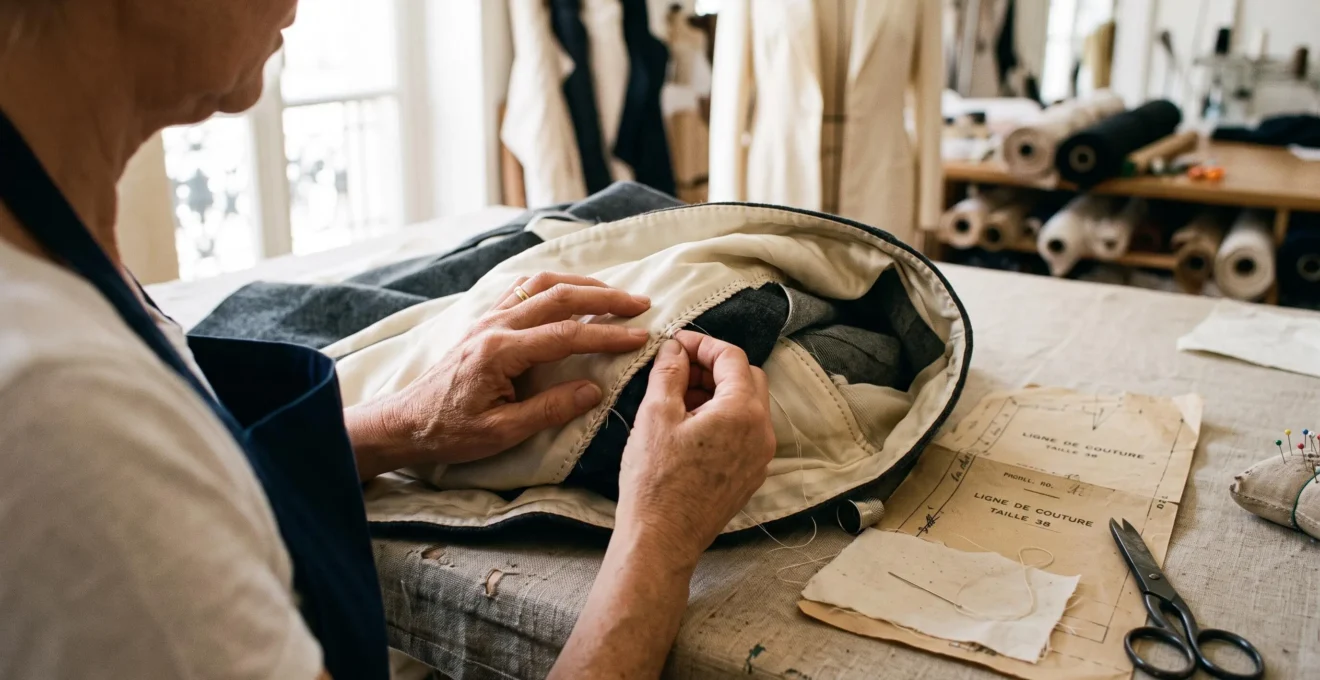
Genuine exclusivity often becomes apparent through construction choices, unusual materials and design decisions that standard product photographs cannot communicate. Hand-finished seams, individually adjusted linings and distinctive structural details may demonstrate exceptional craftsmanship. However, those qualities only establish design exclusivity when accompanied by evidence that the particular design or execution is genuinely restricted.
A polished campaign photograph reveals silhouette and surface embellishment. It rarely shows how a sleeve is attached, whether a lining accommodates movement or how internal edges are finished. These details help distinguish careful construction from products whose luxury positioning depends principally on presentation.
The historical distinction is visible in The Metropolitan Museum of Art‘s history of Jeanne Hallée. The museum documents how the Parisian house incorporated delicate handwork and embellishment into garments, alongside its development of made-to-measure couture. That historical evidence demonstrates the importance of skilled execution without implying that every hand-finished garment is unique.
Another distinction concerns production exclusivity versus design exclusivity. A jacket produced in a small batch may share its pattern with garments sold in other fabrics. Conversely, an individually commissioned silhouette may have distinctive construction even when its material is commercially available.
Before buying online, request photographs of the lining, internal seams, closures, construction labels and any unusual design features. Ask whether the stated production quantity applies to one colour, one season, one market or every version of that design.
The most useful questions are precise: How many examples have been manufactured? Is the pattern exclusive to this collection? Will the same silhouette be produced again? Where was the garment made? Can the house provide documentation supporting its answers?
An especially revealing clue is a detail that would be inconvenient or expensive to repeat consistently at scale: perhaps a individually developed drape, complex asymmetric construction or material selected for a particular commission. Such features may strengthen the case for distinctive design, but they remain indicators rather than proof of restricted production.
The immediate objective is not to uncover a secret atelier technique. It is to establish whether the seller can explain precisely what makes the design unavailable elsewhere. Once that claim is defined, originality becomes easier to investigate.
How to Judge Design Originality Without Being a Fashion Insider ?
Design originality can be assessed without professional fashion credentials by comparing silhouettes, construction details and recurring creative signatures against publicly accessible collections. The strongest approach combines historical visual research with direct questions about a garment’s development. Similarity does not automatically prove copying, and visual distinctiveness alone cannot establish legal protection or commercial exclusivity.
Begin with the silhouette. Examine the proportion between shoulders and waist, the placement of seams, the handling of volume and the relationship between fabric and movement. A familiar jacket shape may contain an unusually engineered sleeve or a distinctive drape that becomes apparent only in profile.
Originality of concept and originality of execution are different things. A designer may reinterpret a conventional evening dress through an identifiable construction method without inventing an entirely new garment category.
Three accessible research steps help establish context:
- Compare earlier collections. Search public runway archives, fashion-house collection pages and established auction catalogues for comparable silhouettes across different seasons.
- Identify the house’s recurring design language. Look for characteristic proportions, construction methods, fabric treatments or motifs, then determine whether the proposed purchase develops those ideas coherently.
- Conduct a reverse-image search. Compare the product photographs with visually similar garments offered by other retailers, checking whether matching results represent the same authorised product, a generic design or possible imitation.
Vogue Runway, official maison archives and specialist auction catalogues can help establish visual context. Their usefulness depends on the completeness and accuracy of the available records; an absent search result does not demonstrate that a design has never appeared before.
Multiple retailers selling the same garment are not automatically evidence of copying. They may be legitimate stockists. More revealing is whether apparently identical designs are marketed under unrelated labels without a credible account of their origin.
There is also a reverse trap: a visually shocking garment can appear unprecedented simply because its presentation is extreme. Ask whether the designer can explain the pattern development, material choices or relationship to an established creative practice.
Originality ultimately becomes more persuasive when a garment has both an intelligible design history and recognisable construction characteristics. The remaining question is how that originality relates to production quantity.
Made-to-Order or Limited Edition: Which Actually Feels Rarer After 6 Months ?
Made-to-order fashion may feel more personally exclusive after six months because its proportions and alterations reflect the individual wearer. A numbered limited edition may offer a clearer record of production scarcity. Neither automatically guarantees unique design, future rarity or resale value: the decisive factors are the commission terms, edition scope and possibility of reissue.
The phrase “made-to-order” is particularly easy to misunderstand. It can describe a garment produced only after an order is placed, using an existing pattern. That is different from a bespoke design developed individually for a client.
Similarly, an edition numbered 12 of 40 establishes a stated position within a particular run, but the value of that number depends on what the maker means by the edition. It may cover only one fabric, colour or release.
The following comparison separates practical benefits from assumptions about scarcity.
| Criterion | Made-to-order | Numbered limited edition |
|---|---|---|
| Primary appeal | Individual fit or production to order | Documented production quantity |
| Design uniqueness | Depends on customisation and pattern terms | Depends on edition scope and reissue policy |
| Everyday wear | Potentially better if fitted to the wearer | Depends on standard sizing and alterations |
| Collecting | Commission records may establish provenance | Edition records may help identify the release |
| Resale | Personal measurements may limit the buyer pool | Edition documents may help verification, without guaranteeing demand |
| Principal uncertainty | Whether the pattern can be ordered again | Whether the design can return in another edition |
For regular wear, an individually fitted commission may offer more enduring satisfaction than a numbered release. For collecting, a documented edition can be easier to describe consistently to a future buyer, provided the documentation is credible and transferable.
Reissue policy is the crucial question. A brand could release a similar design later in another material, while a made-to-order pattern might remain available indefinitely. Neither commercial label resolves that ambiguity.
Be especially cautious with “limited pre-order” campaigns. A brief ordering window does not necessarily establish a fixed production ceiling. Ask whether the manufacturer accepts unlimited orders during the announced period and whether another ordering window is possible.
After six months, the psychological excitement of an announcement may have faded. What remains is the garment’s fit, its actual use, its design integrity and the documentary evidence supporting the original claim.
The better choice is not necessarily the one with the smaller published number. It is the one whose exclusivity can be explained and whose practical value persists beyond the launch campaign.
The Exclusive-Design Trap That Leaves You With a £1,000 Item You Never Wear
The most expensive mistake in exclusive fashion is buying scarcity instead of suitability. A £1,000 garment can be beautifully constructed and genuinely uncommon yet remain unworn because its proportions, colour or maintenance requirements do not fit everyday life. A useful purchase must satisfy two separate tests: credible exclusivity and a realistic reason to wear it.
Limited availability can create pressure precisely when careful judgement is most valuable. A countdown, a stock warning or a social-media announcement may encourage immediate action without providing meaningful evidence of design originality.
Before purchasing, apply the three-occasion test: identify three specific occasions when you would wear the piece. Then identify compatible shoes, outerwear and accessories already owned. This converts an imagined lifestyle into a tangible wardrobe decision.
Cost per wear provides another useful perspective. The calculation is straightforward:
Cost per wear = total purchase and ownership costs ÷ actual number of wears.
Consider a purely hypothetical comparison. A £1,000 statement garment worn twice has a purchase-price cost of £500 per wear. A £600 garment worn thirty times costs £20 per wear before care and alterations. These are illustrative scenarios, not findings about luxury consumers.
Resale should not be treated as an automatic escape route. An unusual silhouette may appeal to a small group of buyers, while the absence of comparable transactions can make pricing uncertain. A numbered edition or original receipt improves documentation but does not create market demand.
A five-step exclusivity purchase audit
- Define the rarity claim: obtain a written statement identifying the production quantity, its scope and any reissue restrictions.
- Inspect construction: save clear photographs of internal seams, lining, closures and distinctive features.
- Research originality: record comparable archive examples or reverse-image results with their relevant collection details.
- Test actual use: write down three specific wearing occasions and the outfits that would accompany the purchase.
- Review the decision: after a self-imposed 48-hour reflection period, complete a purchase note covering price, expected wears, care requirements and unresolved questions.
The 48-hour interval is a personal decision-making safeguard, not a scientifically established purchasing threshold. Its practical purpose is to separate an immediate scarcity reaction from a considered choice.
Rarity can enrich ownership, but it cannot substitute for usefulness. Once a garment earns its place in a wardrobe, the next challenge is protecting its condition without compromising its materials.
A Storage Routine That Keeps Exclusive Pieces Pristine for 5+ Years
Long-term preservation depends on matching storage methods to the construction, weight and materials of each piece. Fragile embroidery, structured tailoring, silk and leather do not respond identically to hanging, folding or environmental conditions. A carefully designed routine can reduce damage over five years or longer, but no storage method guarantees that natural ageing will stop.
The Canadian Conservation Institute guidance on caring for textiles and costumes explains how factors including light, humidity, dust, handling and inadequate support contribute to textile deterioration.
Its recommendations are intended principally for heritage collections, but the underlying preservation principles offer a useful framework for valuable garments in domestic wardrobes.
Start by separating pieces according to their structural needs:
- Delicate silk and fragile embroidery: consider supported flat storage, especially where embellishment weight could distort the fabric.
- Structured jackets and suitable dresses: use correctly shaped, padded hangers that support the shoulders without creating pressure marks.
- Bias-cut, heavily beaded or unusually heavy garments: prioritise supported flat storage where hanging could stretch or distort construction.
- Leather accessories: avoid prolonged confinement in non-breathable plastic and follow material-specific care guidance.
- Metal accessories and jewellery: use separate protective compartments to reduce contact abrasion, taking account of individual materials and finishes.
Seasonal inspections can reveal small problems before they become substantial. Examine shoulders for hanger impressions, inspect fabrics for colour transfer and watch for changes in metal surfaces, stitching or fastenings. Handle vulnerable materials carefully and avoid unnecessary cleaning experiments.
Documentation deserves equal attention. Photograph garments from the front, back and inside at purchase, then retain receipts, edition numbers, certificates and any professional condition assessments. These records can assist future identification, insurance discussions and resale enquiries, although their existence does not guarantee cover or a particular selling price.
For commissioned pieces, preserve measurements, fitting notes and correspondence describing alterations or original construction choices. This information may help a future specialist understand how the garment was intended to fit, even if the original maker is no longer available.
Care requirements should be evaluated before acquisition. A garment requiring specialist handling is not necessarily impractical, but its maintenance needs belong in the purchasing decision rather than being discovered after damage occurs.
Preserving a distinctive piece is partly an exercise in understanding its construction. The same knowledge also helps explain why apparently invisible couture finishing can demand so much labour.
Why Do Couture Finishes Take So Long Even When You Can’t See Them From Far Away ?
Couture finishing can take considerable time because skilled workers must control fabric tension, shape delicate edges and complete details individually. Hand-set linings, carefully finished seams and individually worked buttonholes may involve repeated fitting and adjustment. These processes can improve finish, comfort or construction, but their duration depends on the garment and does not automatically establish exclusivity.
A buttonhole looks like a small opening. In finely executed garments, however, its surrounding fabric must be stabilised and its edge controlled. Individual handwork can accommodate particular materials and design requirements that a standardised production sequence may handle differently.
Similarly, a lining is not merely a hidden layer. Its positioning affects how a garment sits against the body and how the outer fabric moves. A lining that pulls at the wrong point can compromise fit even if the exterior appears flawless when photographed.
Finishing internal seams may involve decisions about bulk, fabric behaviour and how edges respond to repeated use. The appropriate method depends on the textile and garment construction; hand-sewing is not universally superior to machine-sewing.
The Metropolitan Museum’s historical account of Jeanne Hallée illustrates the significance of delicate handwork in couture practice. It does not establish a contemporary industry-wide number of hours required for finishing or prove that an individual design is impossible to reproduce.
To assess craftsmanship in person, examine the interior as carefully as the exterior. Look for secure stitching, controlled seam allowances, thoughtful placement of linings and finishing that suits the fabric. Avoid assuming that every handmade stitch must look mechanically identical.
Ask the maker which elements were completed by hand, why those techniques were chosen and whether records of the making process are available. An exact labour-hours figure can be informative when documented, but a confidently stated number without supporting detail adds little.
Time-intensive craftsmanship and genuine exclusivity frequently overlap without being equivalent. A skilled atelier may reproduce a complicated technique across multiple garments. Conversely, an individually developed design might use machine processes where those methods best serve its construction.
The more meaningful question is whether the labour serves a specific design purpose. That principle becomes particularly valuable when examining older luxury objects, where construction details can also reveal evidence about age and alteration.
How to Spot Period-Consistent Details in Antique Jewellery Without Being an Expert ?
Period consistency in antique jewellery can be investigated by comparing hallmarks, clasps, stone settings and construction methods with the item’s claimed age. The objective is not to authenticate the entire piece independently, but to identify details that support its description or deserve specialist investigation. Repairs and later replacements are common possibilities and do not automatically make an antique inauthentic.
British hallmarking provides a useful starting point because precious-metal marks can be examined using established institutional guidance.
Sheffield Assay Office‘s explanation of UK hallmarks identifies the sponsor’s mark, fineness mark and assay office mark as compulsory components of the modern UK hallmarking system, subject to the relevant rules and exemptions. Date letters are voluntary and have been optional since 1999.
For historical pieces, the letter alone may be insufficient to identify a year. Letter case, typeface and surrounding shield shape can help distinguish marking cycles. Older pieces and articles made outside the UK can require additional expertise.
Construction provides a second line of enquiry. Examine whether the clasp appears integrated with the original design, whether setting styles are consistent across the piece and whether gemstones show evidence of replacement or later adjustment.
Some older jewellery uses hand-fabricated components and traditional stone cuts, while later manufacture may introduce different techniques. Such observations can generate questions about attribution, but no single clasp shape, setting style or stone cut establishes a universally reliable date.
Consistency is not the same as complete originality. An antique brooch may have acquired a replacement fastening during its working life. That alteration can affect its condition, historical integrity or desirability without invalidating the age of its original components.
A responsible verification process begins with the seller’s description, continues through hallmark and construction examination, and escalates to independent professional assessment when authenticity, materials or restoration history remain uncertain. A qualified jewellery specialist or gemmologist may examine aspects that photographs cannot resolve.
As with couture, the strongest conclusions come from several details telling a coherent story. A prestigious name, an impressive price or a convincingly antique appearance cannot replace that examination.
Identifying a historically plausible piece is only the first stage of responsible purchasing. Its physical condition, disclosed repairs and the seller’s obligations are equally important.
What to establish before buying an antique luxury piece
- Separate evidence of historical origin from evidence of present condition: they answer different questions.
- Treat repairs as matters requiring disclosure and evaluation, not automatic reasons to reject an item.
- Obtain written descriptions and relevant independent findings before relying on a seller’s claims.
How Do You Buy Antique Jewellery in the UK Without Getting Caught by Hidden Damage ?
Buying antique jewellery in the UK requires careful condition assessment, clear written disclosures and an understanding of who is selling the item. Hidden setting repairs, replacement stones, damaged enamel and weakened clasps may not appear in ordinary photographs. Purchasing from a professional trader offers different legal protections from buying privately, but no seller category removes the need for inspection.
Begin with the vulnerable areas. A brooch clasp may function during a brief demonstration while showing wear at its hinge. A ring setting may hold its stones securely yet contain earlier repairs that deserve closer assessment. Enamel can conceal fine cracks, while a replacement gemstone may differ subtly from its neighbours.
Ask for detailed photographs of the reverse, fastenings, settings and any known restoration areas. For expensive or technically complicated objects, independent examination is preferable to relying solely on a listing description.
The legal context also matters. UK government guidance on statutory rights in sales contracts explains that goods supplied by traders must satisfy applicable requirements concerning description, satisfactory quality and fitness for purpose.
Under the Consumer Rights Act 2015, the assessment of satisfactory quality takes account of relevant circumstances. For antique jewellery, age, price, description and disclosed defects can be important. The law should not be interpreted as requiring an old object to be in new condition.
Private-to-private purchases generally offer substantially less consumer protection than purchases from professional traders. The precise position depends on the transaction and applicable law, so the identity and status of the seller deserve attention.
Membership of professional organisations such as BADA or LAPADA may offer useful information about a dealer’s professional standing and practices. Such membership does not automatically create additional statutory remedies or guarantee that a particular item has no undisclosed defects.
Before paying, request written answers to the following questions:
- Which parts of the object have been repaired, altered or replaced?
- What documentary provenance accompanies the piece, and what remains uncertain?
- Can an independent specialist examine the item before purchase?
- Does the description distinguish original components from later additions?
- What return arrangements apply to this transaction, and are any statutory rights or relevant exceptions involved?
Evaluate the specificity of the answers. A dealer who identifies the location and nature of a repair provides more useful evidence than one who simply describes the piece as being in excellent condition.
Perfect preservation is not necessarily the appropriate expectation for antique jewellery. A carefully executed historical repair may be compatible with continued enjoyment and collection value. The issue is whether its existence, significance and implications have been explained accurately.
That makes transparency a more practical trust signal than claims of perfection. Clear condition records, appropriately qualified professional opinions and accurate descriptions help buyers understand what they are purchasing.
Before making a significant purchase, request a written condition description and supporting documentation, then arrange independent examination wherever the potential financial or authenticity risk justifies it. Buy for the qualities that can be established, not merely for the rarity the seller promises.
Does a certificate of authenticity prove that a fashion design is exclusive?
Not necessarily. A certificate may support a claim about origin, edition identity or materials, depending on who issued it and what it states. It does not automatically prove that the design will never be reproduced. Check the document’s scope, issuer and relationship to the exact item.
Can a mass-produced garment have an original design?
Yes. Creative originality and production volume are separate characteristics. A designer may develop a distinctive silhouette that is subsequently manufactured in substantial quantities. Its design may be original without being commercially scarce.
Does bespoke clothing always mean one-of-a-kind clothing?
No. Bespoke clothing typically involves individual pattern development or substantial personalisation, but the same atelier may use related design concepts for other clients. Confirm whether any contractual restriction applies to reproducing the design if uniqueness is essential.
Should a rare luxury piece always be kept unworn to protect its value?
No universal rule applies. Condition may matter to collectors, but actual market demand, provenance and the nature of the piece also influence resale prospects. Decide whether an acquisition is primarily intended for wearing or collecting, then choose an appropriate care strategy.
Can a genuine antique still contain modern replacement components?
Yes. Clasps, settings and gemstones may have been replaced during an object’s history. These changes do not necessarily invalidate the authenticity of its original components, but they should be disclosed and evaluated when considering attribution, condition and price.