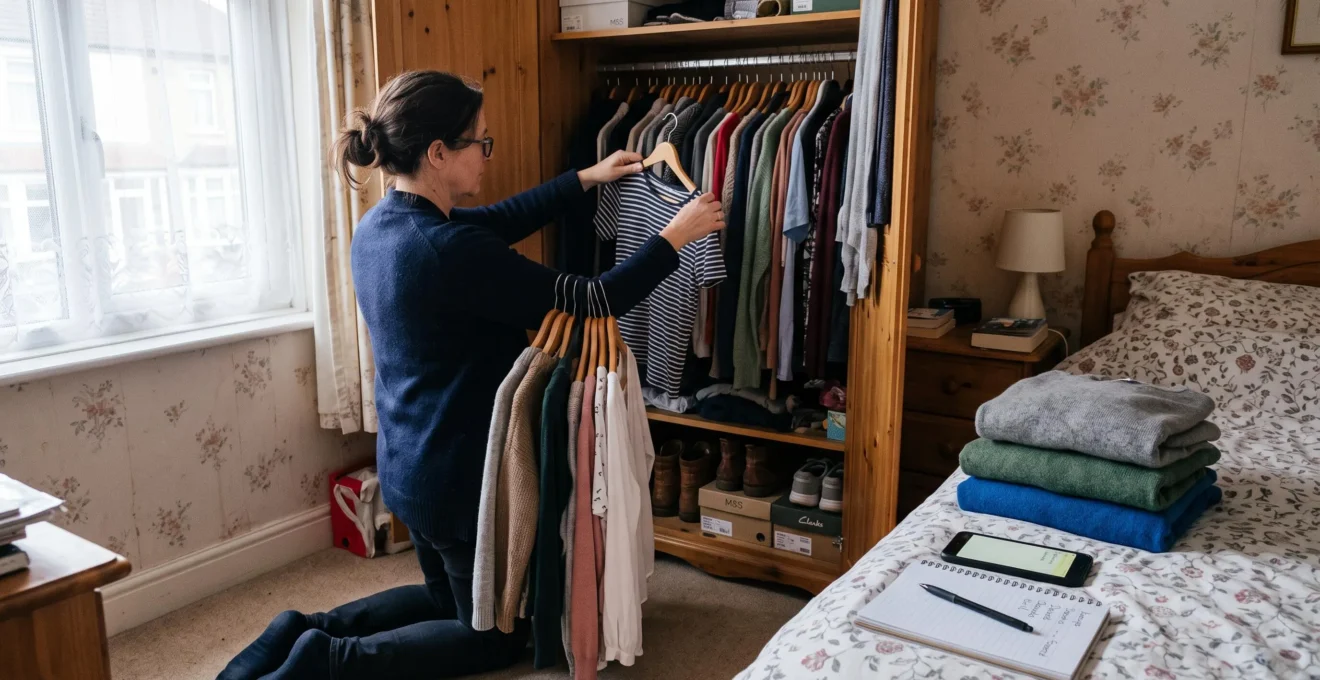
A more sustainable wardrobe does not necessarily contain more sustainable products. It contains clothes that are worn, maintained, repaired and replaced only when there is a genuine reason to do so.
For UK shoppers tired of eco collections, capsule wardrobe hauls and environmental claims that sound impressive but explain very little, this distinction changes the question. Instead of asking which supposedly responsible product to buy next, ask what would happen if nothing new entered the wardrobe.
The Ellen MacArthur Foundation’s historical research illustrates why clothing utilisation matters: global clothing production doubled between 2000 and 2015 while average clothing utilisation declined by 36 %. Those figures describe that historical period, not today’s UK wardrobe habits, but they highlight a fundamental problem: producing more clothes while wearing each item less.
Promoting sustainability therefore starts with a practical sequence: understand what you already wear, extend useful life, find an appropriate next owner for unwanted pieces and apply stricter evidence standards when replacement becomes unavoidable.
A more sustainable wardrobe starts with better use, not better shopping
- Measure what you actually wear before buying, decluttering or reorganising your wardrobe.
- Prioritise maintenance, repair, alteration and continued use over unnecessary replacement.
- When a purchase becomes necessary, check practical suitability, repairability and substantiated environmental claims rather than trusting marketing labels.
- Why Can Buying One More “Sustainable” Item Still Be the Less Sustainable Choice ?
- How to Do a Wardrobe Wear Audit in 30 Minutes Without Getting Overwhelmed ?
- Repair, Resell, or Donate: Which Option Makes Sense for 3 Common Wardrobe Problems ?
- The Sustainability Mistake That Looks Good Online but Changes Nothing
- When Should You Replace Clothing if You Want the Lowest Waste Outcome ?
- A Simple Priority Framework That Makes Ethical Shopping Sustainable for You
- Metals, Leather, or Textiles: Which Supply Chain Is Easiest to Trace Credibly ?
- Where Do Supply Chains Break Down in Luxury, and Why Should UK Buyers Care ?
Why Can Buying One More “Sustainable” Item Still Be the Less Sustainable Choice ?
Buying another sustainably marketed garment can be the less sustainable choice when an existing item already meets the same need. A new purchase introduces additional production and consumption, whereas continuing to wear suitable clothes does not require manufacturing their replacement. The decisive question is whether the new garment genuinely substitutes for something necessary or simply expands the wardrobe.
Consider a hypothetical situation: someone owns a perfectly functional wool jumper and buys an organic-cotton alternative because it carries a sustainability label. If the original jumper remains wearable but is subsequently neglected, the purchase has not solved a clothing problem. It has added another item to the system.
Cost per wear helps expose the distinction, although it is a financial measure rather than a direct environmental footprint calculation. Dividing a garment’s purchase price by its actual number of wears reveals whether it has delivered practical value. That calculation cannot, by itself, establish the environmental superiority of one fibre, manufacturing method or garment.
The environmental comparison also depends on the counterfactual: what would have happened without the purchase? A replacement that enables someone to meet a genuine clothing need differs substantially from buying a product to compensate emotionally for earlier consumption.
Before buying, ask two questions:
- What specific need is currently unmet? Identify the activity, season, dress requirement or functional problem that existing clothing cannot cover.
- What will this purchase replace in actual use? If the answer is nothing, recognise the item as an addition rather than a necessary substitution.
Luxury clothing introduces another consideration. A high price, substantial fabric or heritage brand reputation does not guarantee a long useful life. Ask whether the manufacturer offers repairs, replacement hardware, compatible spare parts or access to specialist servicing. An expensive bag with unavailable replacement fittings may ultimately be harder to maintain than a less expensive, repairable alternative.
UK shoppers should also treat vague environmental language cautiously. The CMA’s guidance on environmental claims in fashion retail explains that businesses must substantiate environmental claims and communicate important qualifications clearly. Labels such as “eco” or “conscious” are not sufficient evidence on their own.
The practical alternative is to establish what already works. That requires a wardrobe audit focused on actual behaviour rather than an idealised version of personal style.
How to Do a Wardrobe Wear Audit in 30 Minutes Without Getting Overwhelmed ?
A 30-minute wardrobe audit works best when it records clothing use rather than trying to reorganise every possession. Divide garments into frequently worn, seasonally worn and long-unused groups. Examine the frequently worn items first, document problems and postpone difficult disposal decisions. The objective is a manageable record that supports better maintenance and purchasing decisions.
Set a timer and use the following sequence:
- Minutes 0–5: Identify three wardrobe zones: items worn weekly, items worn seasonally and items untouched for approximately a year. Do not empty every drawer.
- Minutes 5–15: Inspect your frequently worn clothes. Note damage, discomfort, poor fit and maintenance requirements.
- Minutes 15–22: Record the garments in a phone note or spreadsheet. Keep the information factual rather than judgemental.
- Minutes 22–27: Choose a few realistic actions, such as sewing a button, cleaning footwear or checking alteration options.
- Minutes 27–30: Put everything back and schedule a separate review of seasonal or unused items.
A simple audit table should connect observations with the next decision.
| Item | Last worn | Condition or repair need | Next action |
|---|---|---|---|
| Black work trousers | Last week | Loose hem | Repair |
| Wool jumper | Last month | Good condition | Keep wearing |
| Occasion dress | Last year | Good condition, poor fit | Assess alteration or resale |
| Unworn shirt | Unknown | Good condition | Check whether it fills a real need; otherwise consider resale or donation |
Memory is an imperfect way to judge usage, particularly for similar garments. Try reversing the direction of hangers after each wear, or make a quick note when an item is used. After a month, you will have a more concrete picture of your everyday wardrobe. This method is a personal tracking technique, not a scientifically validated measurement of environmental impact.
Most importantly, do not convert an audit into an automatic clear-out. Removing functional clothing may create a need to replace it. Donating large quantities without checking their condition or the receiving organisation’s requirements can also transfer the burden of sorting and disposal elsewhere.
Your five-action wardrobe audit checklist
- Identify the three usage zones and create a note naming each one.
- Record five regularly worn garments with their last-worn dates.
- Inspect those five items and produce a short repair or care list.
- Track actual wear for the next month using hangers or a phone note, producing a wear record.
- Select one immediate maintenance action and record its completion before considering a new purchase.
Once the audit identifies a damaged, uncomfortable or unused garment, the next decision should concern its remaining practical value rather than how quickly it can be removed.
Repair, Resell, or Donate: Which Option Makes Sense for 3 Common Wardrobe Problems ?
Repair makes sense when a garment remains useful and restoration is practical. Resale is worth considering when another buyer is likely to value the item enough to justify the effort and costs. Donation suits clean, wearable clothing accepted by a receiving organisation. For all three decisions, keeping or altering an item may be preferable to moving it elsewhere.
Three common wardrobe problems illustrate why there is no universal disposal rule.
| Wardrobe problem | First option to assess | When another route makes sense |
|---|---|---|
| Damaged premium coat or designer accessory | Obtain a repair estimate and check specialist servicing | Resell with accurate condition disclosure if repair is impractical and genuine buyer demand exists |
| Garment no longer fits | Assess alteration and realistic future use | Resell or donate if alteration will not make it useful |
| Unused gift or impulse purchase | Consider styling it with existing clothes or arranging an exchange | Resell or donate when it is unlikely to be worn and remains suitable for another person |
For premium clothing, the decision should consider resale proceeds after commissions, authentication charges where applicable, shipping, packaging and time spent listing the item. These costs vary, so a universal resale-value threshold would be misleading.
For example, in a hypothetical resale calculation, an item expected to sell for £80 might incur £12 in total selling and delivery costs. The resulting £68 is the amount to compare with your effort, the item’s potential future use and any available repair or alteration option. These figures are illustrative, not typical platform fees.
Condition matters just as much as price. A resale listing should accurately disclose wear, damage and alterations. Where authenticity is important, establish whether a platform requires verification and what that service covers.
Donations deserve equally careful judgement. UK charity shops generally need items they can realistically sell or handle through their collection arrangements. Unsaleable textiles may enter secondary sorting, recycling or export channels, but the eventual outcome depends on the organisation and downstream arrangements. Donation is not a guarantee of reuse.
Before donating, check the shop’s current acceptance criteria. For unwearable textiles, investigate an appropriate local textile collection point rather than leaving damaged clothes in an ordinary clothing donation bag. A recycling label alone does not guarantee that fibres will become new clothing.
An often-overlooked alternative is keeping and restyling. Changing a garment’s fit, combining it with different existing pieces or using it for another suitable purpose can avoid both disposal and replacement, provided the result is genuinely useful.
The Ellen MacArthur Foundation identifies repair, resale, rental and remaking as circular fashion models, while cautioning that circular business activity does not automatically deliver environmental benefits unless it reduces dependence on new production and resource use.
The most useful result is not the emptiest wardrobe. It is a wardrobe where each item has a realistic purpose, a maintenance plan or a carefully chosen next destination.
The Sustainability Mistake That Looks Good Online but Changes Nothing
The most convincing-looking sustainability mistake is replacing ordinary consumption with environmentally branded consumption while leaving purchasing frequency unchanged. An aesthetically perfect capsule wardrobe, an expensive ethical-fashion haul or a dramatic decluttering video can communicate environmental concern without demonstrating reduced resource use. What matters is measurable behaviour after the content has been posted.
Buying an entire new capsule wardrobe is a particularly revealing example. If someone already owns suitable trousers, shirts, knitwear and coats, replacing them with a more coordinated collection introduces additional products without necessarily improving how clothing is used.
Similarly, selling a wardrobe full of rarely worn items may recover some value, but the outcome is less convincing if the proceeds immediately fund another shopping cycle.
In luxury fashion, purchasing can also express identity, taste and status. A product marketed as responsible may appeal because it lets the buyer feel environmentally conscientious while still enjoying the excitement of acquisition. Recognising that possibility does not mean every sustainability-motivated purchase is insincere. It means intention should be tested against subsequent behaviour.
Instead of tracking public-facing signs of a sustainable lifestyle, maintain three private measures:
- Actual wear: how frequently existing pieces are used over a realistic period.
- Maintenance completed: repairs, alterations and care actions that return garments to regular use.
- Unnecessary additions avoided: purchases abandoned because existing clothing already meets the need.
These are behavioural indicators, not verified carbon savings. They become useful when they change decisions rather than merely provide attractive statistics.
One practical intervention is a waiting rule for non-essential purchases. Choose a period in advance, write down the proposed item’s intended role and review it after the waiting period. The exact number of days is a personal choice, not an evidence-based universal threshold.
Consider what public decluttering content communicates as well. When an apparently sustainable transformation requires viewers to buy an entirely new set of products, the message can normalise replacement rather than continued use.
Reducing unnecessary purchases creates the foundation for a stronger rule: replace clothing according to function and condition, not because a new version looks environmentally preferable.
When Should You Replace Clothing if You Want the Lowest Waste Outcome ?
Replace clothing when it no longer performs a necessary function safely, hygienically or reliably, and reasonable maintenance or repair cannot restore it. A fashionable alternative, an environmental label or a brand’s suggested replacement cycle is not sufficient justification. The lowest-waste choice often involves extending use, but the decision must account for safety, condition and realistic future wear.
Clothing replacement should begin with a functional inspection rather than a calendar.
- Safety: Have soles lost essential grip, or has a critical seam or fastening failed in clothing or equipment where failure creates a risk?
- Hygiene: Is the item still cleanable and suitable for its intended use, or has deterioration made continued use impractical?
- Repairability: Can stitching, replacement components, cleaning or alteration restore useful function?
- Expected remaining use: Will repairing the item realistically lead to continued wear, considering comfort, fit and lifestyle?
- Alternative provision: Does another garment already perform the same function adequately?
A worn garment does not automatically belong in the bin. Faded jeans can remain suitable for informal wear; a coat with a damaged zip may need a replacement fastening rather than a replacement coat. Conversely, unsafe footwear should not be worn indefinitely simply to maximise its number of uses.
Repair costs should be considered alongside the practical service the garment can still provide. A repair is less attractive when the fabric surrounding the damaged area is also failing or when the item no longer fits its intended use.
Manufacturer lifespan claims require context. Actual durability depends on wear frequency, care, washing, drying, storage, construction and the stresses placed on particular components. A universal number of expected years cannot reliably describe every person’s experience.
When replacement is genuinely necessary, consider the outgoing item’s destination before shopping. Depending on its condition, options may include specialist repair, resale with full damage disclosure, an appropriate take-back programme or local textile collection.
Check what a take-back scheme actually accepts and whether its stated process explains the likely next use or treatment of collected products. A voucher encouraging another unnecessary purchase can undermine the intended reduction in consumption.
Once a replacement need is established, the next challenge is choosing something that suits daily life and remains serviceable without turning ethical shopping into another cycle of acquisition.
A Simple Priority Framework That Makes Ethical Shopping Sustainable for You
Ethical shopping becomes more sustainable when decisions follow a consistent priority order: first meet the need with what already exists, then consider reuse or a repairable replacement, and only then compare credible environmental certifications. The framework must also match your actual climate, dress code, budget and habits. Otherwise, even a thoughtfully sourced purchase may remain unused.
This approach connects the wardrobe audit, the repair-or-resale decision and the replacement checklist into one practical system.
- Use existing resources first. Check your wardrobe, consider an alteration, arrange a clothing swap or explore an appropriate second-hand option.
- Prioritise long-term usefulness and repairability. For any necessary acquisition, assess construction, fit, available repairs and replacement components.
- Use verified claims as a comparison tool. Assess relevant standards, evidence and sourcing disclosures when choosing between otherwise suitable options.
The order is deliberate. Environmental certification may provide valuable information about a material or supply-chain requirement, but it does not establish that the consumer needs the item or will actually wear it.
Consider a hypothetical UK commuter choosing a winter coat. A second-hand coat that fits well, withstands the expected weather and can be repaired may be more useful than a certified alternative that is unsuitable for regular commuting. This does not prove that the second-hand item has a lower total environmental footprint in every possible comparison; it illustrates why practical use belongs at the beginning of the decision.
A personal budget rule can reinforce the framework. Instead of treating each tempting item as an isolated ethical dilemma, establish a replacement allowance by clothing category. The allowance can be financial, numerical or both, with flexibility for genuinely unexpected needs.
For example, a hypothetical annual rule might permit replacements only after a documented need and a review of repair or reuse options. The precise allowance should follow the person’s circumstances rather than an arbitrary industry benchmark.
The lifestyle-fit test is equally important. Ask whether an item works with local weather, workplace expectations, washing facilities, mobility needs and clothes already owned. An impractical purchase is unlikely to become sustainable merely because its materials have better documentation.
Finally, record the reason for every necessary purchase. A note describing the functional gap, rejected alternatives and intended use makes future decisions easier to evaluate.
The final evidence check becomes especially important with luxury accessories, leather goods, jewellery and certified textiles, where different supply chains provide very different kinds of verification.
Metals, Leather, or Textiles: Which Supply Chain Is Easiest to Trace Credibly ?
No single material family is universally easiest to trace across its entire supply chain. UK precious-metal hallmarking provides particularly strong independent verification of metal purity, but not mining origin or environmental performance. Textiles may offer documented certified-material chains, while leather traceability depends on the availability of records linking hides, processing and manufacturing. Verification must be judged by the specific claim being made.
Precious metals are distinctive because the UK has a statutory hallmarking framework. The British Hallmarking Council‘s explanation of UK Assay Offices describes how precious-metal purity is tested and hallmarking activities supervised.
A hallmark can provide independently regulated evidence about precious-metal content. It does not reveal whether the material was mined responsibly, recycled, produced with renewable energy or obtained under particular labour conditions.
For leather, the challenge is establishing continuity between the animal hide, processing facilities and final product. A brand naming its tannery provides one potentially useful piece of information, but that alone does not identify the hide’s origin or establish environmental performance throughout the chain.
Textile verification commonly relies on standards and documented chain-of-custody processes. Textile Exchange‘s technical FAQs on certification and chain of custody distinguish scope certificates from transaction certificates. The former establish whether an organisation is qualified within a certification scope; the latter relate to specific certified products or shipments.
A certified supplier does not automatically mean every garment it sells is certified.
| Material | Useful evidence to request | Important limitation |
|---|---|---|
| Precious metals | Applicable hallmark and additional origin or recycled-content documentation | Hallmarking verifies purity, not complete provenance or sustainability |
| Leather | Tannery identity, hide-origin information and available chain records | Disclosure of one processing stage does not establish the entire chain |
| Textiles | Named standard, certification scope and relevant chain-of-custody documentation | A certificate may cover a material, supplier or shipment without proving every attribute of the finished garment |
The distinction matters when considering second-hand purchases. A hallmarked vintage jewellery item may retain independently verifiable information about its metal purity long after its original retail paperwork has disappeared. Comparable verification for an older textile item may depend more heavily on surviving documentation.
Neither situation proves environmental superiority. Purchasing vintage jewellery does not automatically establish responsible historical sourcing, and buying certified textiles does not guarantee the lowest possible footprint.
Be cautious with descriptive terms such as “vegan leather”, “responsibly sourced” or “conscious materials”. Each may communicate a limited characteristic without establishing all relevant manufacturing or environmental attributes. Ask what the term means, which standard applies and which parts of the chain are covered.
Even credible information about raw materials can leave major gaps in processing and manufacturing, especially when luxury brands depend on networks of subcontractors.
Key takeaways before assessing luxury supply chains
- Identify the exact claim being verified: metal purity, fibre certification, origin and environmental impact are different questions.
- Ask where independent records stop, particularly between material processing and finished-product assembly.
- Make missing information part of the purchase decision rather than assuming a luxury price or respected name fills the evidence gap.
Where Do Supply Chains Break Down in Luxury, and Why Should UK Buyers Care ?
Luxury supply-chain transparency can weaken when production moves beyond directly controlled facilities into material processing, specialist component manufacturing and subcontracted assembly. A brand may disclose its own workshops without providing equivalent information about every upstream supplier. UK buyers should care because environmental claims can sound comprehensive even when the available evidence covers only a limited stage of production.
A typical luxury product can pass through several distinct stages:
- Raw material: fibres are grown or produced, hides are sourced, or metals are extracted or recovered.
- Processing: materials are spun, woven, dyed, tanned, refined or otherwise prepared.
- Component and product manufacturing: specialist suppliers produce linings, hardware and other components before products are assembled.
- Branding and quality control: the finished item receives its commercial identity, product specifications and distribution approval.
- Retail: marketing presents the finished product and any associated environmental or sourcing claims.
These stages are a useful analytical map, not evidence that every luxury brand uses the same arrangements. Actual supply chains vary considerably by product, manufacturer and sourcing model.
Opacity becomes especially relevant when a claim about one verified component is presented in a way that suggests the entire product meets the same standard. For example, certification of a particular textile input does not automatically substantiate environmental claims about dyeing, hardware, transport or finished-product durability.
UK consumer protection requirements provide an important safeguard against misleading environmental marketing. The CMA’s fashion-sector guidance addresses the need for clear, accurate, appropriately substantiated claims and prominent qualifications. Its investigation of ASOS, Boohoo and George at Asda resulted in formal commitments concerning environmental-claims practices. That outcome concerns those retailers’ marketing commitments; it is not evidence about every luxury supply chain.
As a buyer, ask retailers questions that identify the precise missing information:
- Which production sites are covered by the environmental claim?
- Can the brand identify the relevant processor, tannery, mill or specialist component supplier?
- Does an independent standard apply to the whole finished product or only a particular input?
- What repair services, spare components and aftercare arrangements are available?
- What evidence supports any advertised recycled-content, sourcing or lower-impact claim?
A retailer’s inability or unwillingness to answer is a reason to treat the claim cautiously, not proof of misconduct. Distinguish unavailable evidence from a verified false statement.
Repair and second-hand acquisition offer practical ways to reduce dependence on newly manufactured products, although neither automatically resolves the historical sourcing problems of an existing item. Their strongest contribution is the opportunity to extend useful life and avoid unnecessary new demand.
As the Ellen MacArthur Foundation’s work on circular fashion makes clear, the environmental value of alternative business models depends on whether they help reduce reliance on new production rather than merely creating additional opportunities to consume.
The next useful action is simple: choose one garment you already own, record how often it is worn and identify one way to extend its useful life. Promoting sustainability through a wardrobe begins with decisions that change what you do, not additional products that change how your wardrobe looks.
Can a wardrobe be sustainable without buying certified sustainable clothing?
Yes. Wearing existing garments longer, maintaining them appropriately and avoiding unnecessary purchases are meaningful approaches to reducing clothing consumption. Certification can help evaluate certain attributes of a necessary replacement, but it is not a requirement for improving everyday wardrobe habits. The actual environmental outcome depends on the choices made and the new production they displace.
Is buying second-hand always more sustainable than buying new?
No. Second-hand shopping extends the opportunity for existing products to be used, but the benefit depends partly on whether the purchase substitutes for a new item or simply increases consumption. Consider genuine need, condition, expected use and the possibility of continuing with garments already owned.
What should you do with clothes a charity shop cannot accept?
First check whether the garment can be repaired or repurposed safely. For unusable textiles, consult local council information or suitable textile collection providers, confirming accepted materials and condition requirements. Recycling arrangements differ, and depositing unsuitable items with a charity can create additional sorting or disposal work.
How can you tell whether a fashion sustainability claim is credible?
Look for a clearly defined claim, the specific product or material it covers, appropriate supporting evidence and accessible qualifications. A recognised standard may help, but check whether it applies to a supplier, a particular shipment or the finished product. Vague terms and attractive environmental imagery do not independently demonstrate lower impact.
Does owning fewer clothes automatically mean having a more sustainable wardrobe?
No. A smaller wardrobe can be practical, but its size alone does not establish sustainability. Discarding functional clothes to meet an arbitrary item count may encourage replacement purchases. Focus instead on how often garments are used, whether they meet real needs and how effectively their useful lives are maintained.